Trip Report
Argonaut Peak – NW Arete, Colchuck Peak, Dragontail Peak, Little Annapurna & McClellan Peak
Trip Overview
We were excited to kick off the 2026 Cascade climbing season and had heard that snow conditions were much lighter in the Central Cascades than in the North Cascades. With Highway 20 still closed at Rainy Pass following the December 2025 storms, a trip into the North Cascades would have required a long drive around from Mazama, making the Enchantments an easy choice.
Aside from Mt. Stuart, we had climbed few of the Bulger peaks around Leavenworth. Since we didn’t have an overnight permit for the Enchantments, we planned our two-night trip around camping outside the permit boundary.
Over three days, we completed a loop from the Stuart Lake Trailhead, climbing Argonaut Peak via the Northwest Buttress then descending into the Porcupine Creek drainage. We spent the first night below Banshee Pass. On Day 2, we climbed Colchuck Peak, ascended the snow chute through Pandora’s Box to Dragontail Peak, traversed to Little Annapurna, and descended to Crystal Lake. After dropping our overnight gear, we climbed McClellan Peak before spending the night in a small treed basin in Nightmare Gorge. On Day 3, we crossed the Enchantment Core Zone, descended Aasgard Pass, and returned to the Stuart Lake Trailhead.
It was a fun and scenic early-season loop and we climbed five peaks.
Day 1 – Argonaut Peak - NW Arete
We drove from Mazama to Leavenworth the night before and found a spot at Upper Johnny Creek Campground, surprisingly easy for Memorial Day Weekend. We woke at 4:30 a.m., packed up, and started hiking from the Stuart Lake Trailhead around 5:40 a.m.
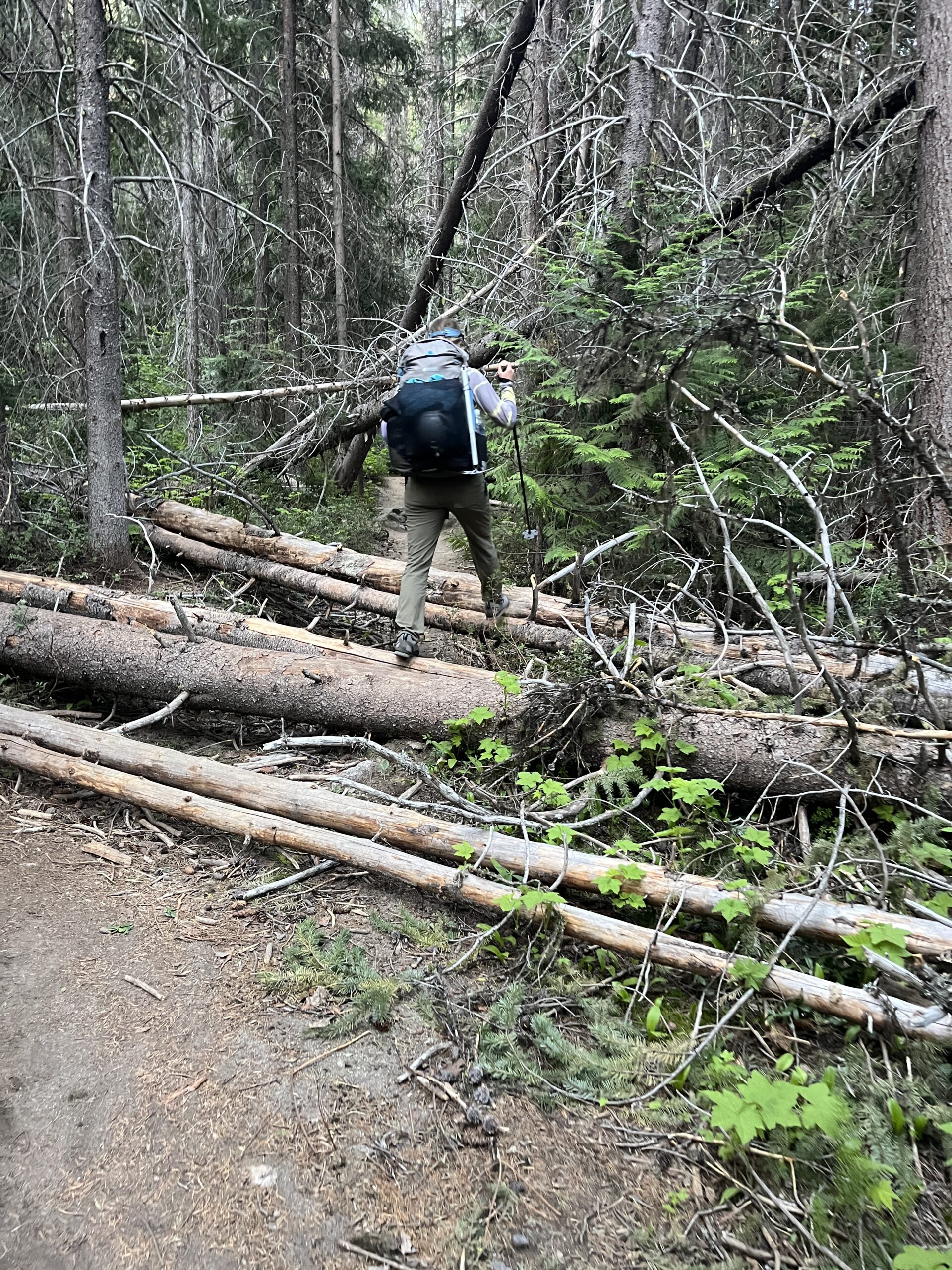
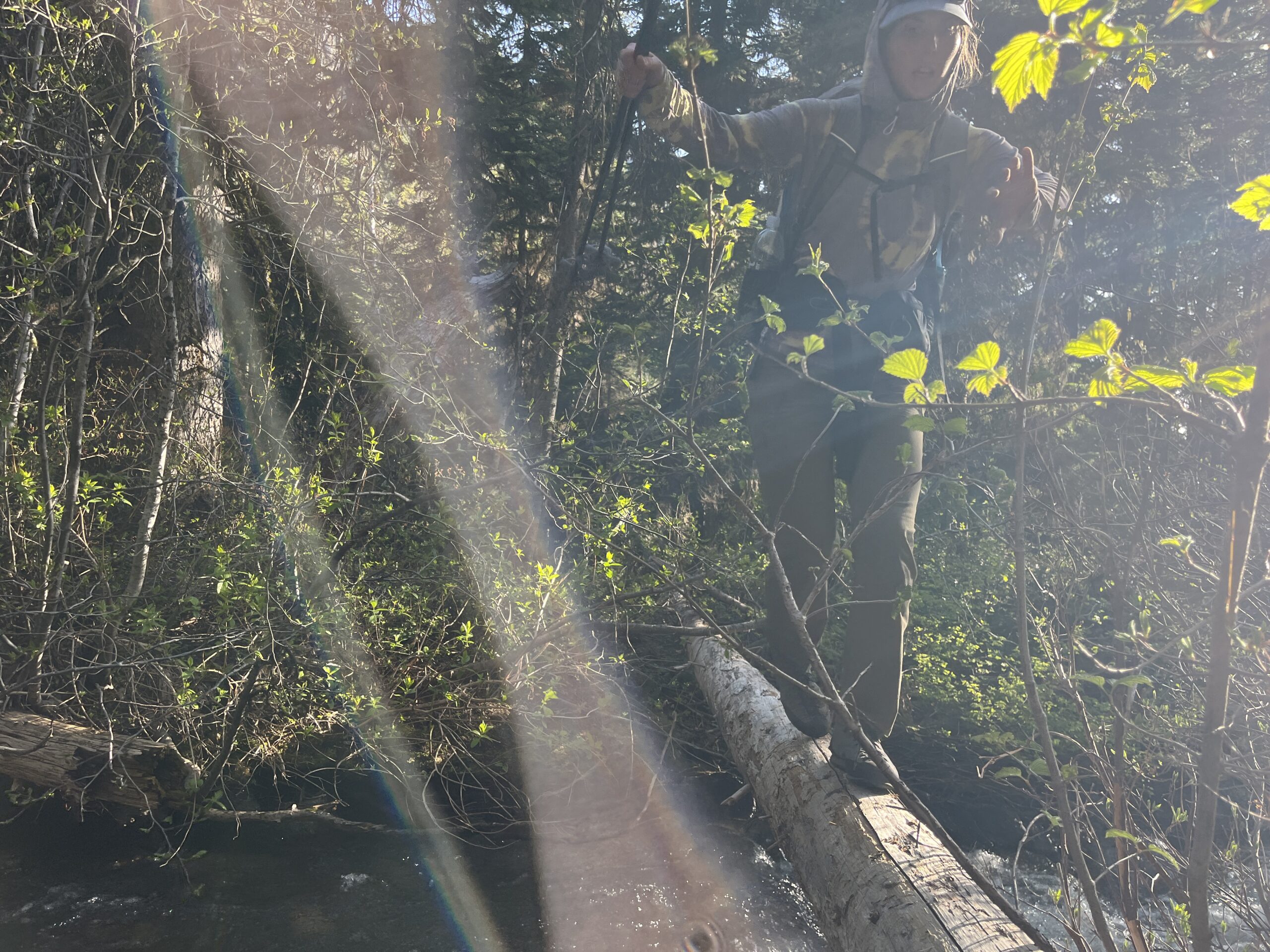
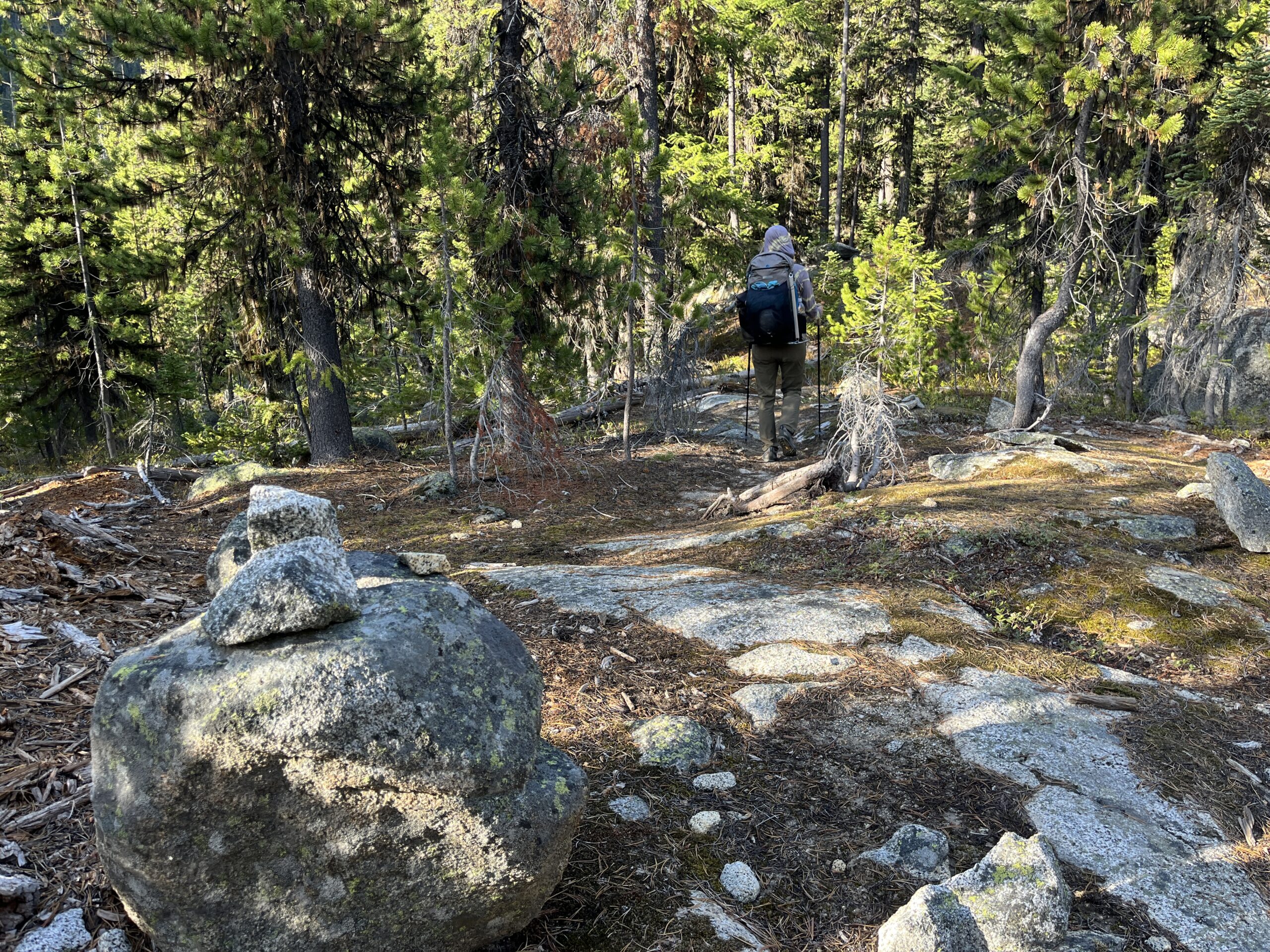
Only a few blowdowns remained on the trail, all with easy bypasses. After about two hours, we left the trail near the first switchback heading up to Stuart Lake. We crossed the first creek on a thin, wobbly log, though a better crossing likely existed nearby. From there, we followed intermittent cairns and trail to an easy crossing of Mountaineers Creek at 4,600 feet around 8:30 a.m.
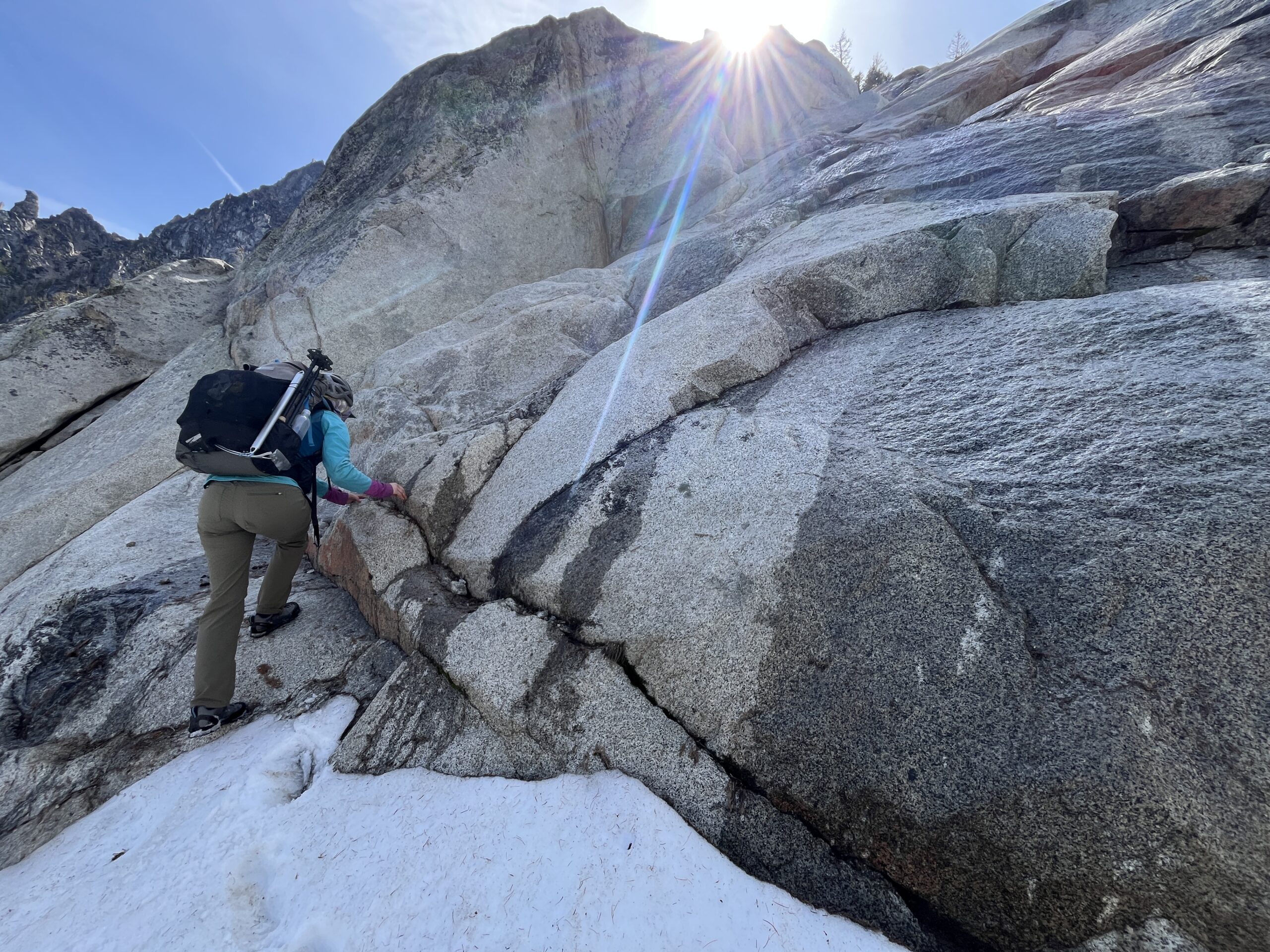
At 4,900 feet, we left the drainage and headed toward Argonaut, briefly passing through trees before emerging above the slide alder onto sandy talus. We slogged up the talus to the wet slabs section and scrambled the right-facing corner unroped. A fall would have been serious, but the holds were solid.
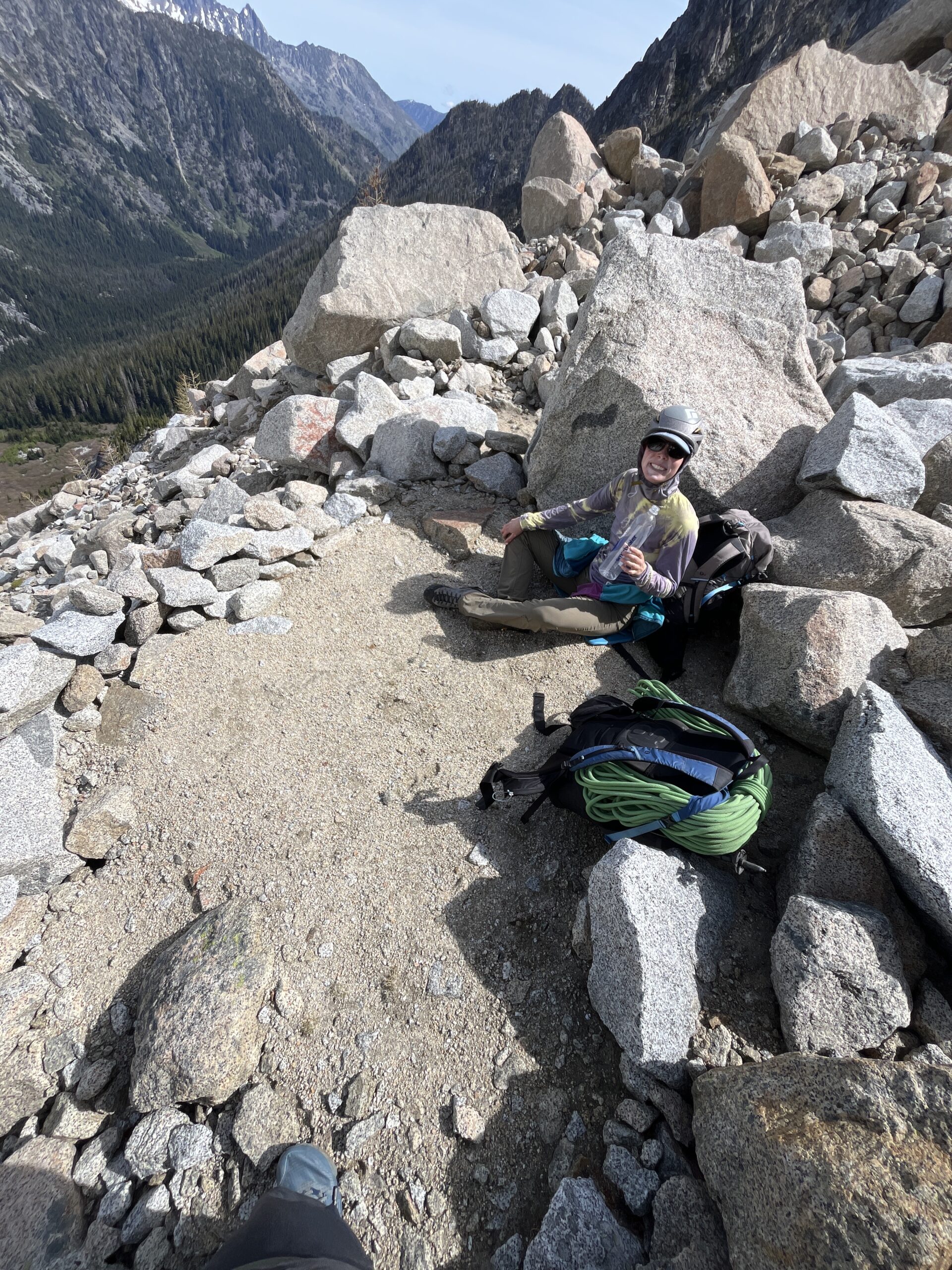
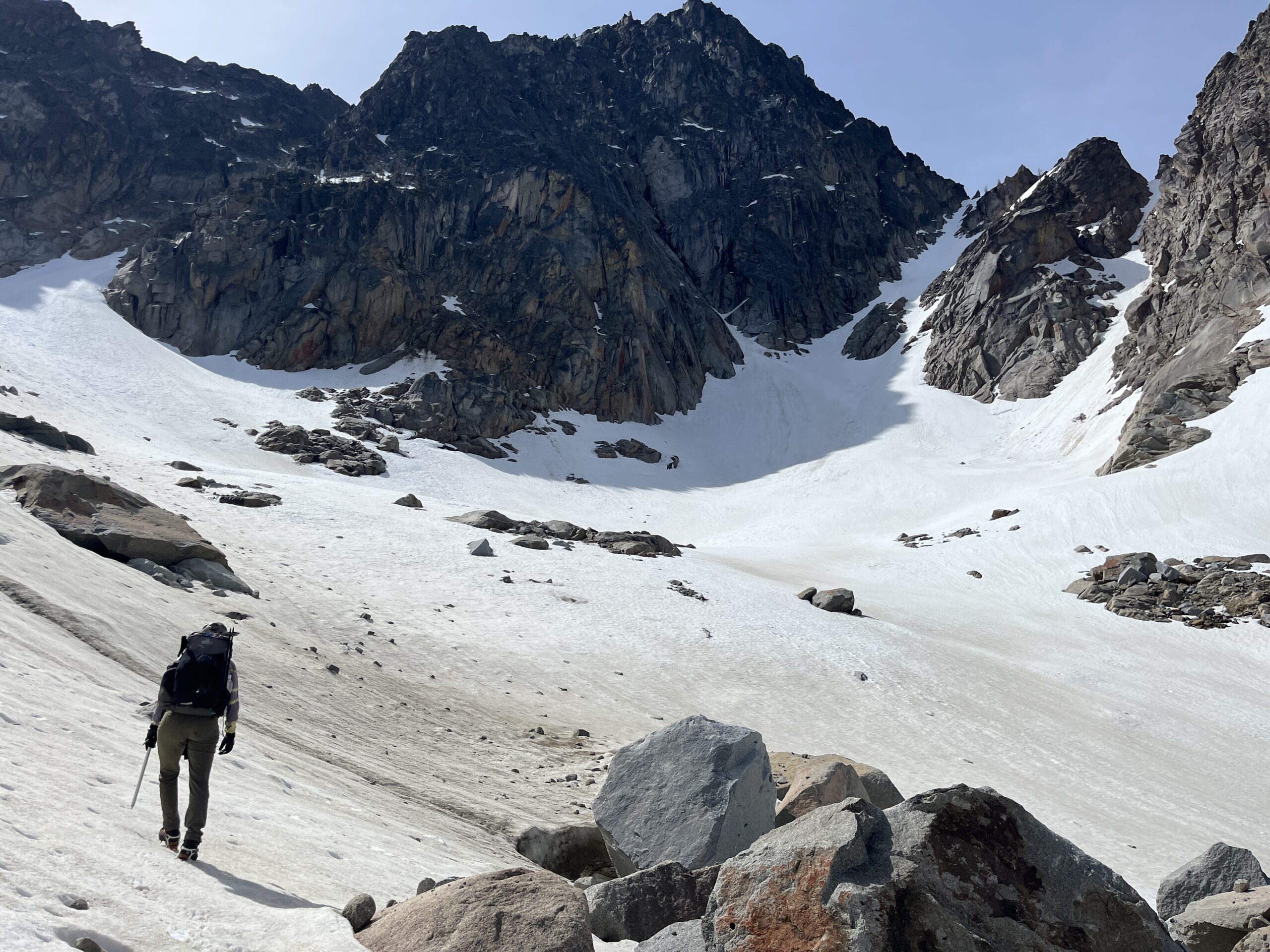
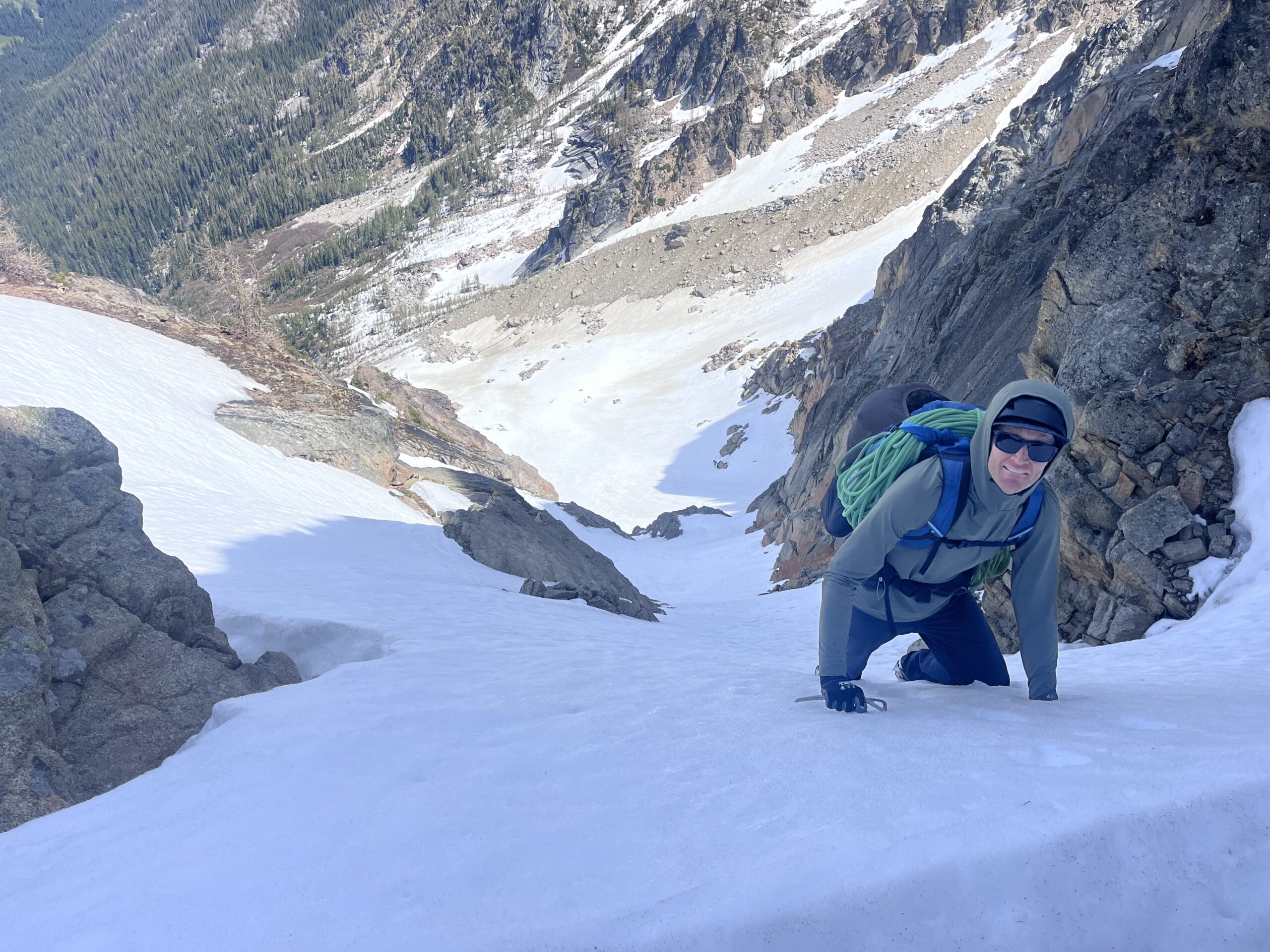
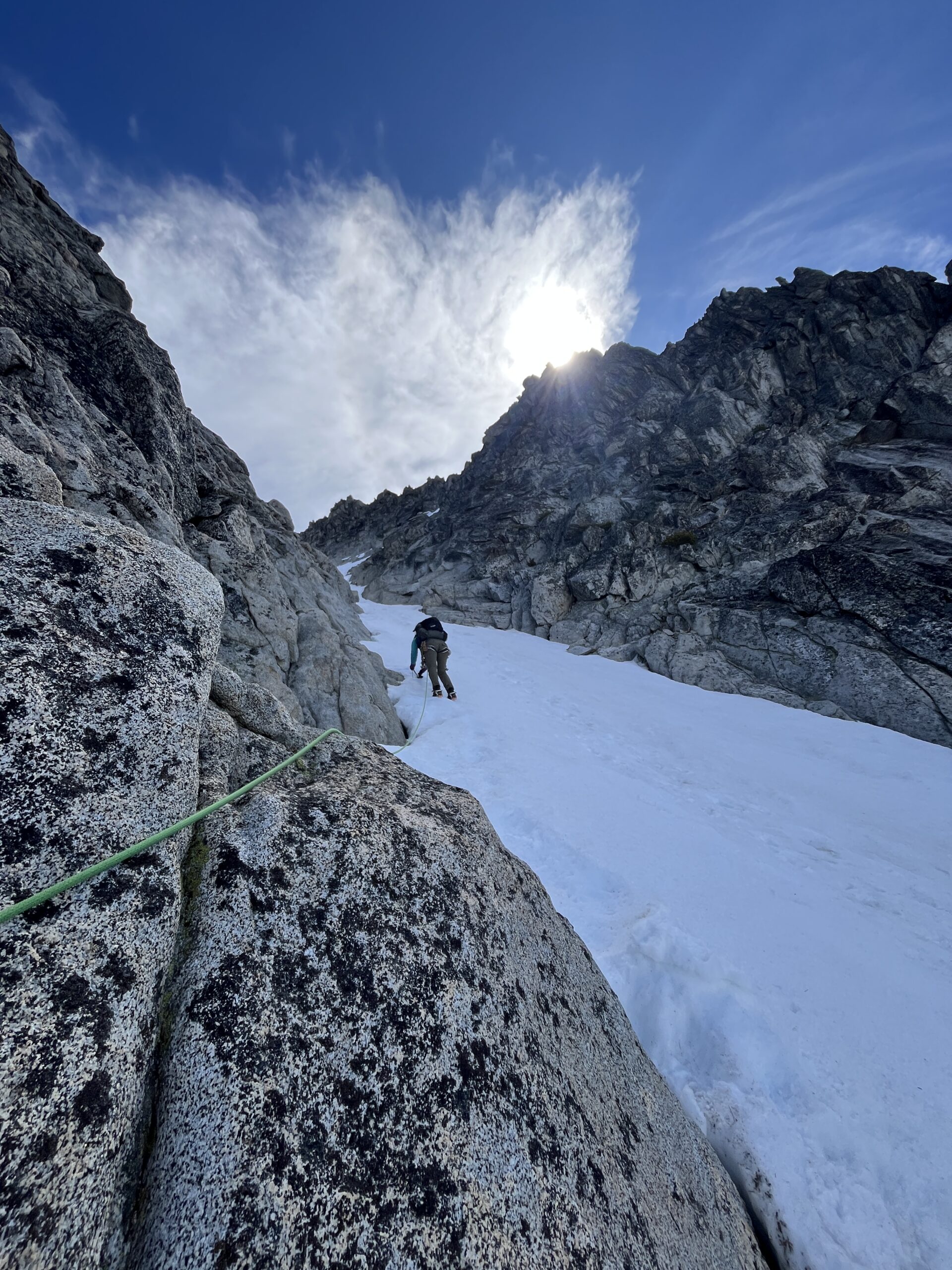
We entered the basin below Argonaut around 10:30 a.m. and found a small bivy site large enough for two people. After a short break, we filled water, switched into mountaineering boots, and put on crampons. The snow in the gully was soft enough for good step-kicking, though it steepened near the top. We reached the notch and the start of the rock route around 12:15 p.m.
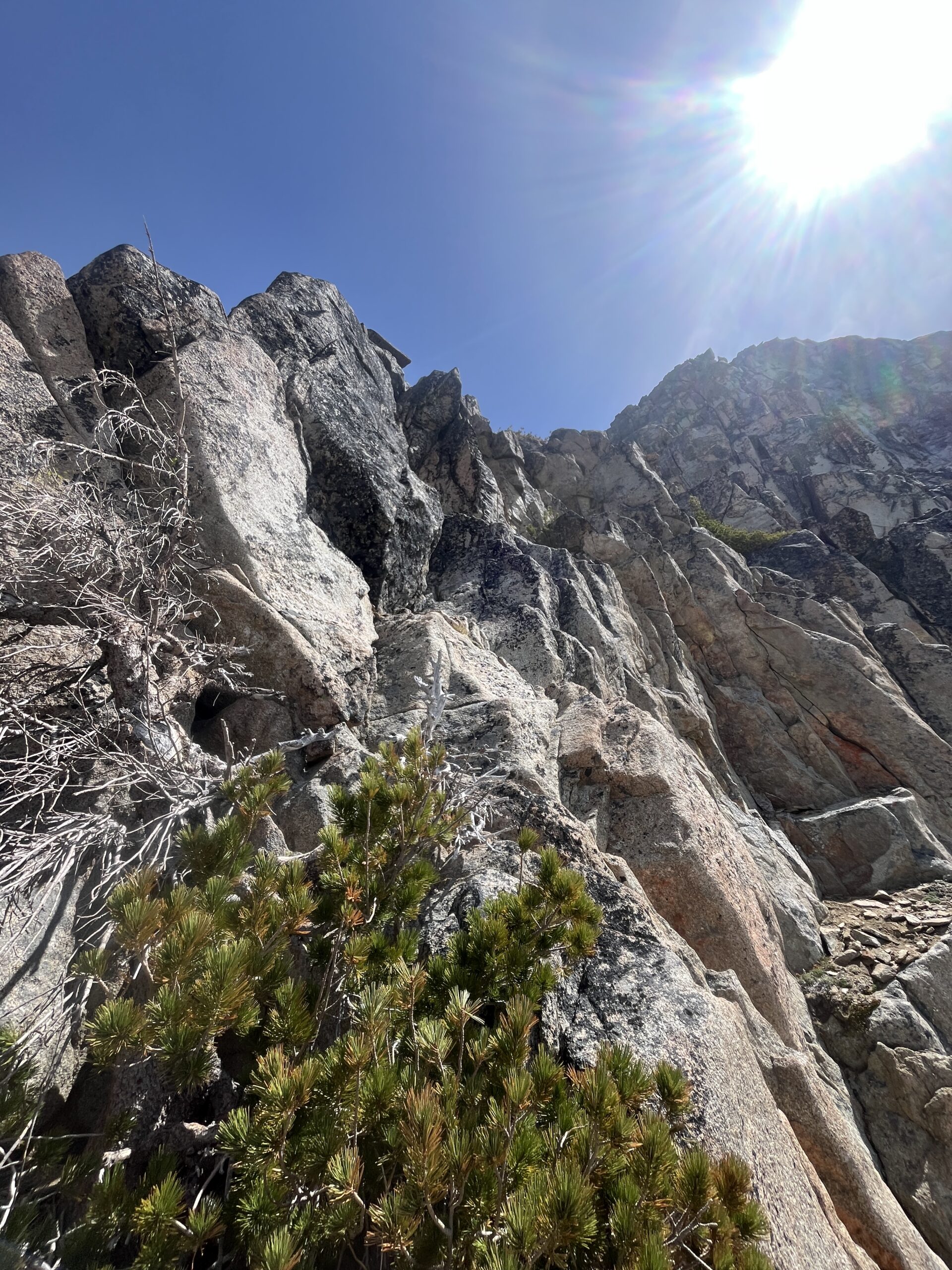
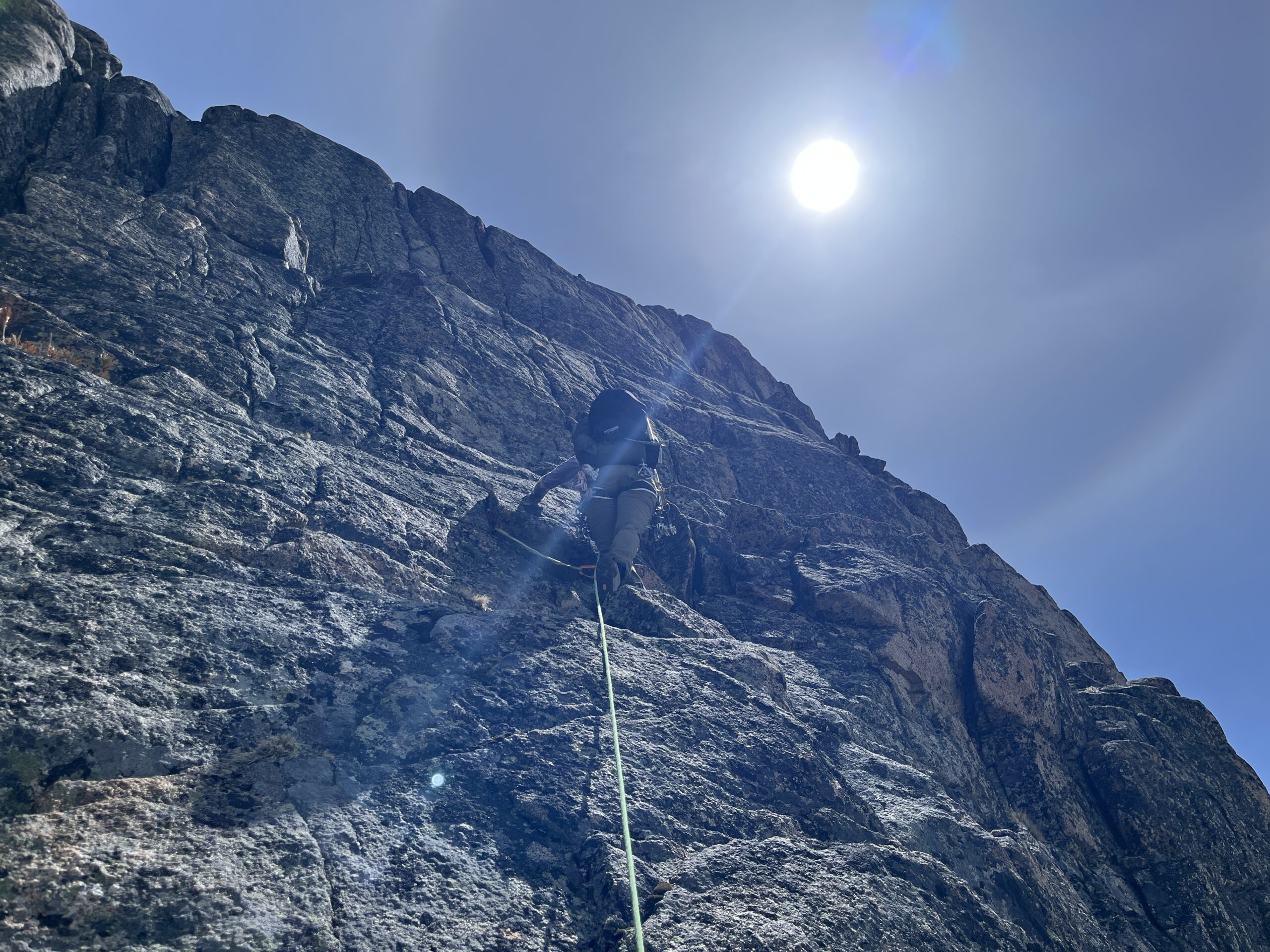
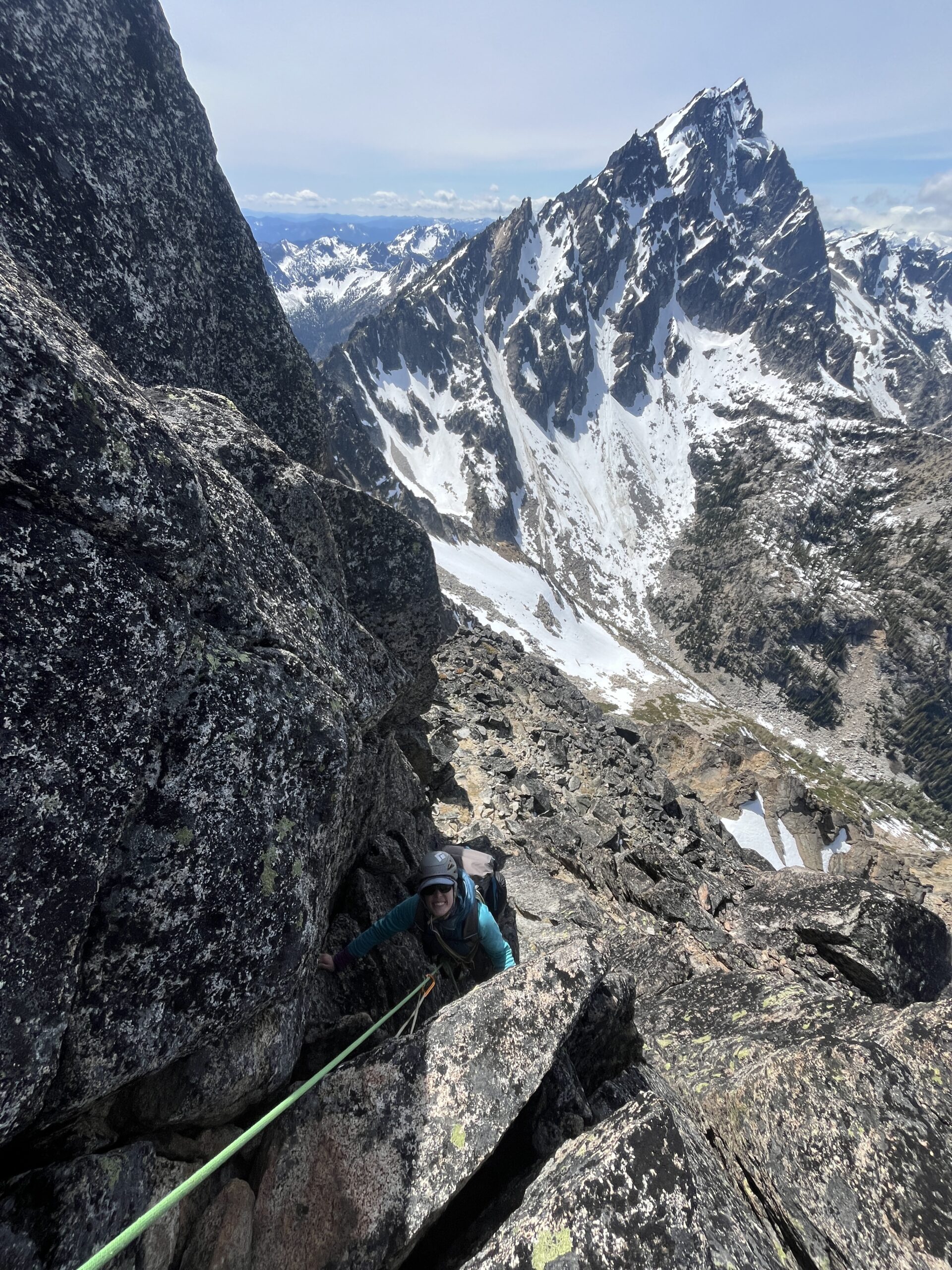
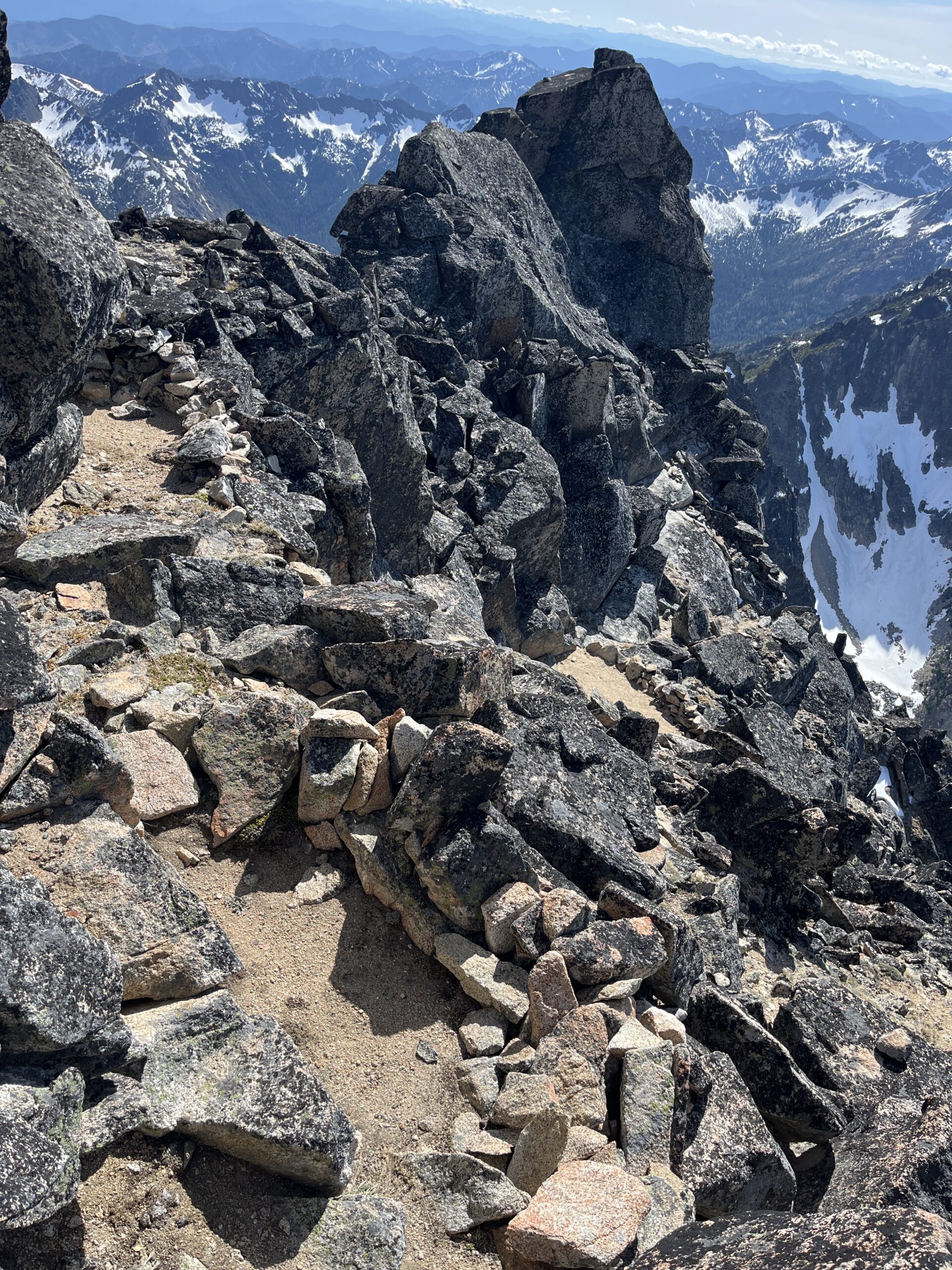
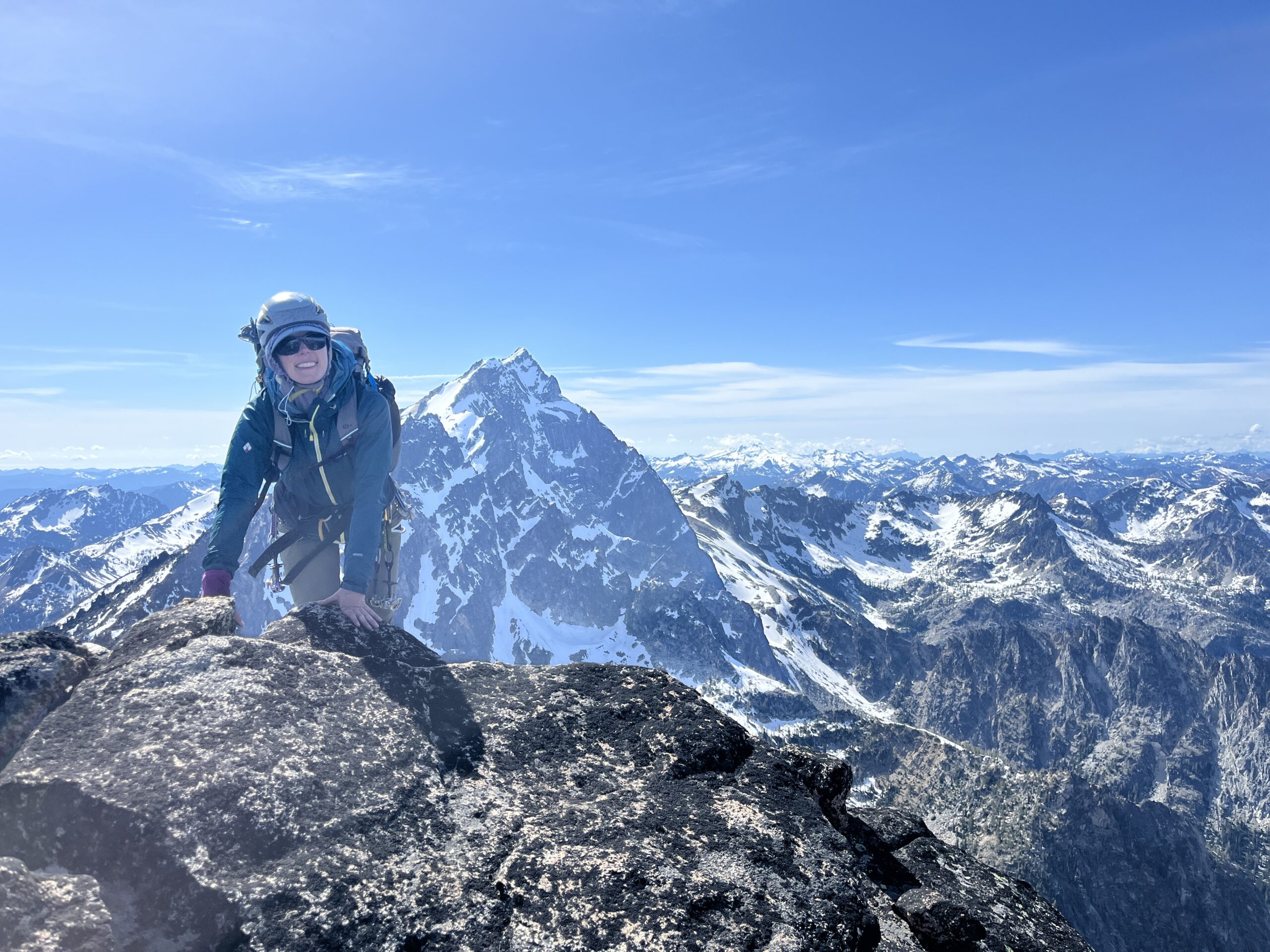
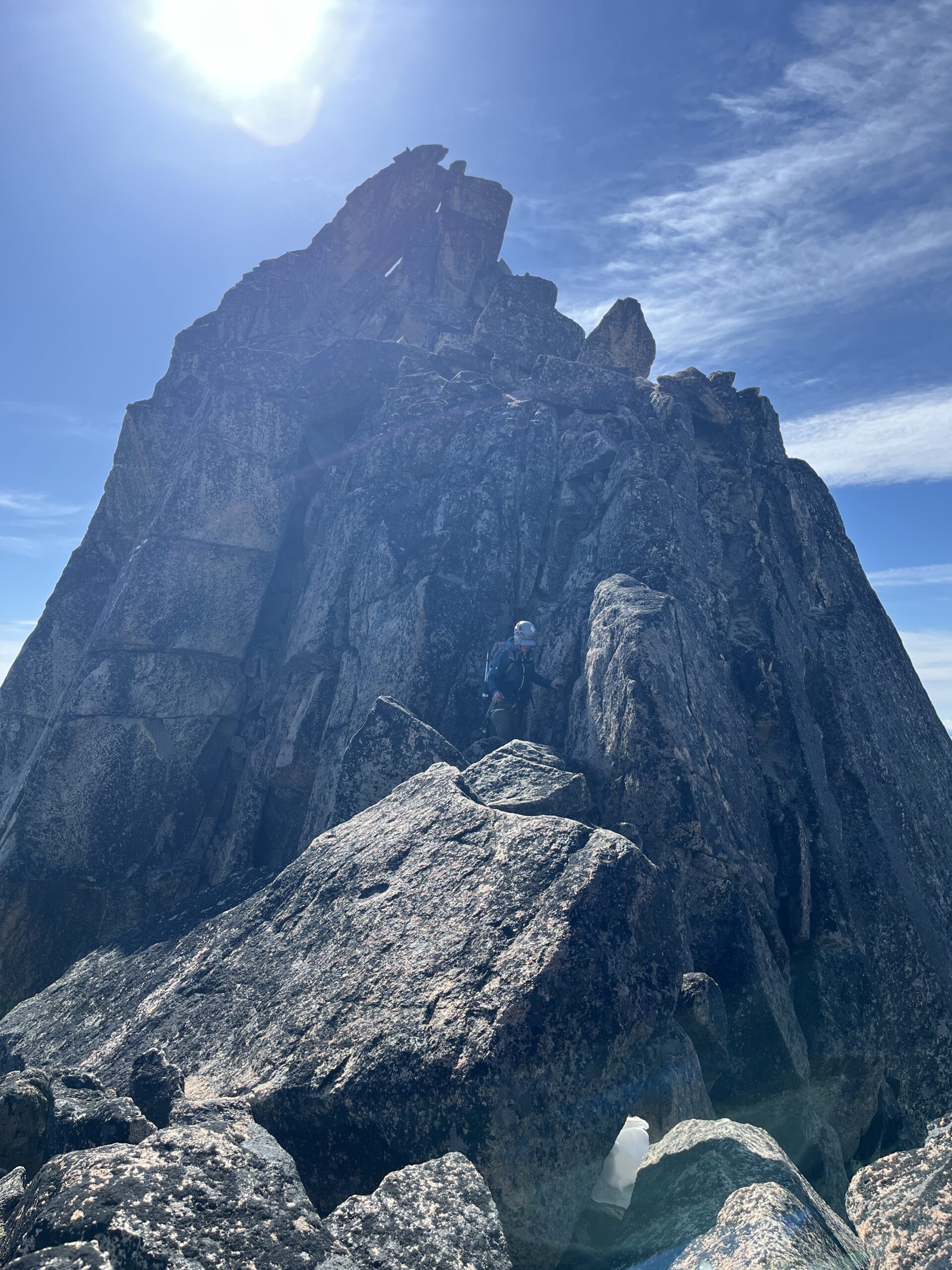
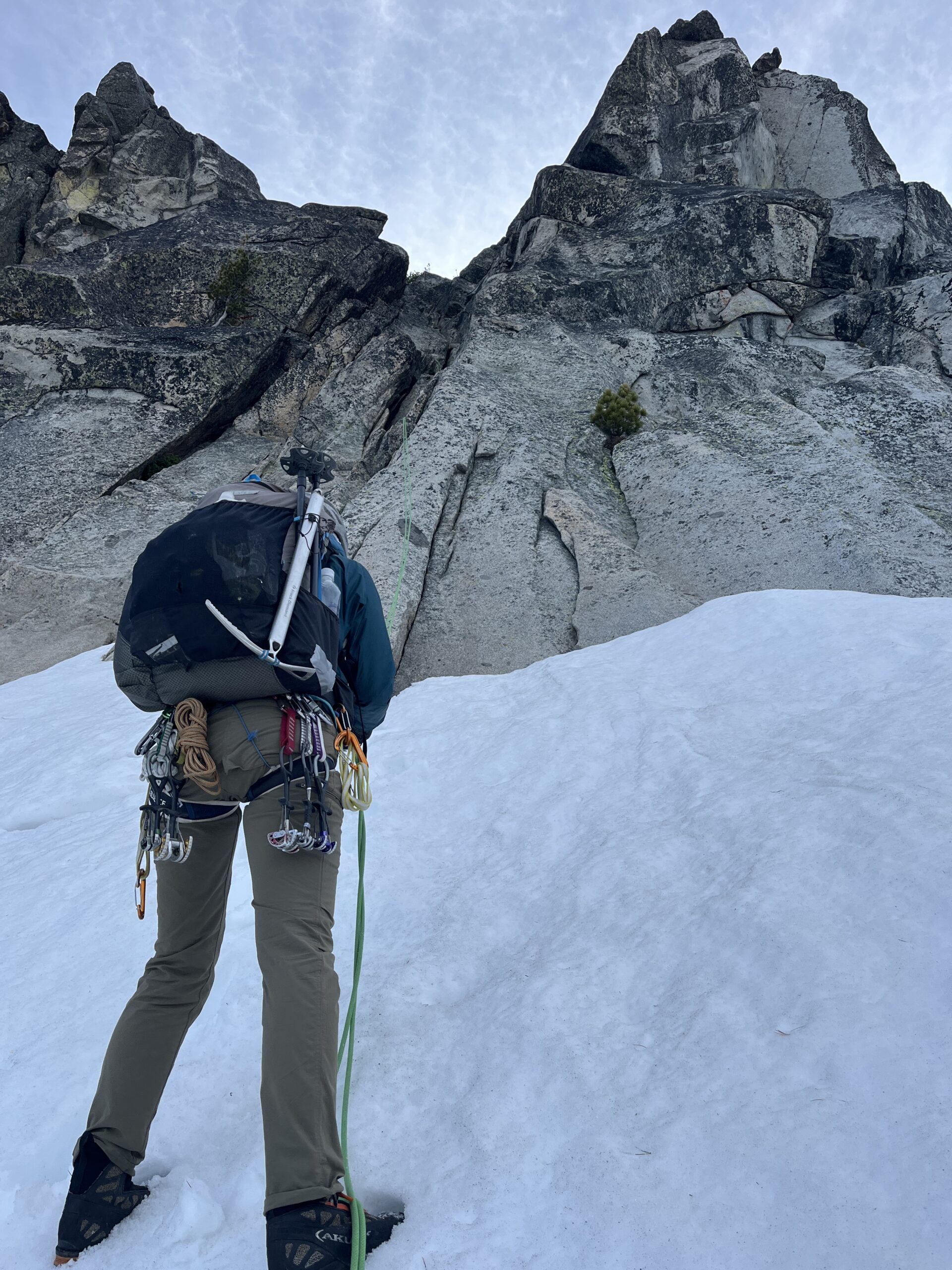
We geared up, reviewed the beta, and started climbing. I led through the tree at the start of pitch 1 and onto the ridge crest. The route description and topo were remarkably accurate, and route-finding remained straightforward throughout. Climbing with overnight packs added some challenge, but the terrain was enjoyable and the line obvious. Just below the summit, we noted three bivy spots.
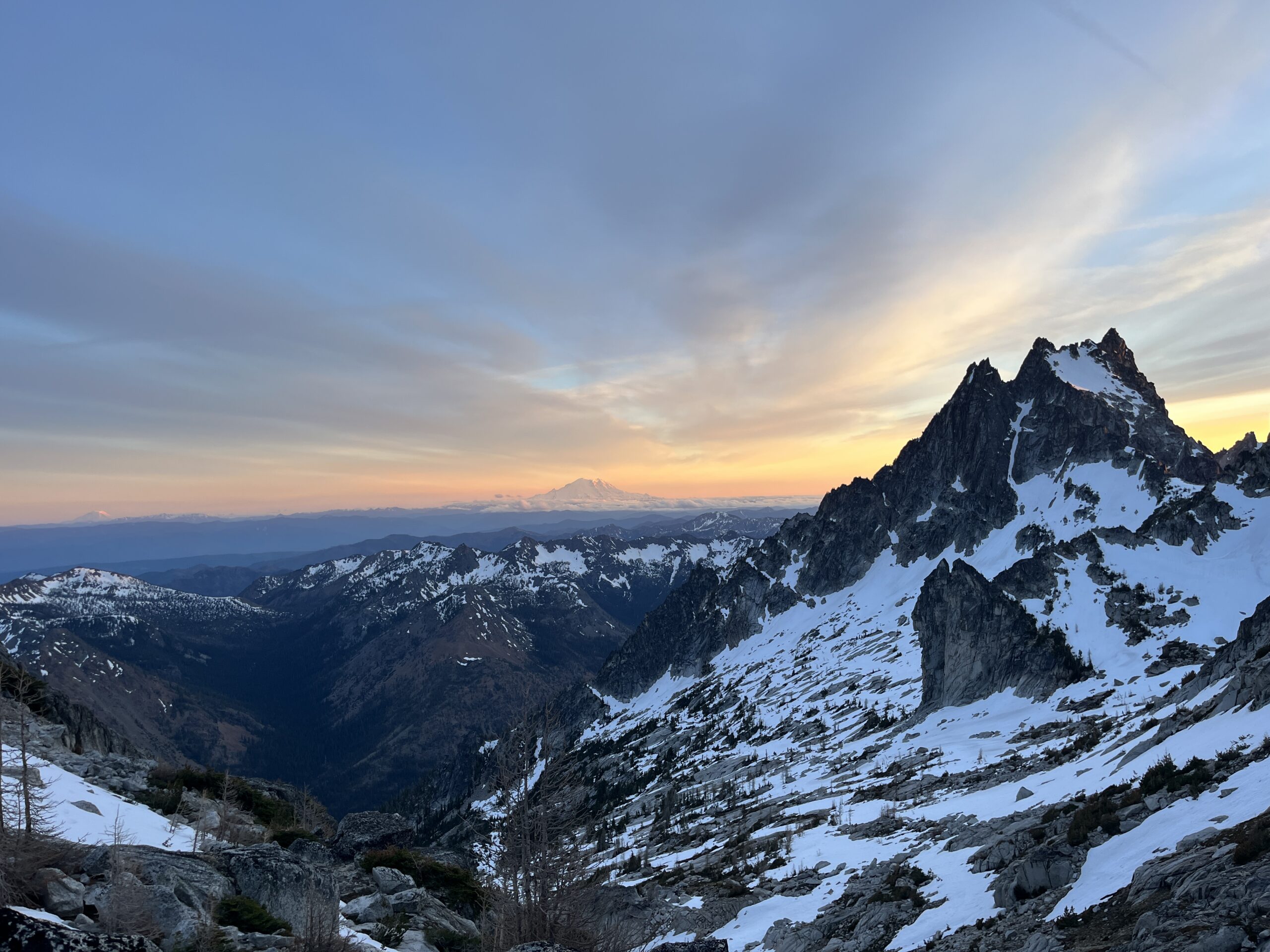
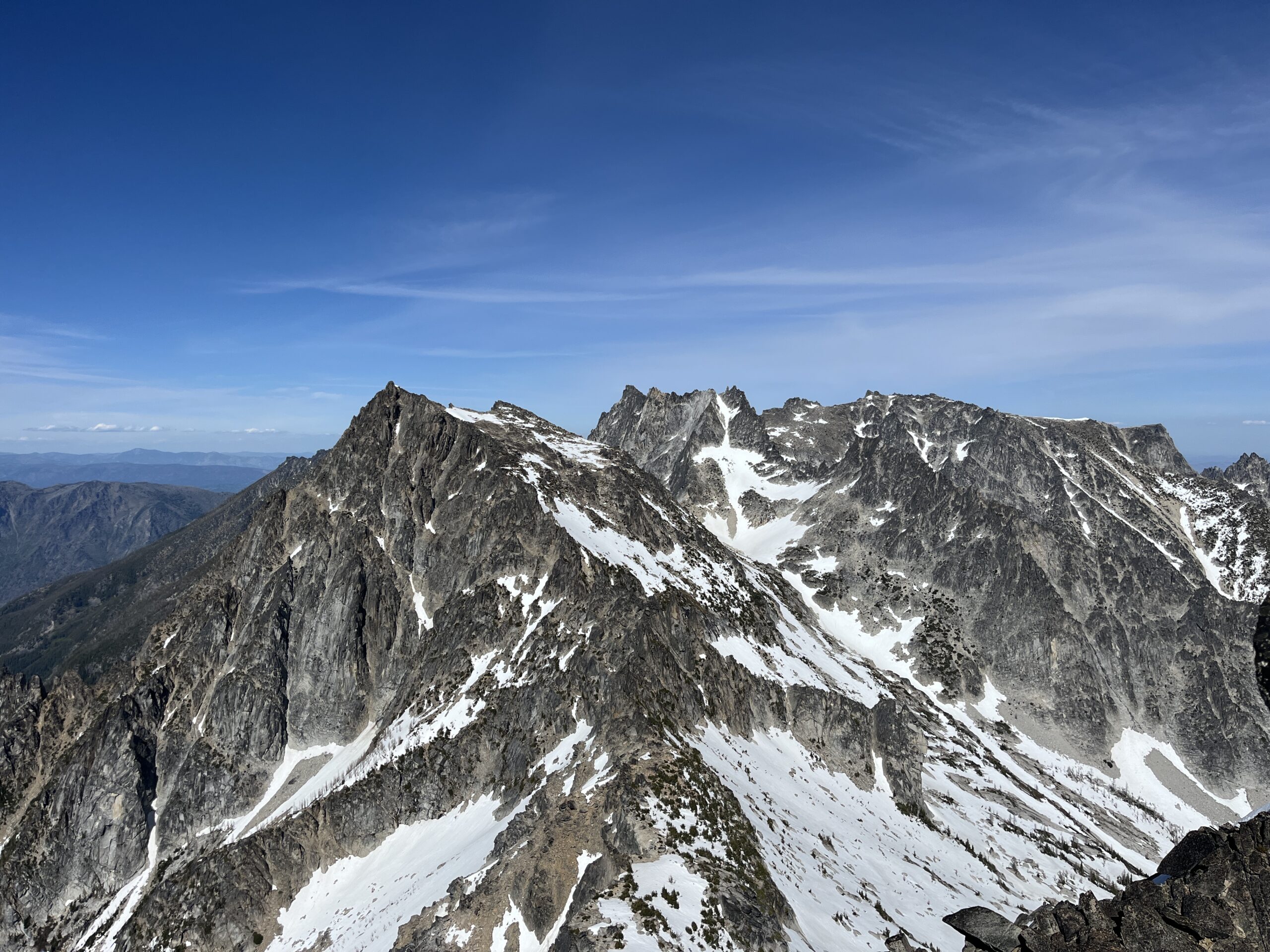
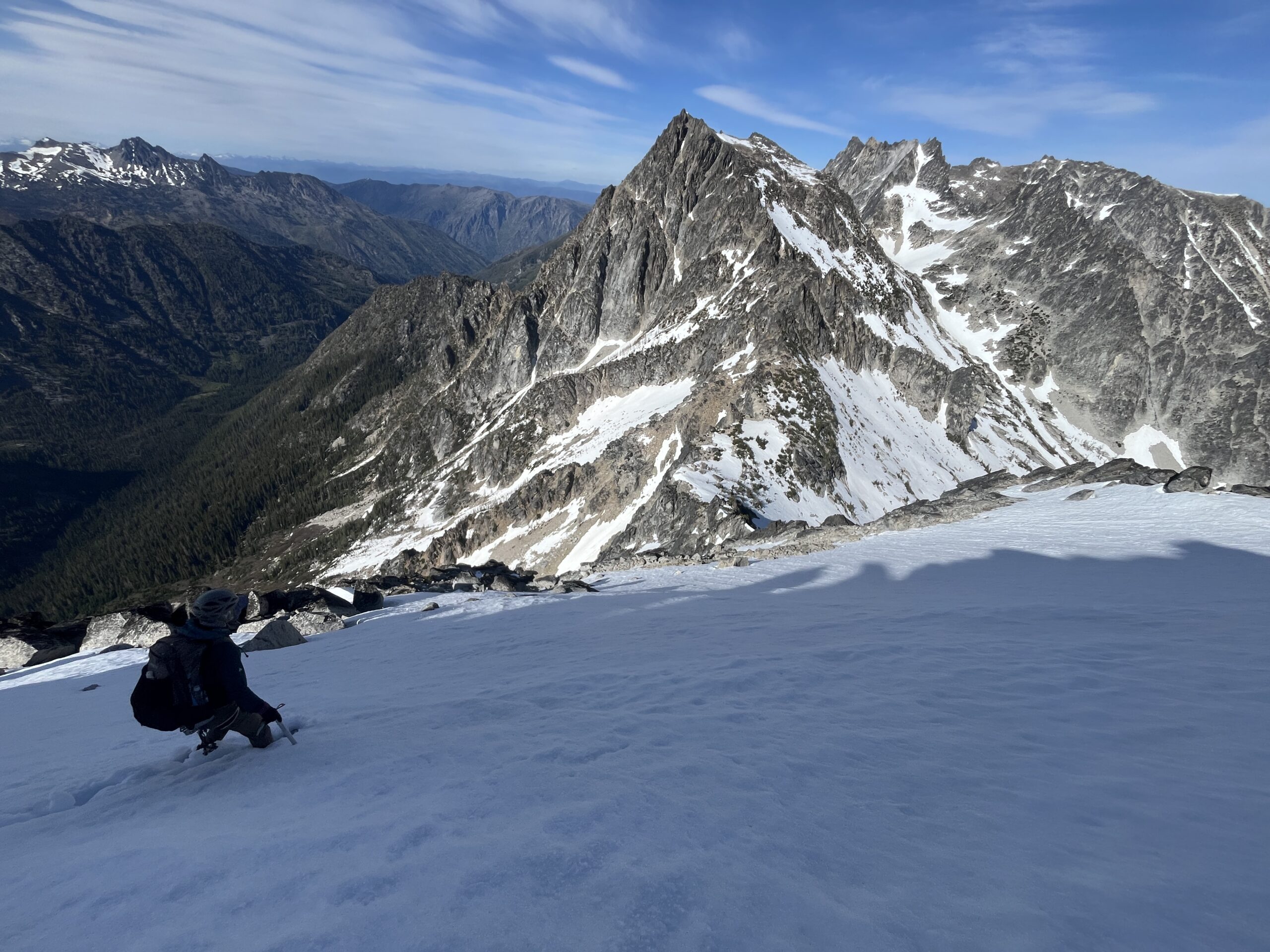
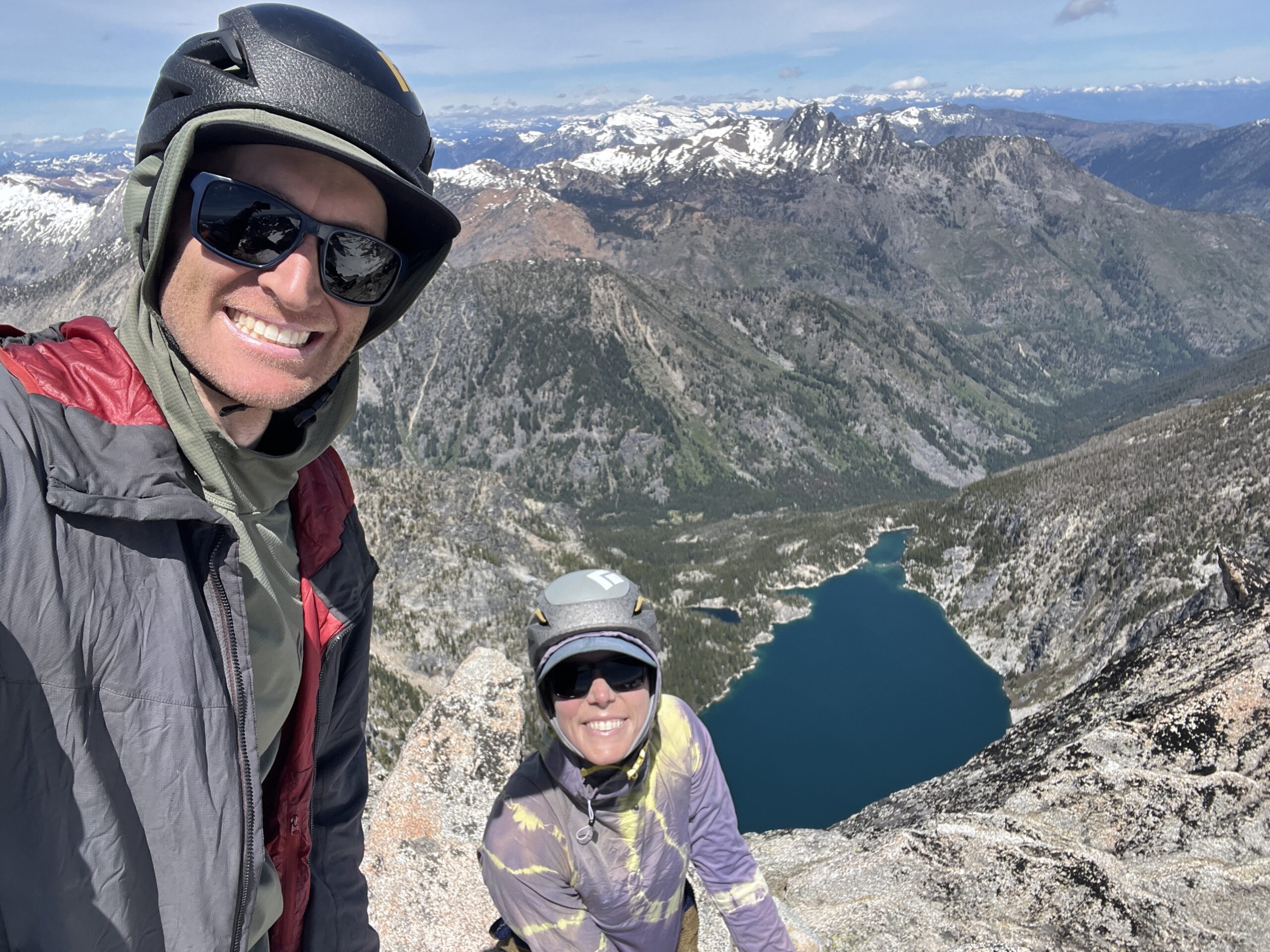
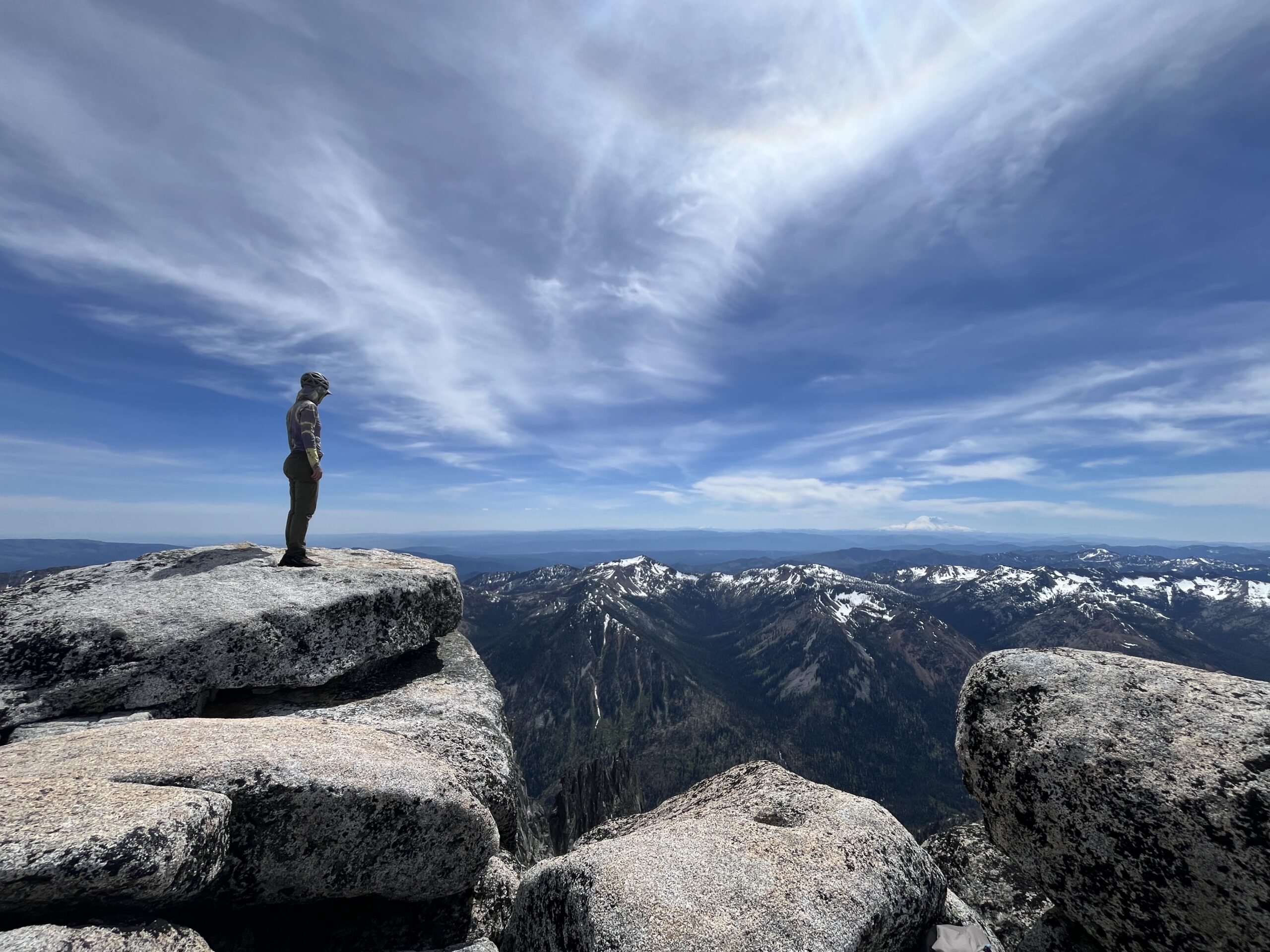
We reached the summit around 4:15 p.m. and enjoyed expansive views of Rainier, Adams, Stuart, and the surrounding Cascades. Looking east, we could clearly see Colchuck Peak and the Pandora’s Box area where we planned to travel the following day.
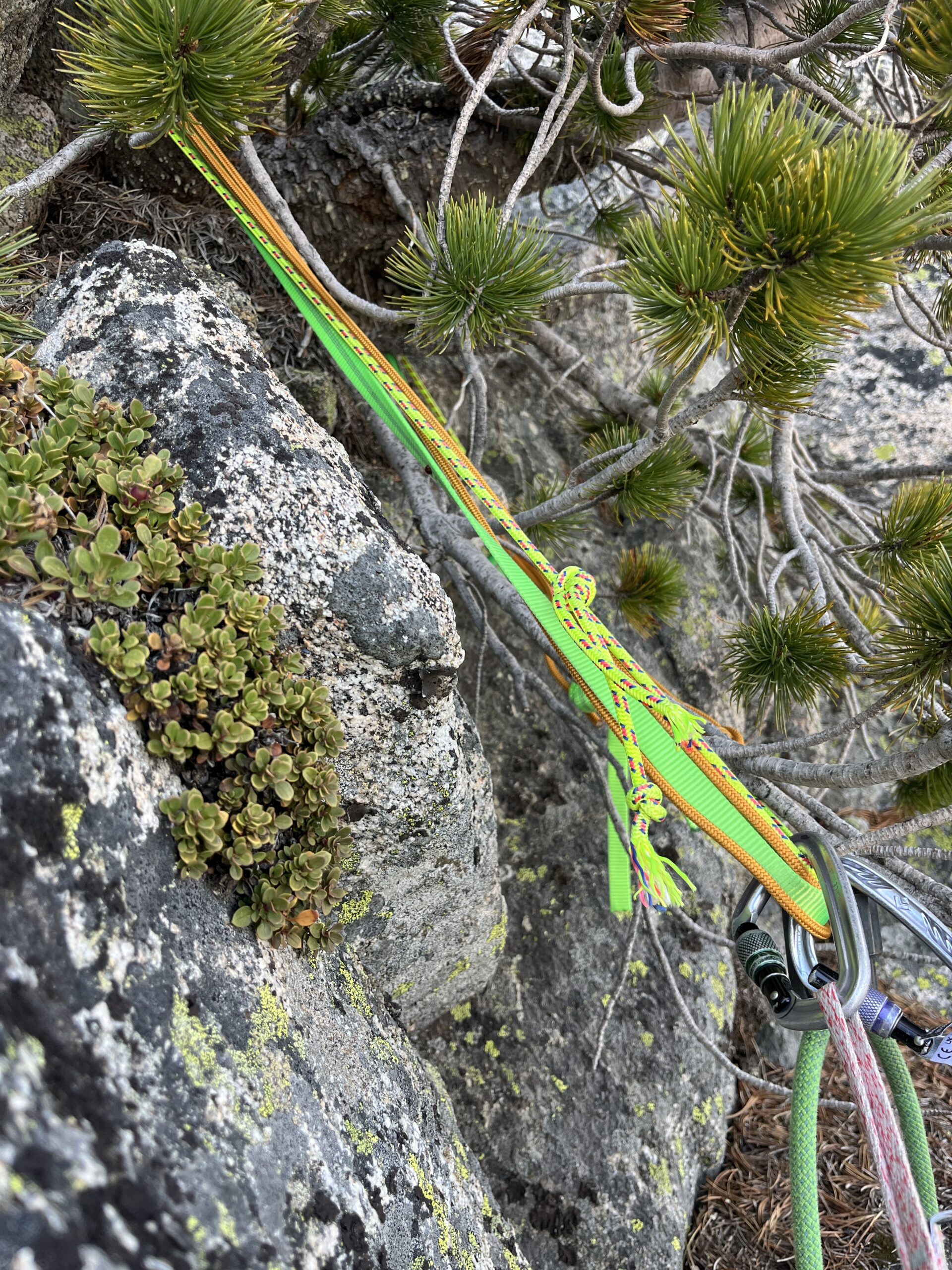
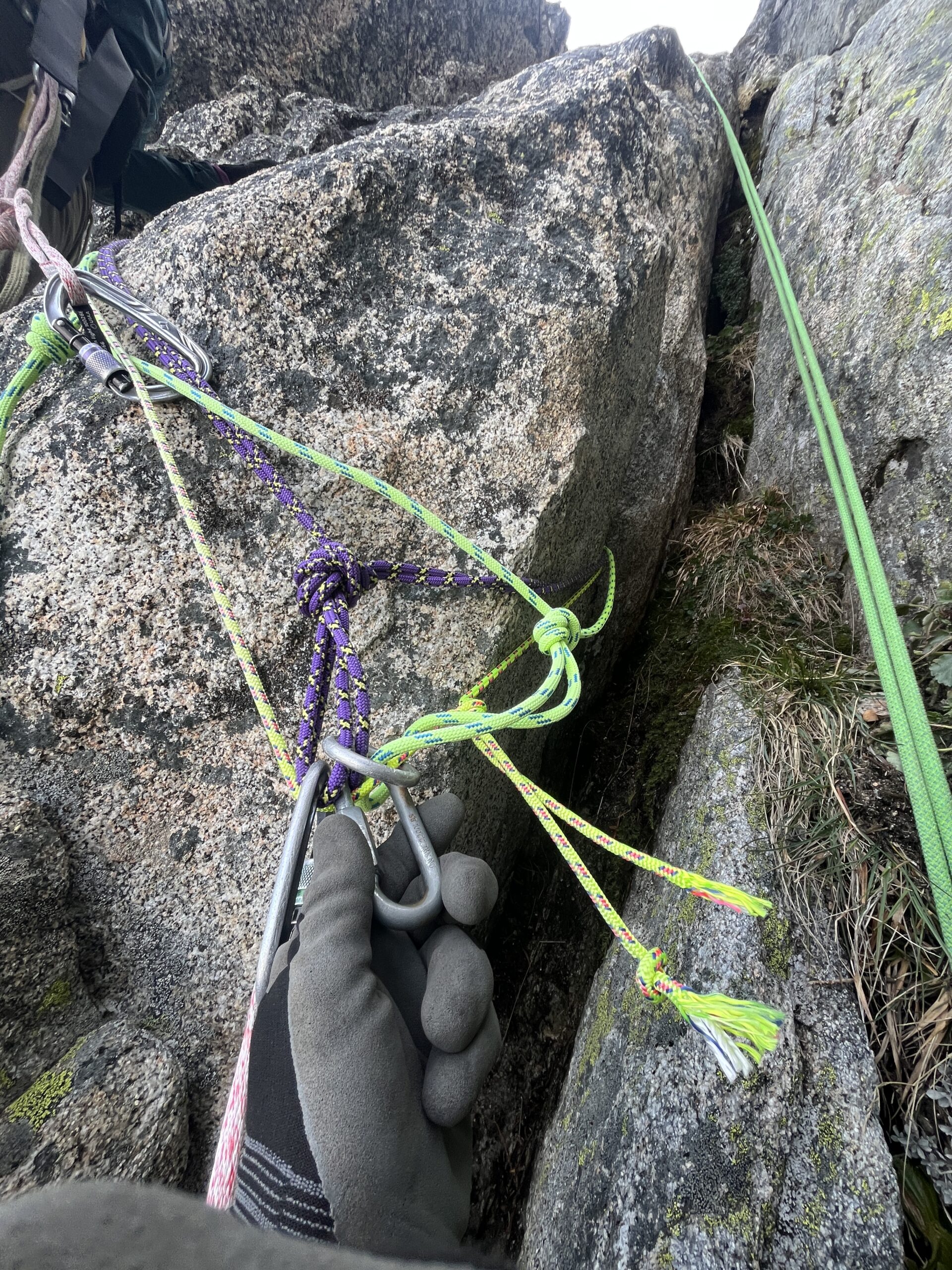
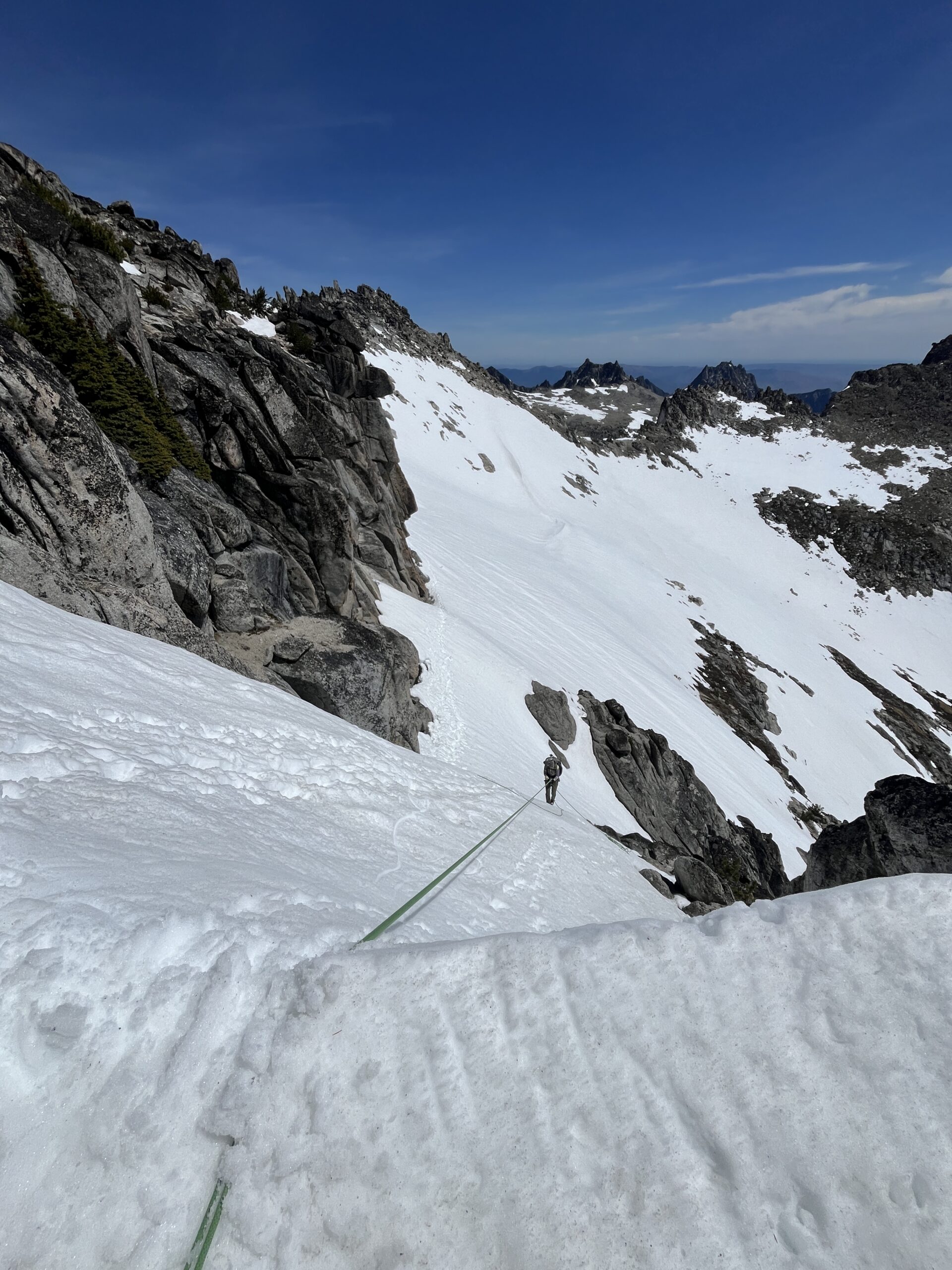
We began the descent around 4:45 p.m., scrambling east along the ridge to the broad northeast snow slope. Soft snow made for easy travel to the east ridge. We completed the first rappel into a snow-filled gully, then built our own rap anchor to avoid being unroped in the steep snow gully and remain on rappel all the way to the notch. The third rappel anchor sits on a tree hidden below the east-ridge notch and is reached by an easy scramble. Two more rappels brought us to the snowfield below the east ridge around 6:30 p.m.
From there, we walked to the basin below Banshee Pass and found a dry campsite for the night. While setting up camp, we found some nearly new cord and a rap ring, which we packed out. We enjoyed dinner with a great view of Rainier before going to bed.
Day 2 – Colchuck Peak through Pandora's Box to Dragontail, Little Annapurna & Mclellan
A steady wind gusting to around 30 mph rattled the tent through the night, and neither of us slept particularly well. We got a later start than planned, leaving camp around 7 a.m. with light packs to climb Colchuck Peak. We reached the summit around 8 a.m. and returned to camp by 9 a.m.
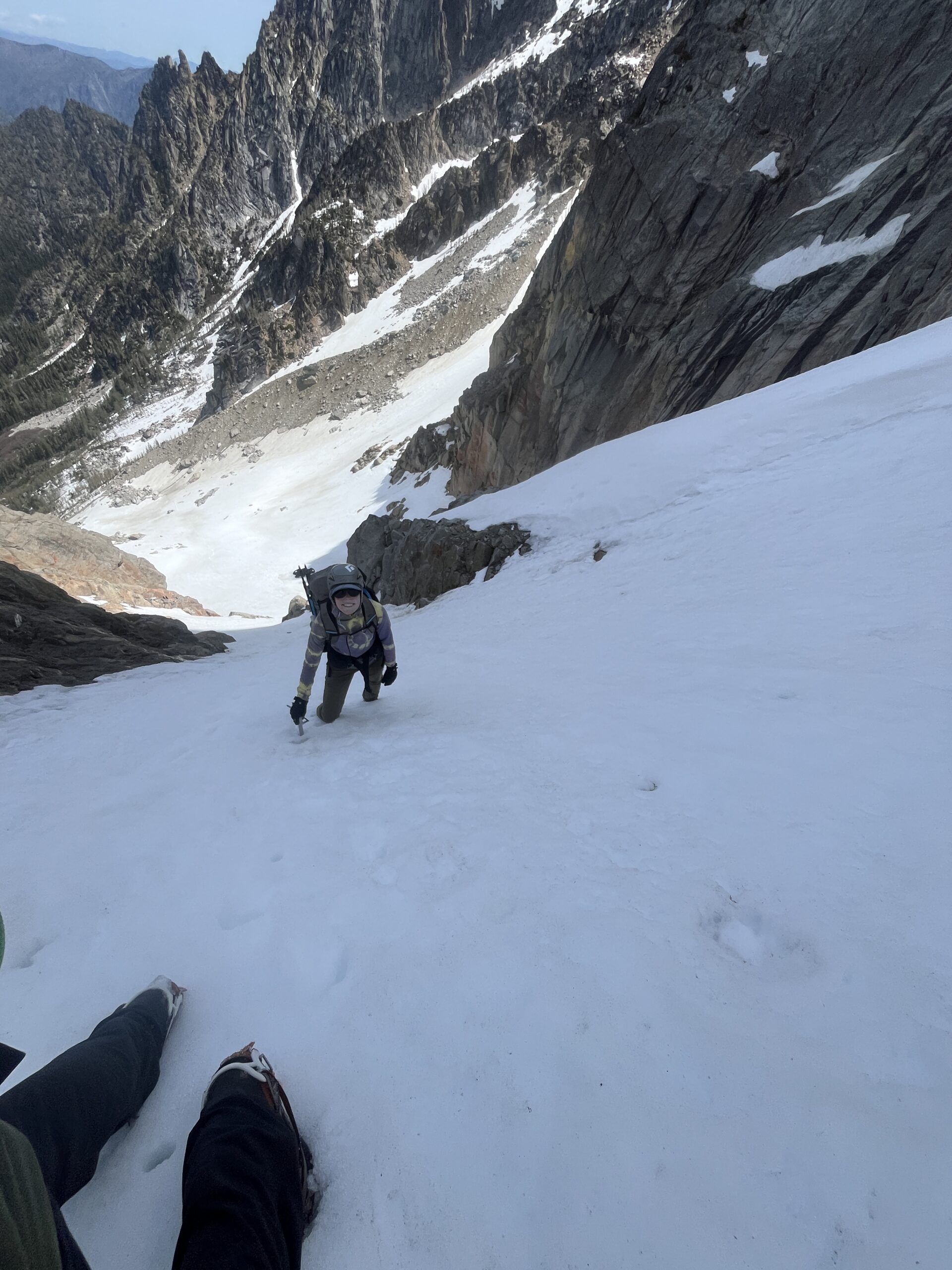
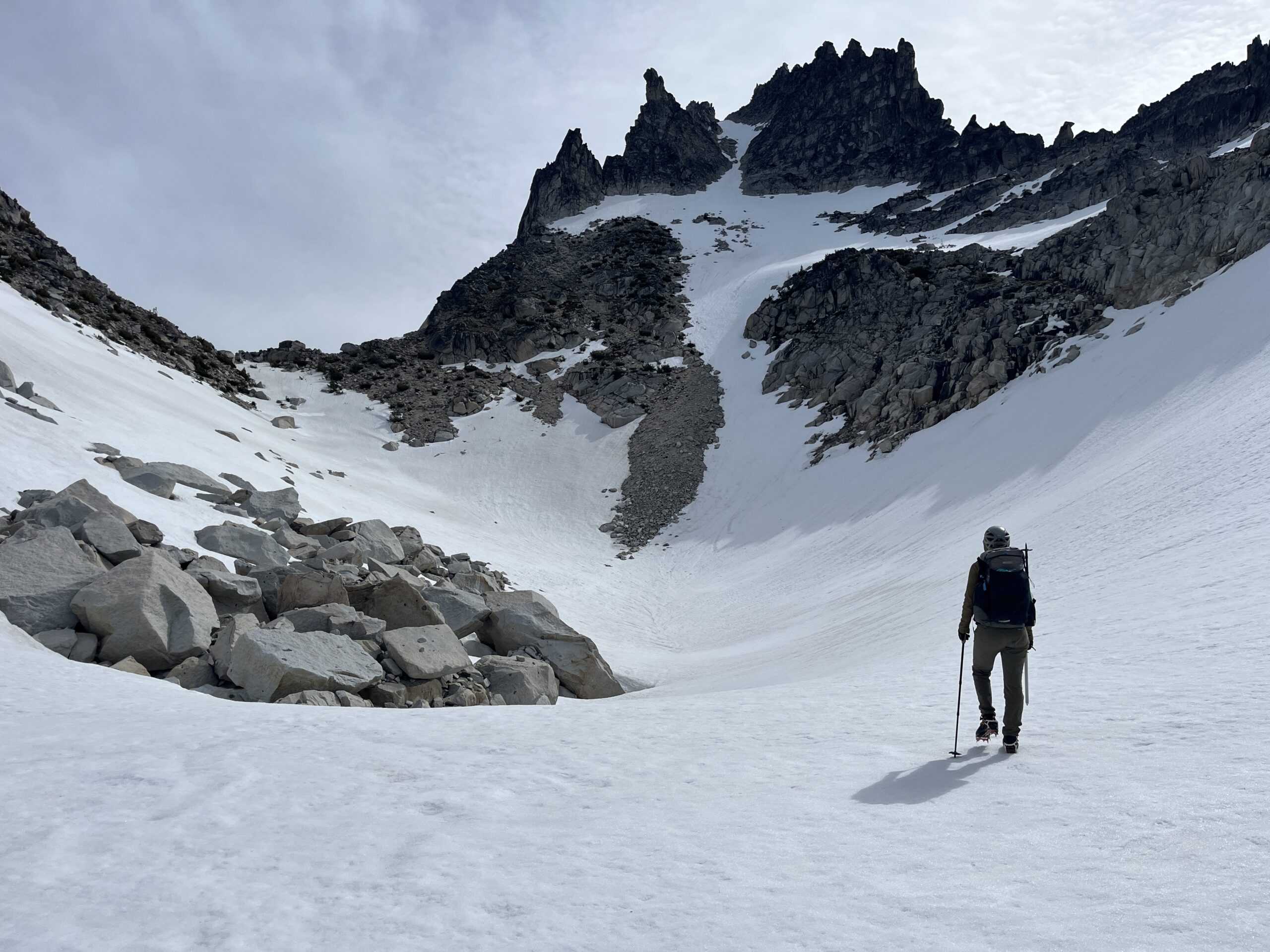
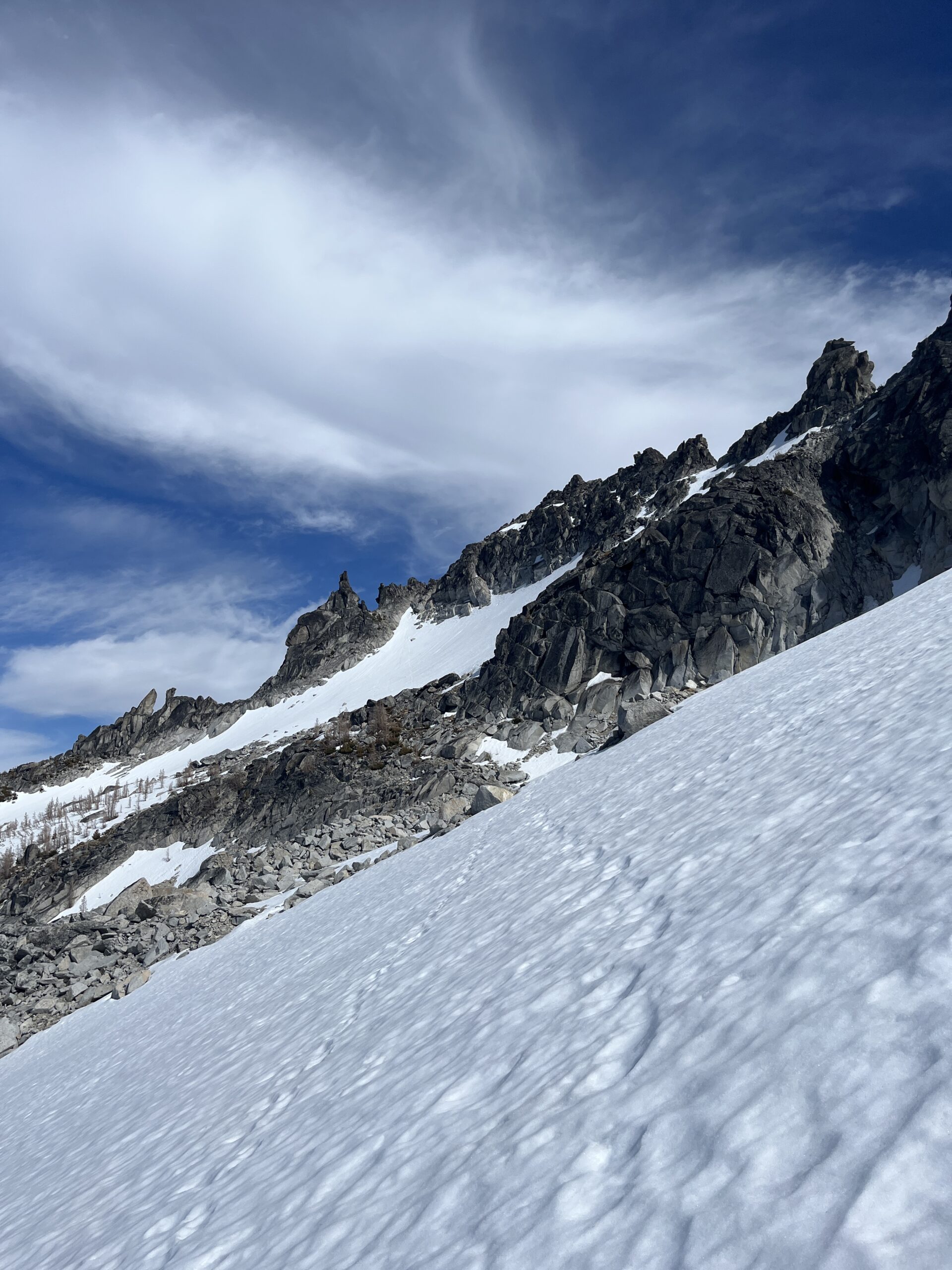
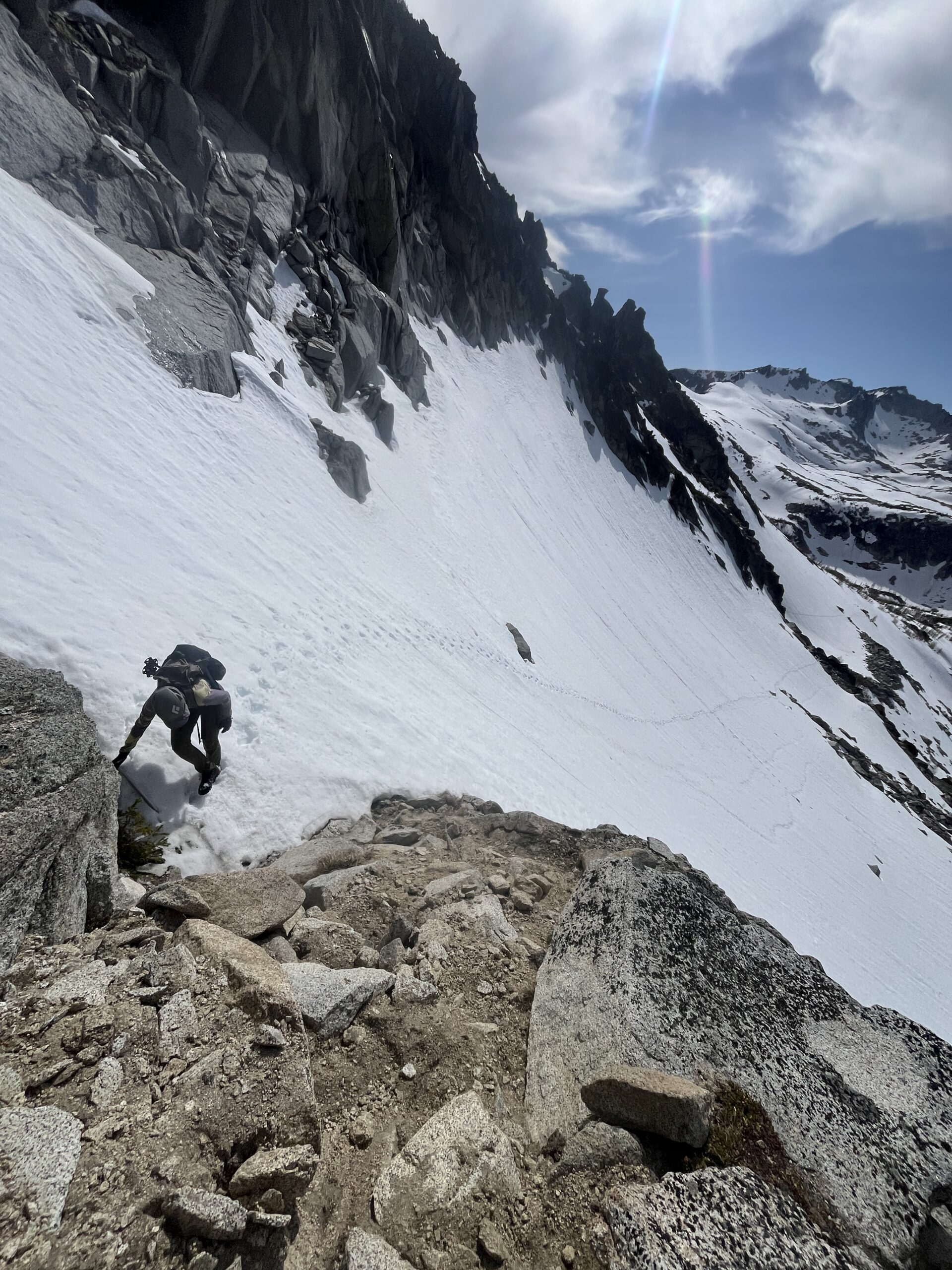
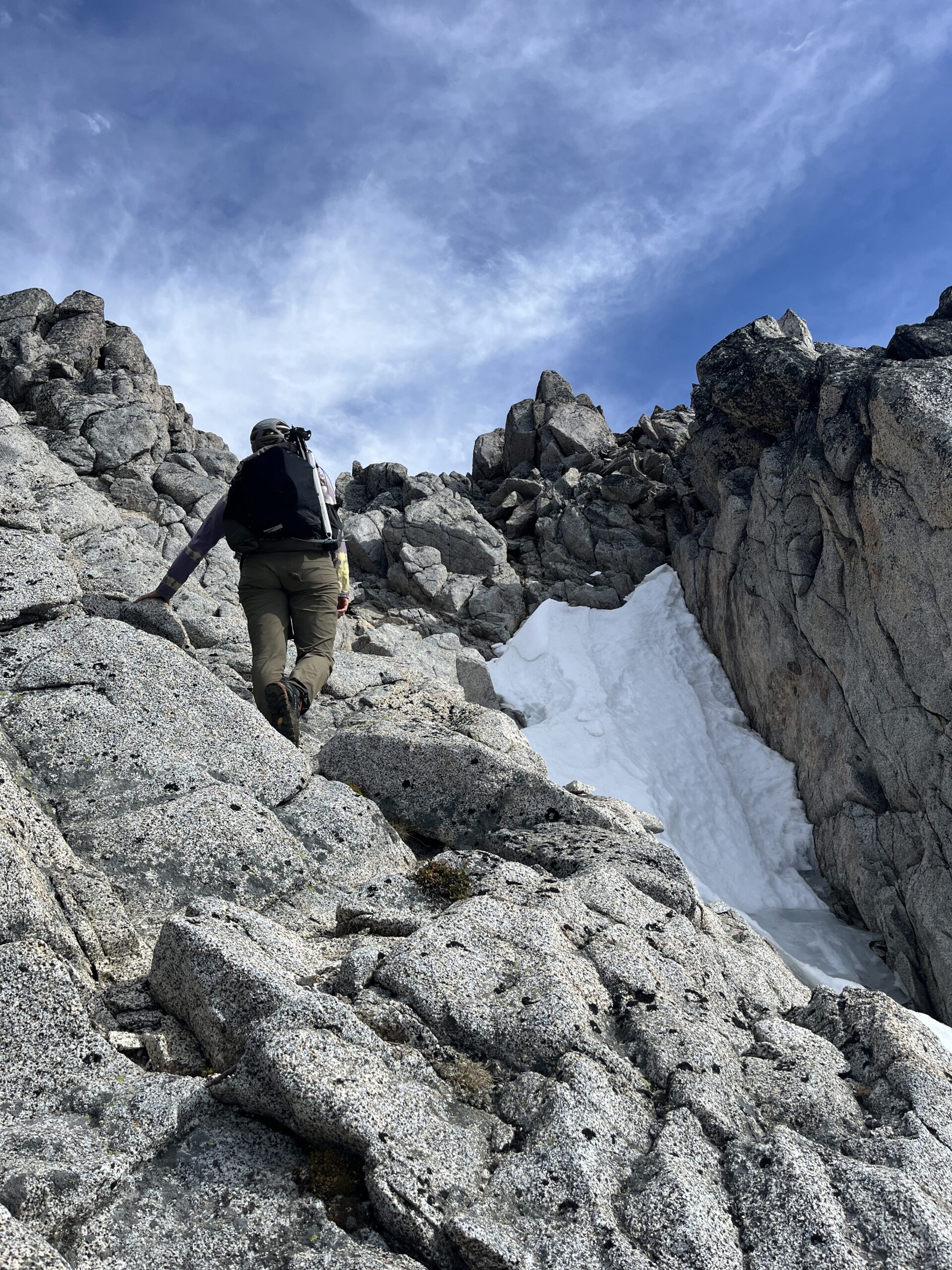
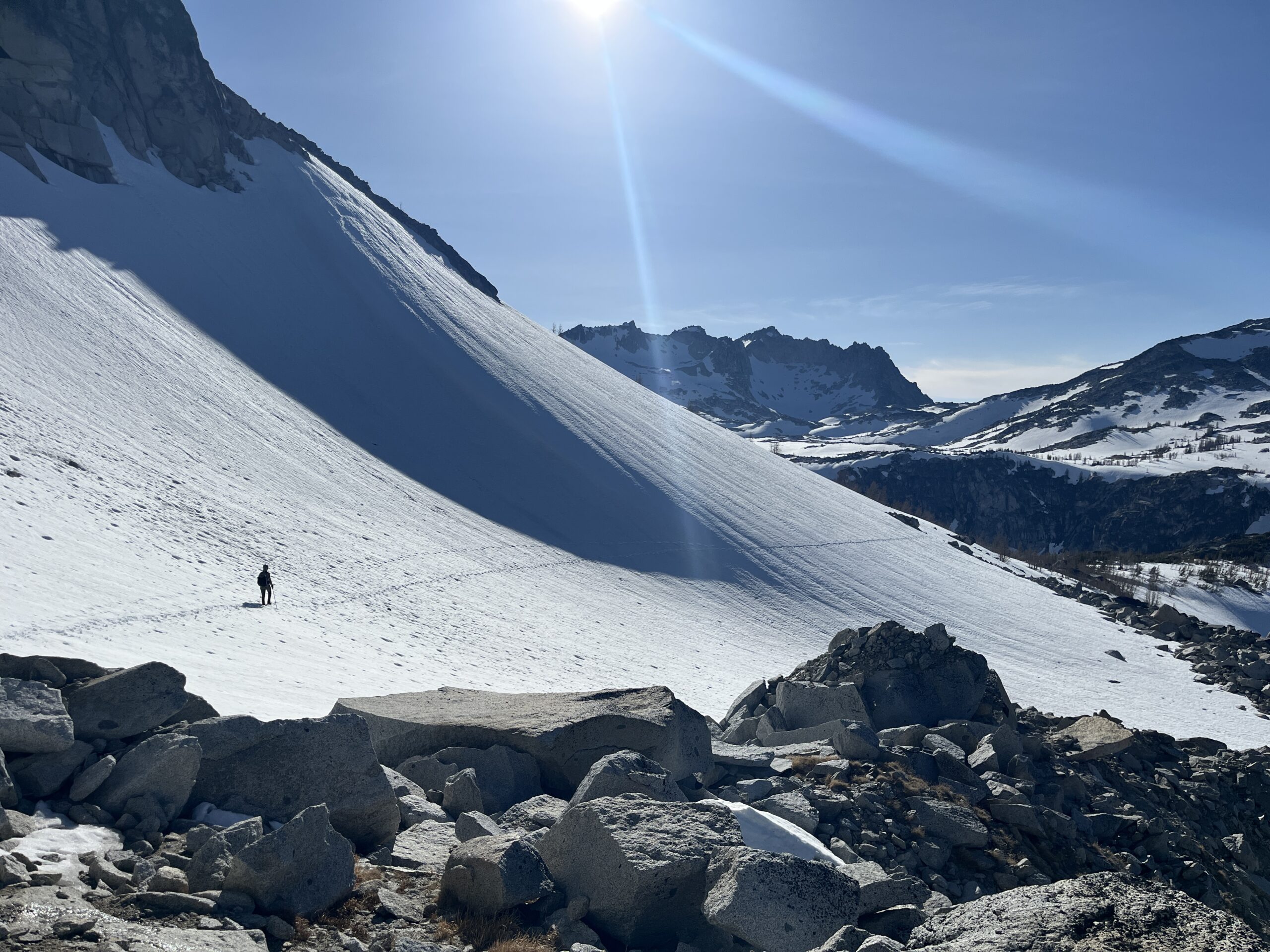
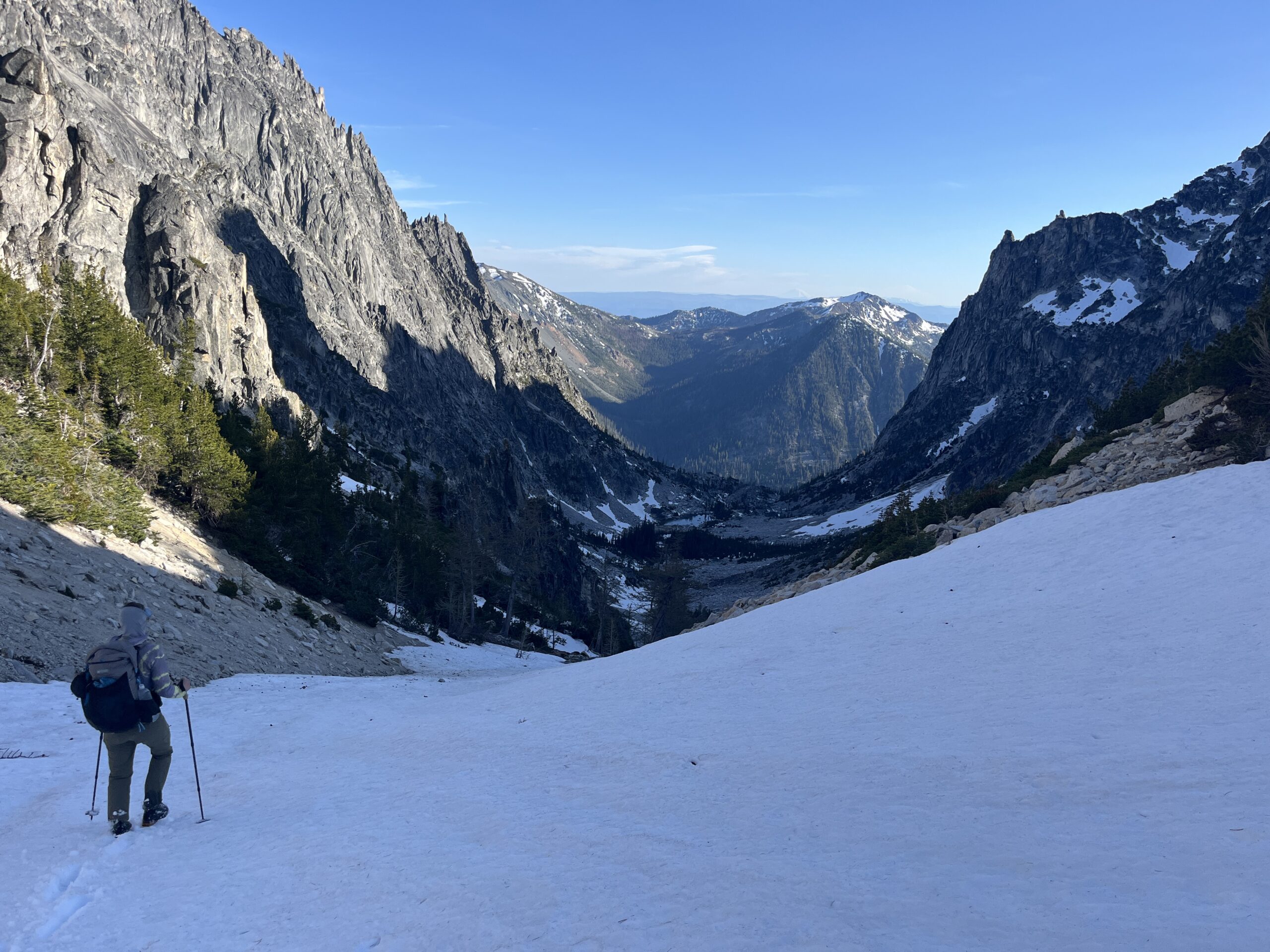
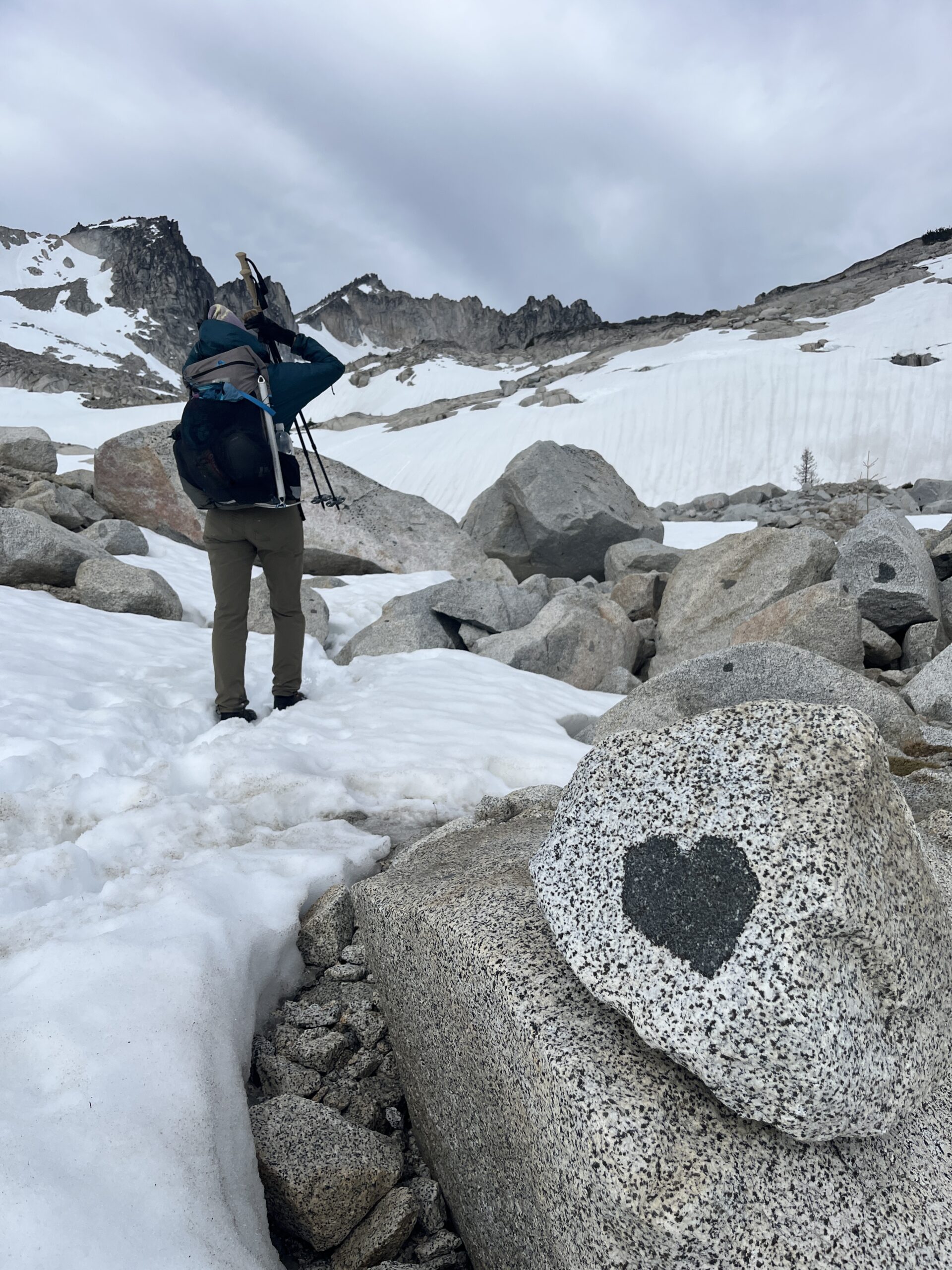
After packing up and eating a quick snack, we headed toward Pandora’s Box around 10 a.m. Despite the later start, the snow remained fairly firm. We roped up and swapped leads up the chute, placing rock gear along the walls where opportunities existed. The angle eased significantly near the top.
From the notch, we could see a bootpack down the steep snow toward Dragontail. Since we had both a rope and the rappel setup we found the previous evening, we chose to rappel the steep section rather than downclimb it with full packs. We then traversed to the pass on the standard Dragontail route, dropped our packs, and made the quick scramble to the summit, arriving around noon.
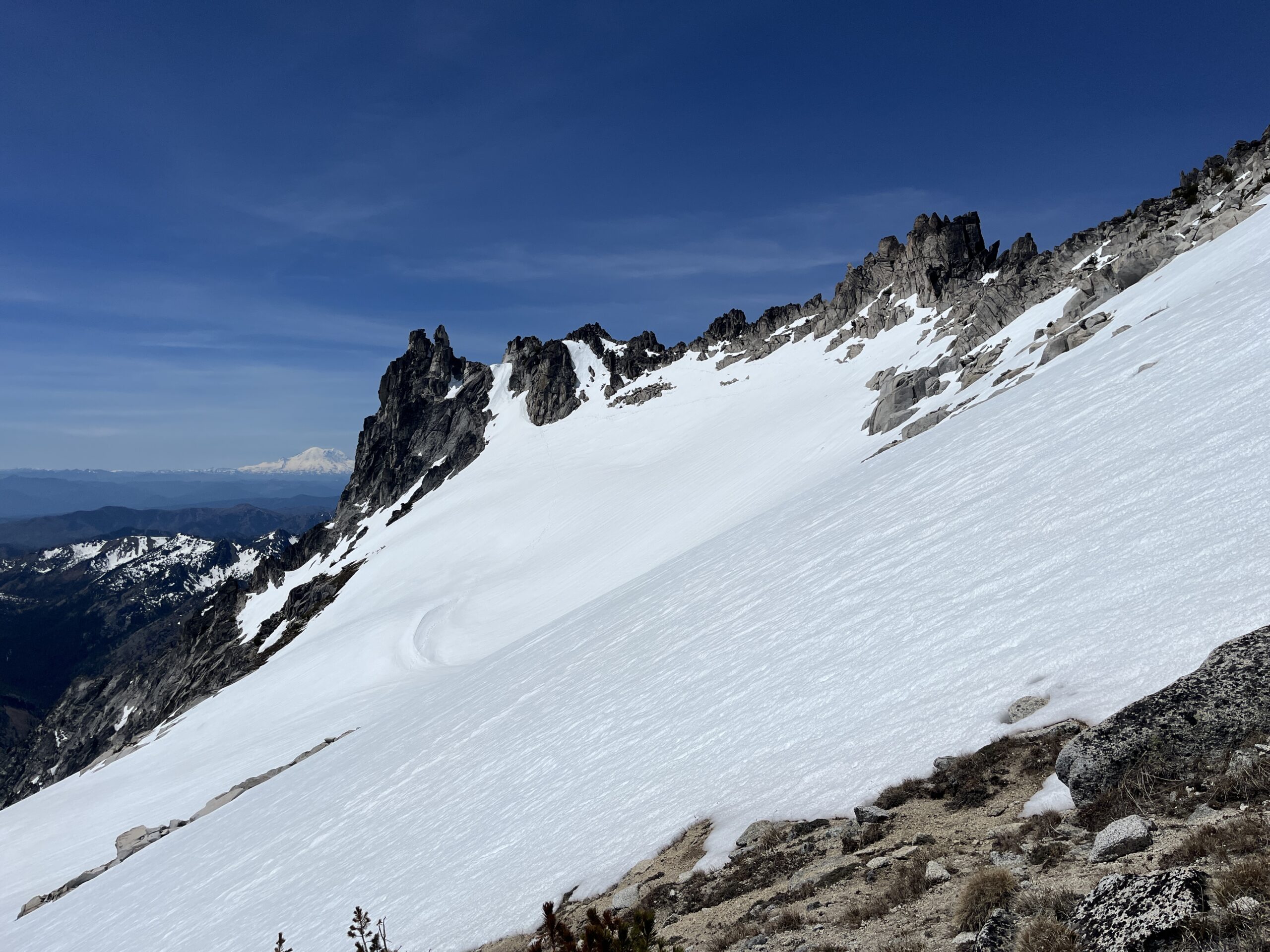
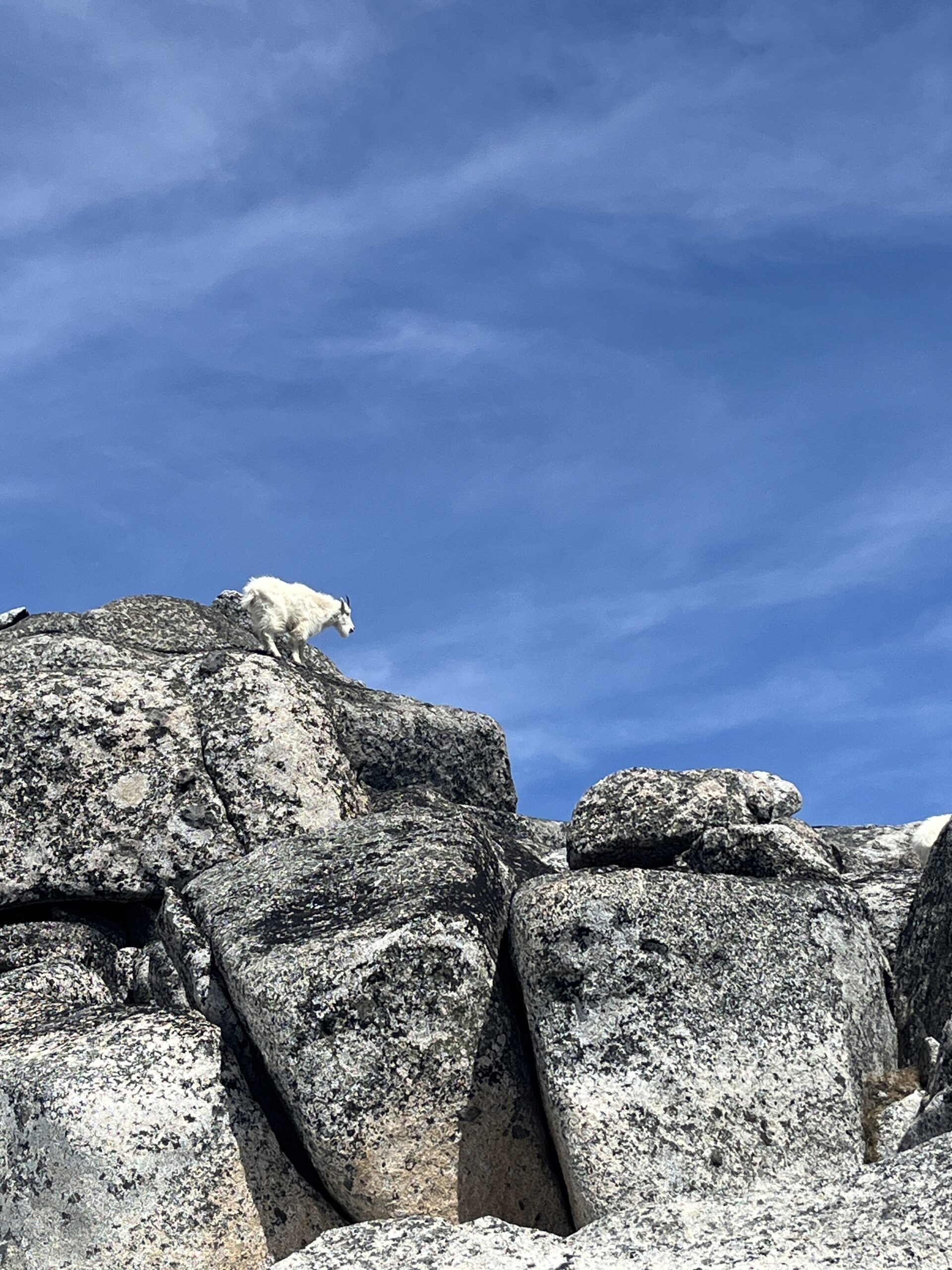
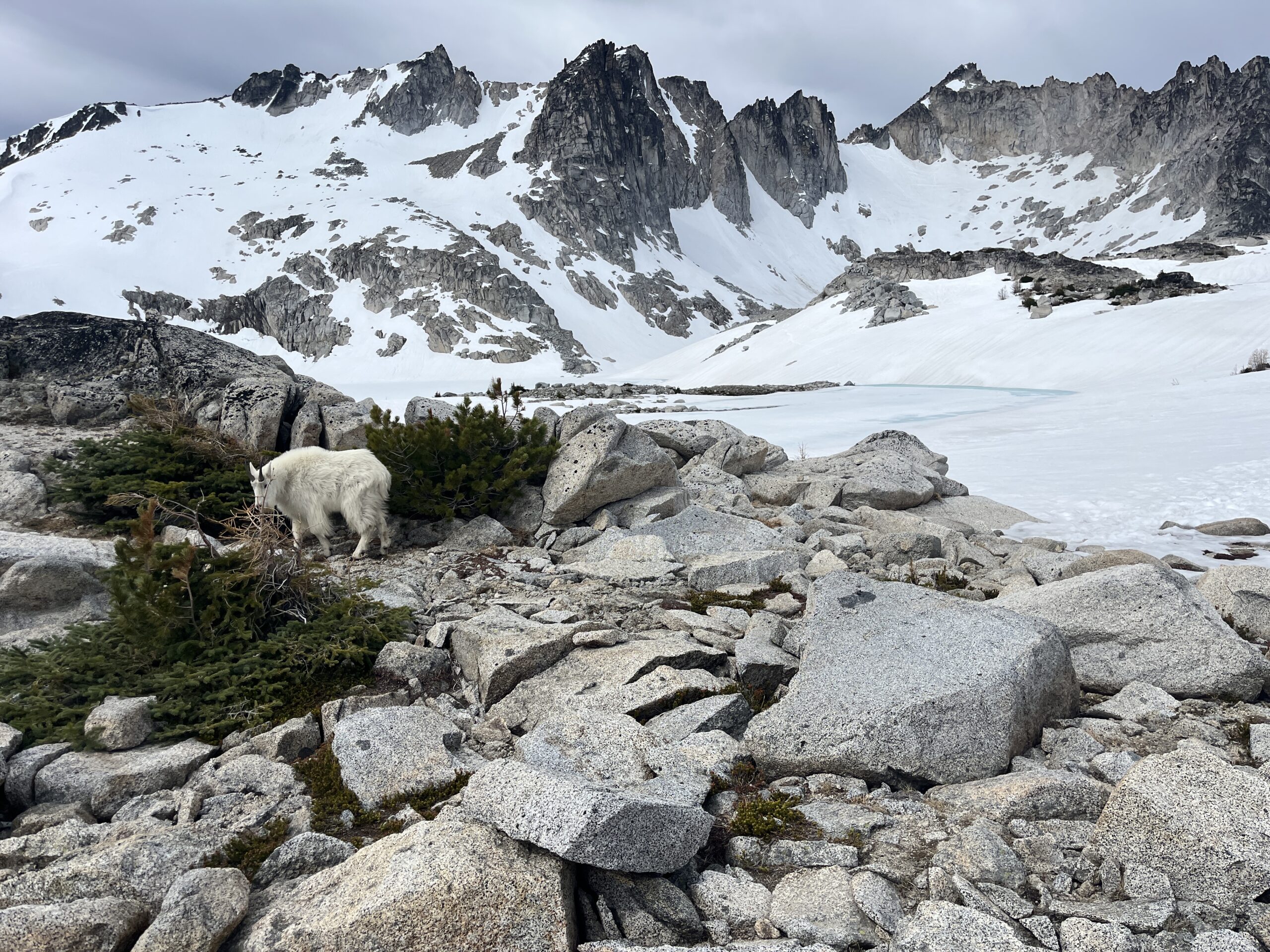
Several other climbers were enjoying the day, and we chatted briefly before returning to our packs. After a snack, we continued toward Little Annapurna around 1 p.m. The ridge traverse was enjoyable, and lingering snow made both the descents and ascents surprisingly efficient. Along the way, we spotted several mountain goats before reaching Little Annapurna roughly 45 minutes later. Its broad sandy summit offered excellent views in every direction.
From there, easy snow travel led directly down to Crystal Lake, where we took a well-earned break around 3 p.m. to eat and refill water.
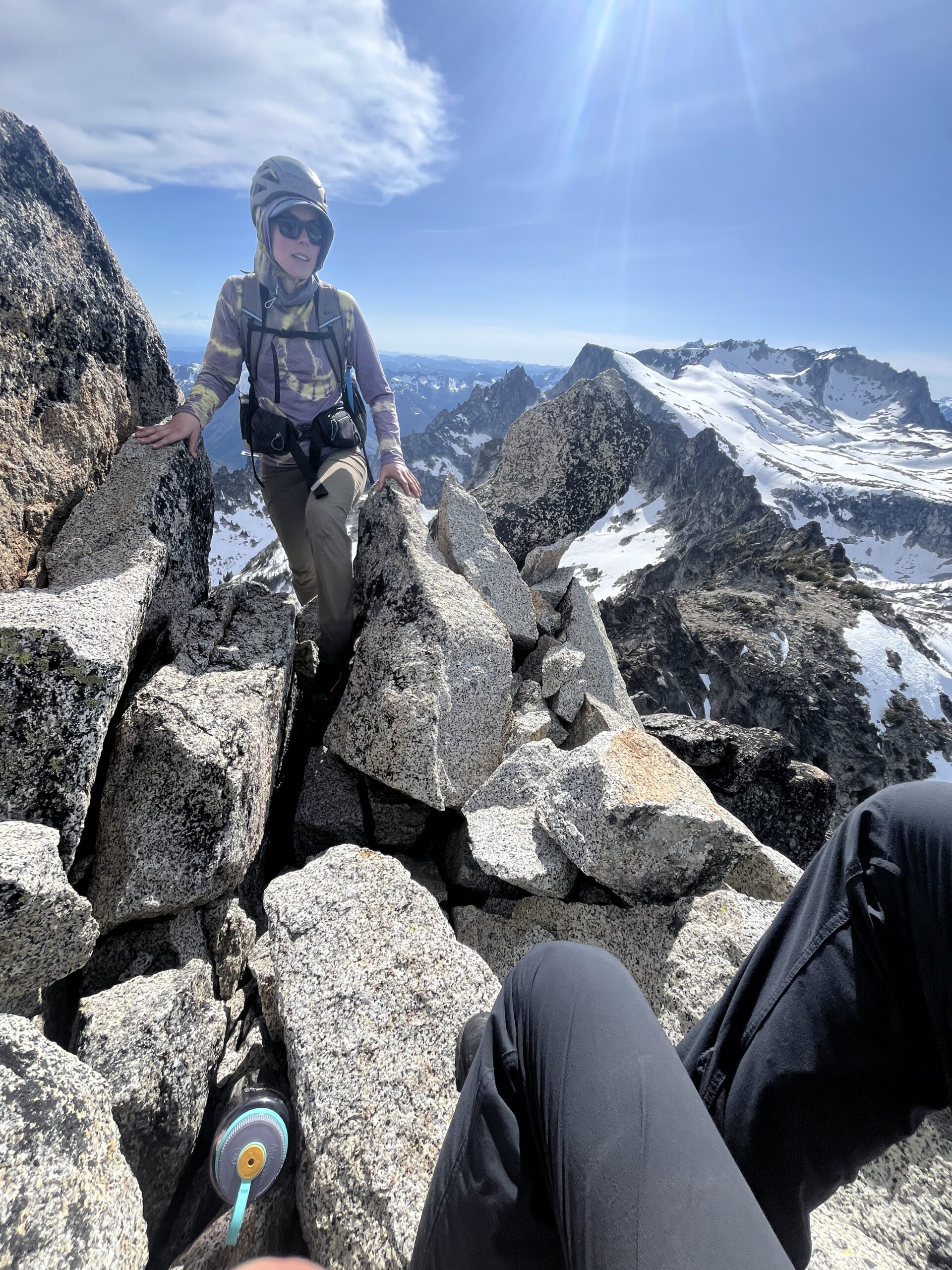
We left our overnight gear at the lake and headed for McClellan Peak around 3:45 p.m. Snow travel was straightforward to the basin northwest of the summit near The Prong, followed by enjoyable Class 3 scrambling. To reach the summit, we wrapped around the south side before finding the easiest line to the top.
We reached the summit around 5:15 p.m. and enjoyed more outstanding views before reversing the route to Crystal Lake. After retrieving our overnight gear and leaving behind our heavier climbing equipment, we descended into Nightmare Gorge.
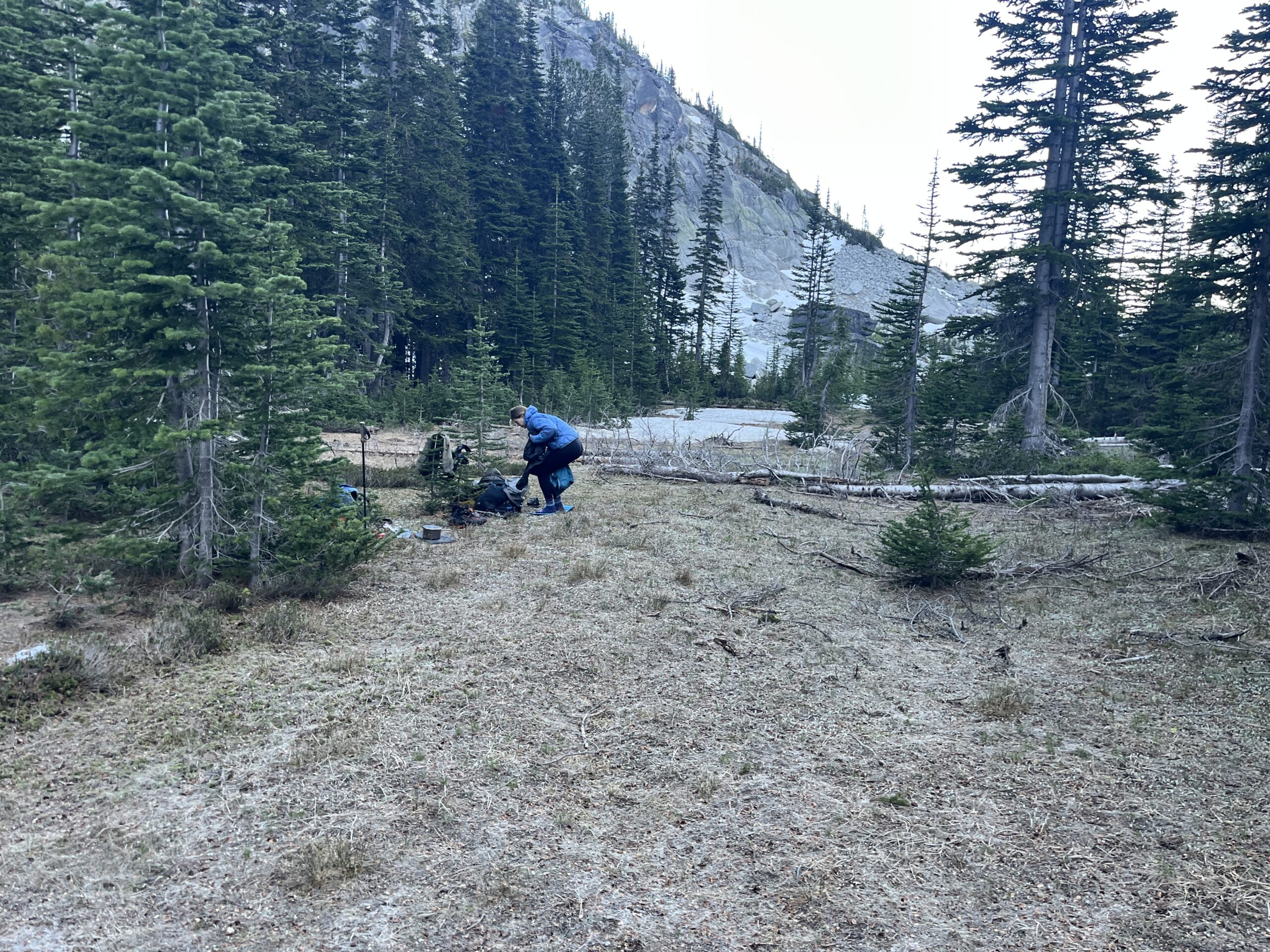
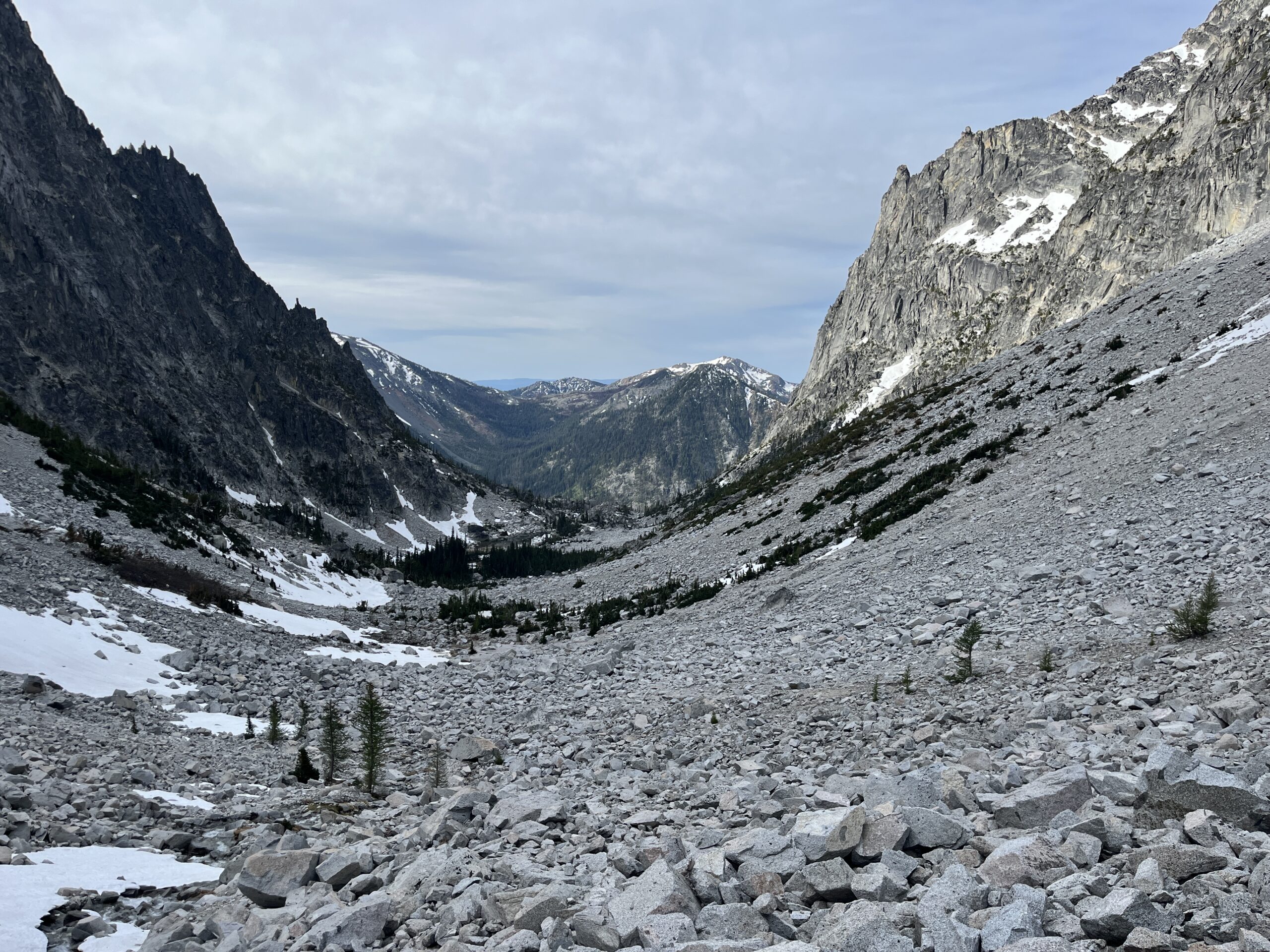
The descent involved some tedious talus hopping, but the scenery more than made up for it. We reached a sheltered basin around 7:30 p.m. and found an excellent flat campsite tucked among the trees. After the previous night’s wind, the added protection was welcome.
Day 3 – Hike out from Nightmare Gorge and over Aasgard Pass
Although the wind returned overnight, the trees provided excellent shelter and we slept much better. We still woke occasionally to gusts of wind howling above camp, and were grateful to be tucked away in the basin.
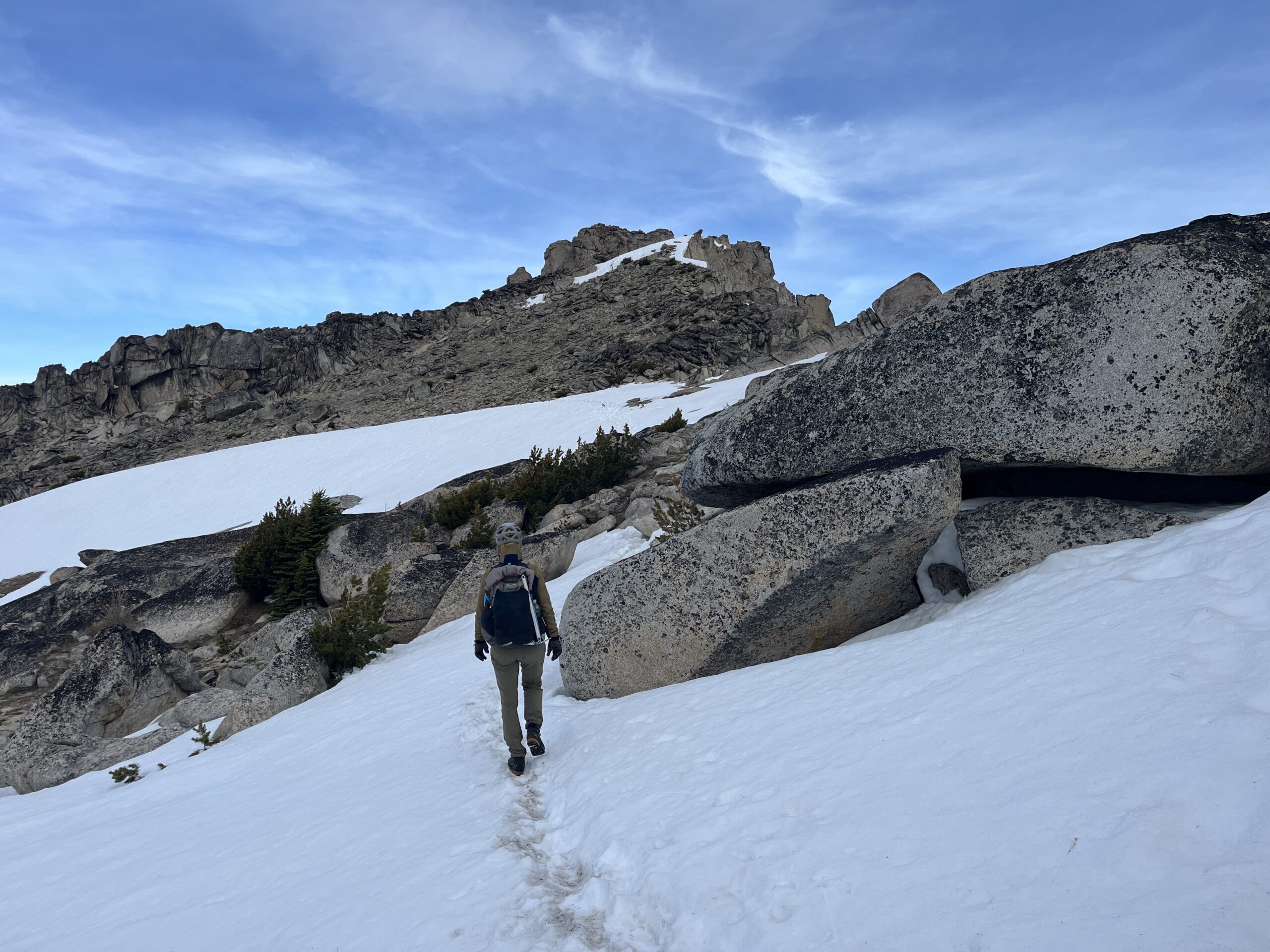
We packed up and left around 7:30 a.m., scrambling back to Enchantment Pass and retrieving the gear we had left at Crystal Lake. From there, we passed Perfection Lake and joined the main trail through the Core Zone.
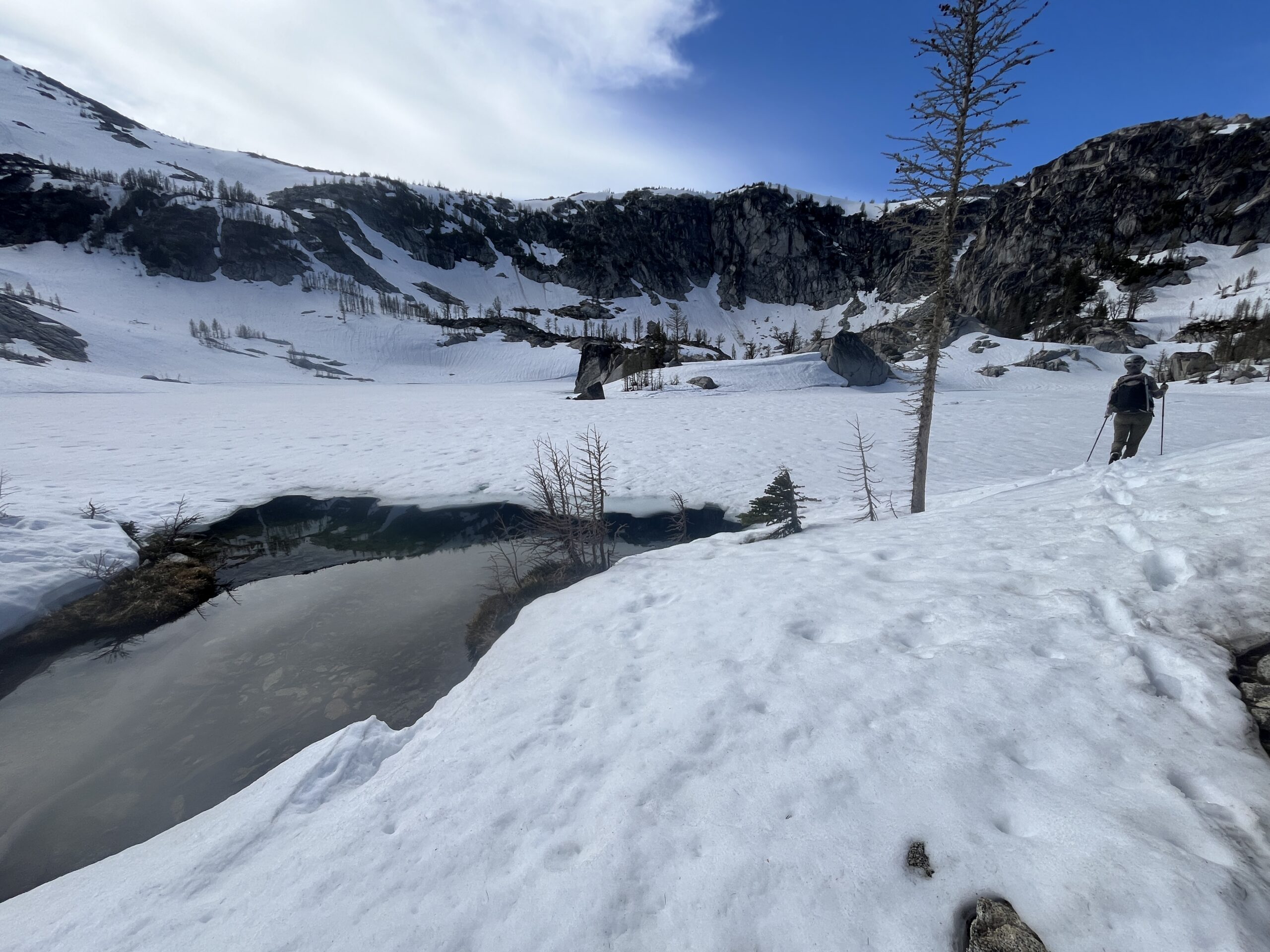
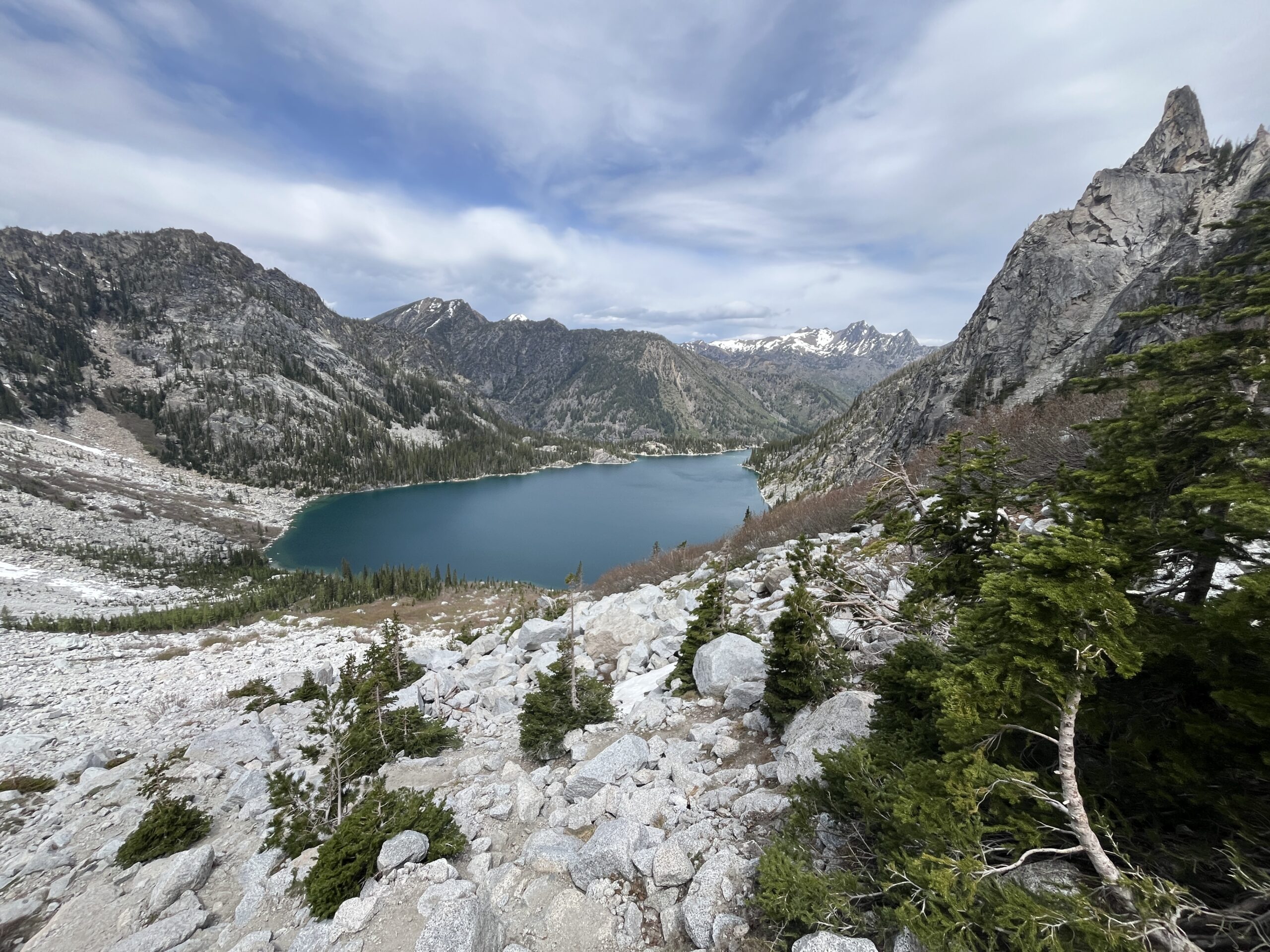
The trail remained largely snow-covered through the upper basin. We descended Aasgard Pass, passed Colchuck Lake, and followed the increasingly busy trail back to the Stuart Lake Trailhead.
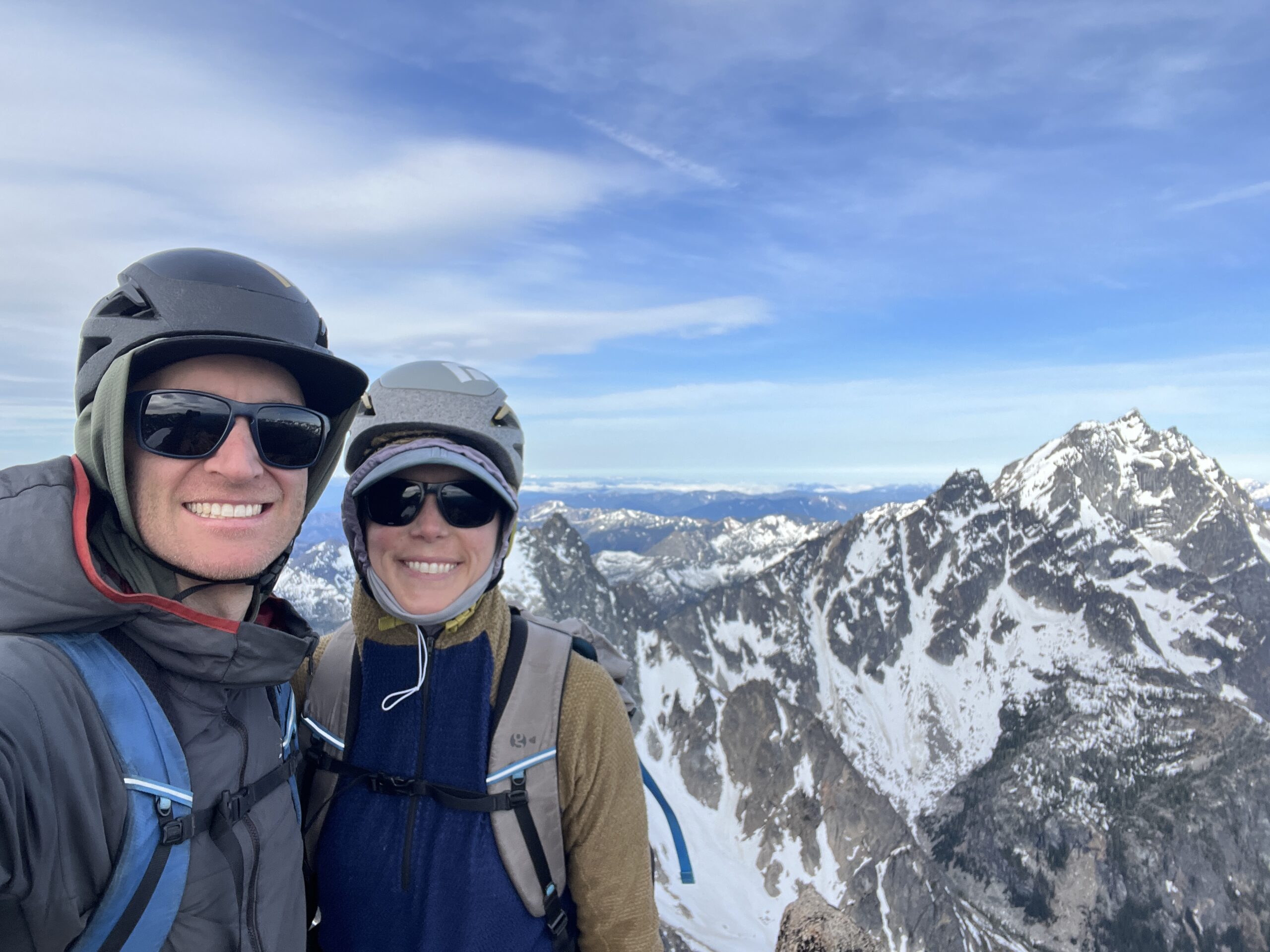
The trip ended with ice cream in Leavenworth at Whistlepunk. A fantastic start to the climbing season, an unforgettable loop through the Enchantments.
Gear Notes
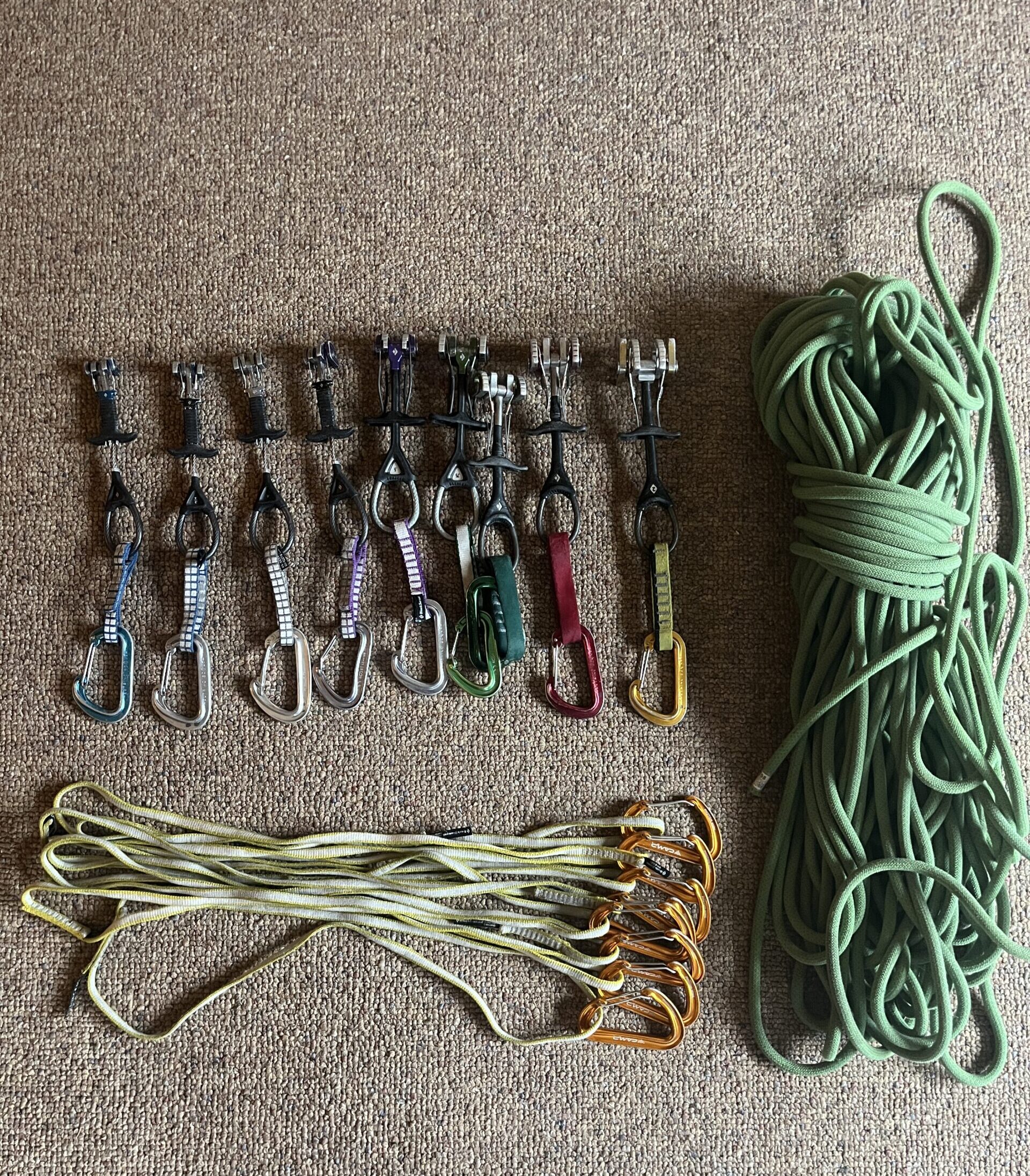
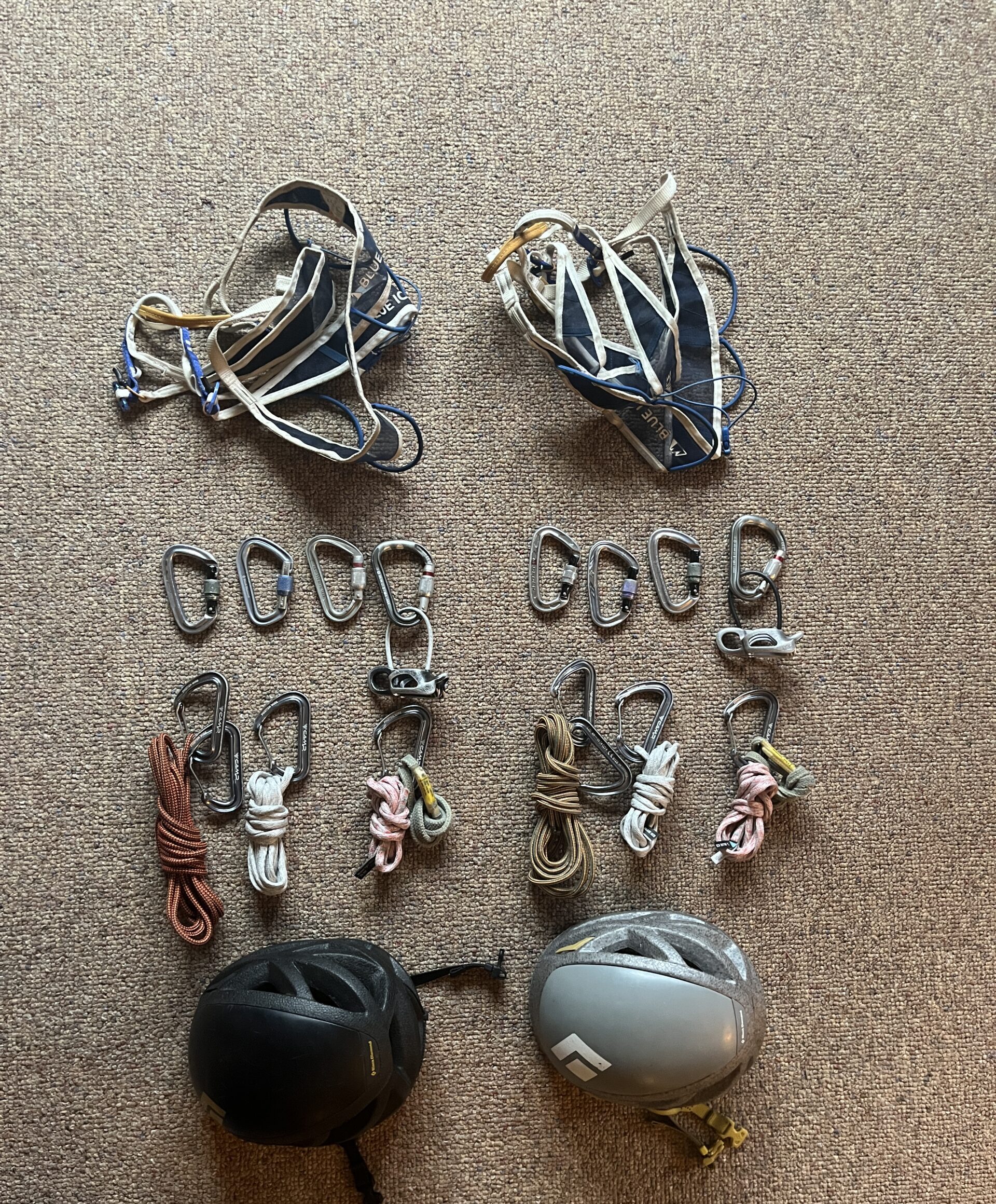
We carried our entire overnight backpacking setup up except for Colchuck Peak on the morning of Day 2 and when we stashed our gear to do McClellan Peak from Crystal Lake. We carried a single rack plus a few other cams and brought some alpine slings with only one carabiner on them each to save a bit of metal. We did bring an old cordalette and two small old non-lockers that we left at the second rap station off of Argonaut.