Trip Report
Sherpa Peak – West Ridge
Trip Overview
Day 1 – Hike in and camp at 6400'
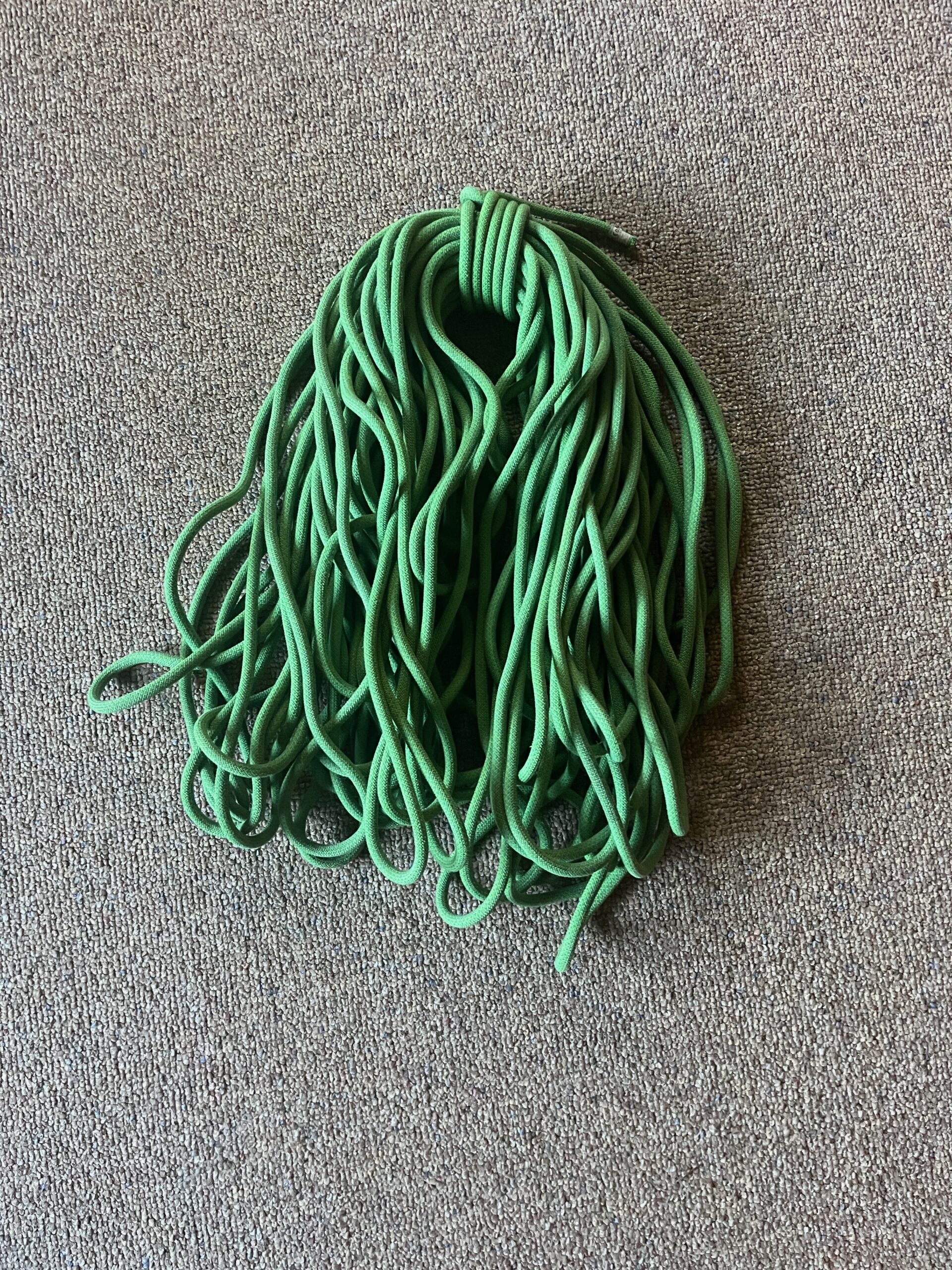
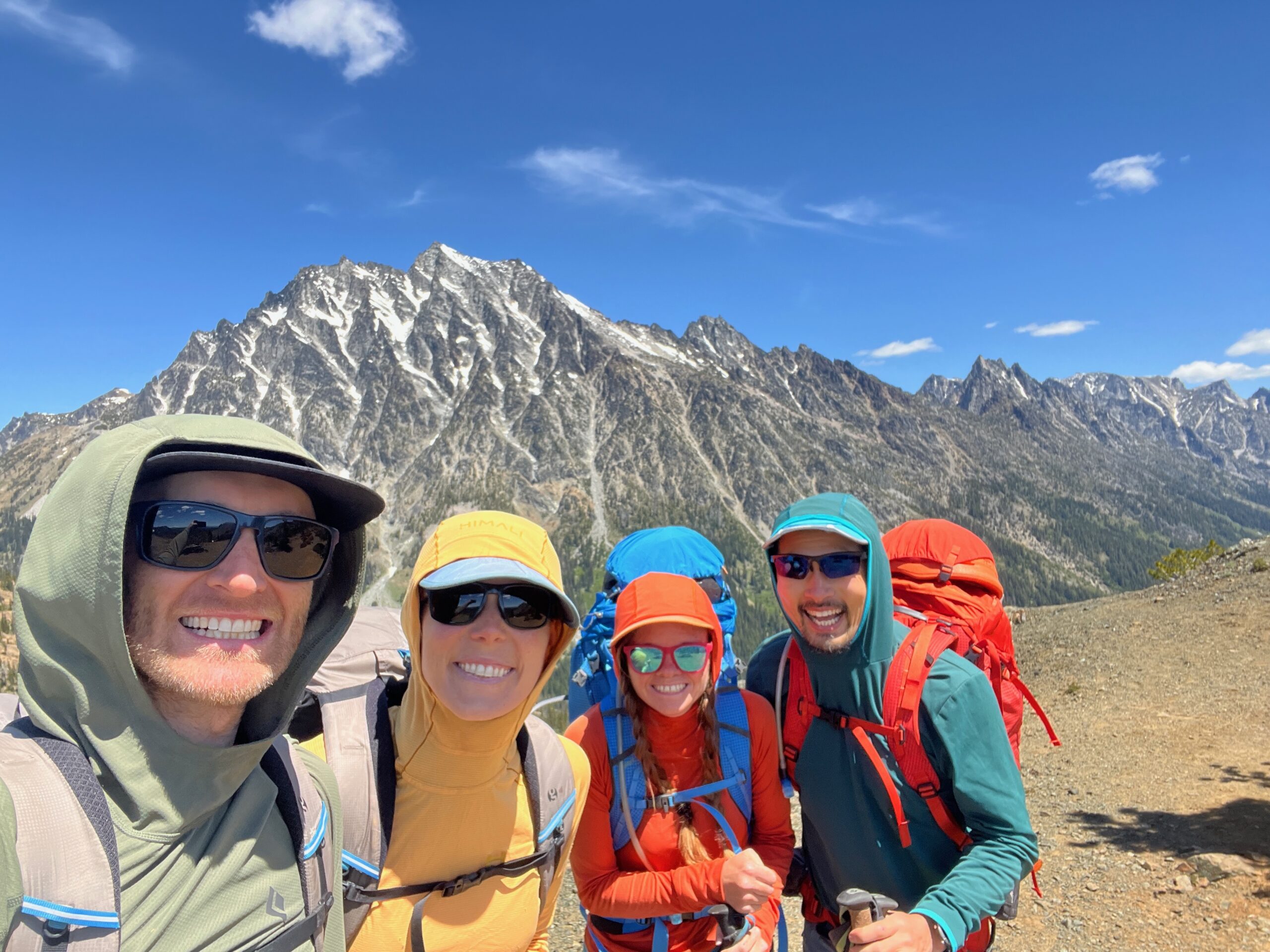
We left our house around 7 a.m. and drove the four hours to Esmerelda TH where we met our friends around 11 a.m. It was a busy day with lots of cars. At the trailhead we had a quick discussion about gear, and decided to bring a single rack and one 60 meter rope for the four of us. We planned to either belay each person up in the middle of the rope or just set a fixed line for folks to get on while we made the more exposed or difficult moves.
We left the trailhead and hiked on great trail up to Longs Pass – passing a few other hikers on the way. We took a short break at Longs Pass and ate a snack after about 1.5 hours of hiking. It was great to be back in the Enchantments again, this time from a different angle, after our trip on Argonaut’s Northwest Arete and the other classic Core Enchantment Zone peaks a few weeks before.
We hit a little bit of snow on the north side of the pass but nothing major and found the trail down to Ingalls Creek. From there we turned east and headed down the valley, passing the Cascadian Couloir turnoff and making sure to stay right at and not go up that trail. We passed a bunch of tents as we walked down the trail.
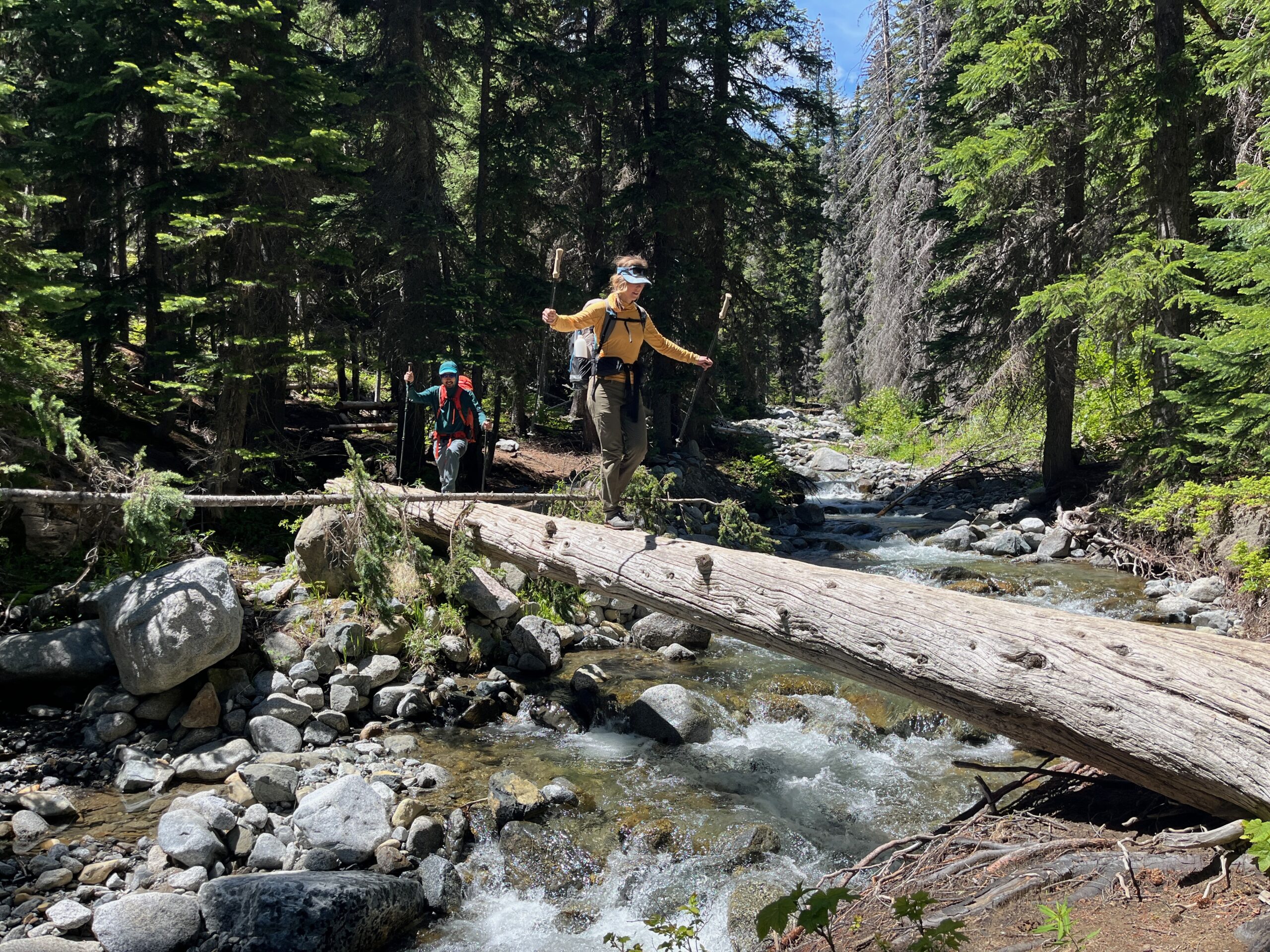
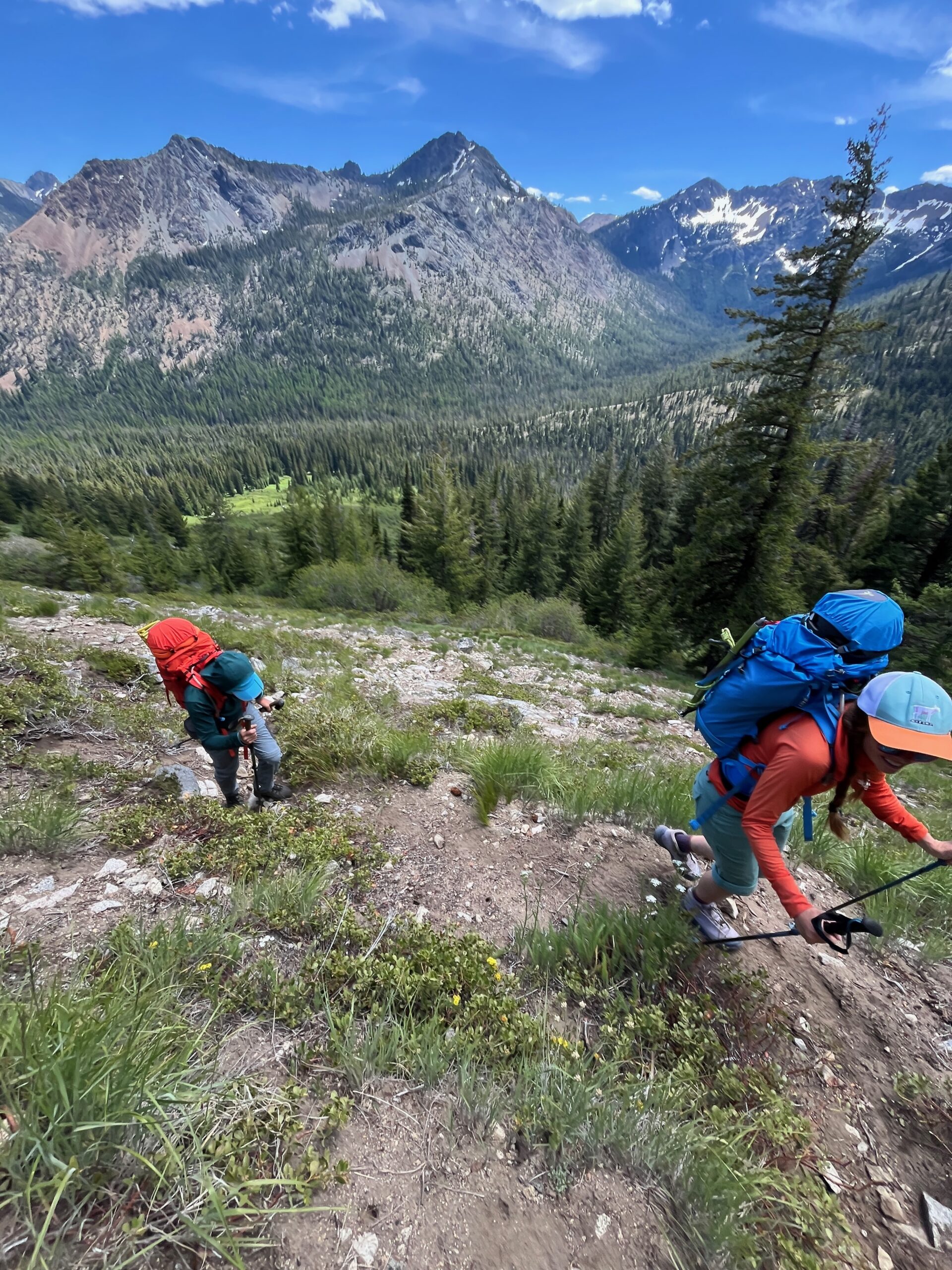
At a spot with a little campsite on the north side of the trail we found the approach trail and turned north making our way up the sometimes faint and sometimes obvious trail. Eventually the trail became pretty easy to follow to the crossing of the drainage right below 6,000 feet. We ran into another group of 4 folks here who were planning on going up Sherpa the next day too!
Once we crossed the drainage we slogged up some sandy, rocky slopes and then dropped a few feet down off the other side of the ridge to the creek below.
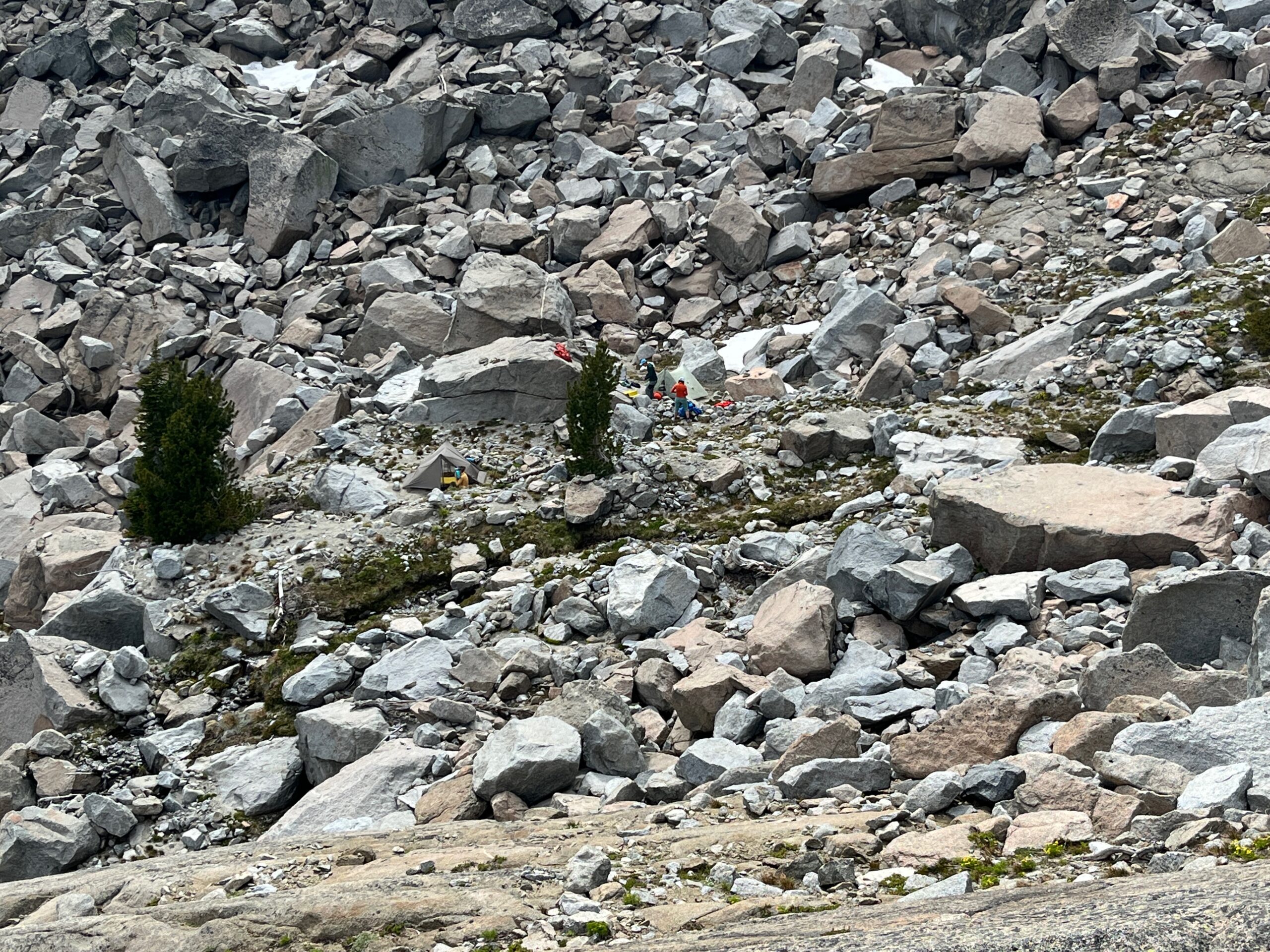
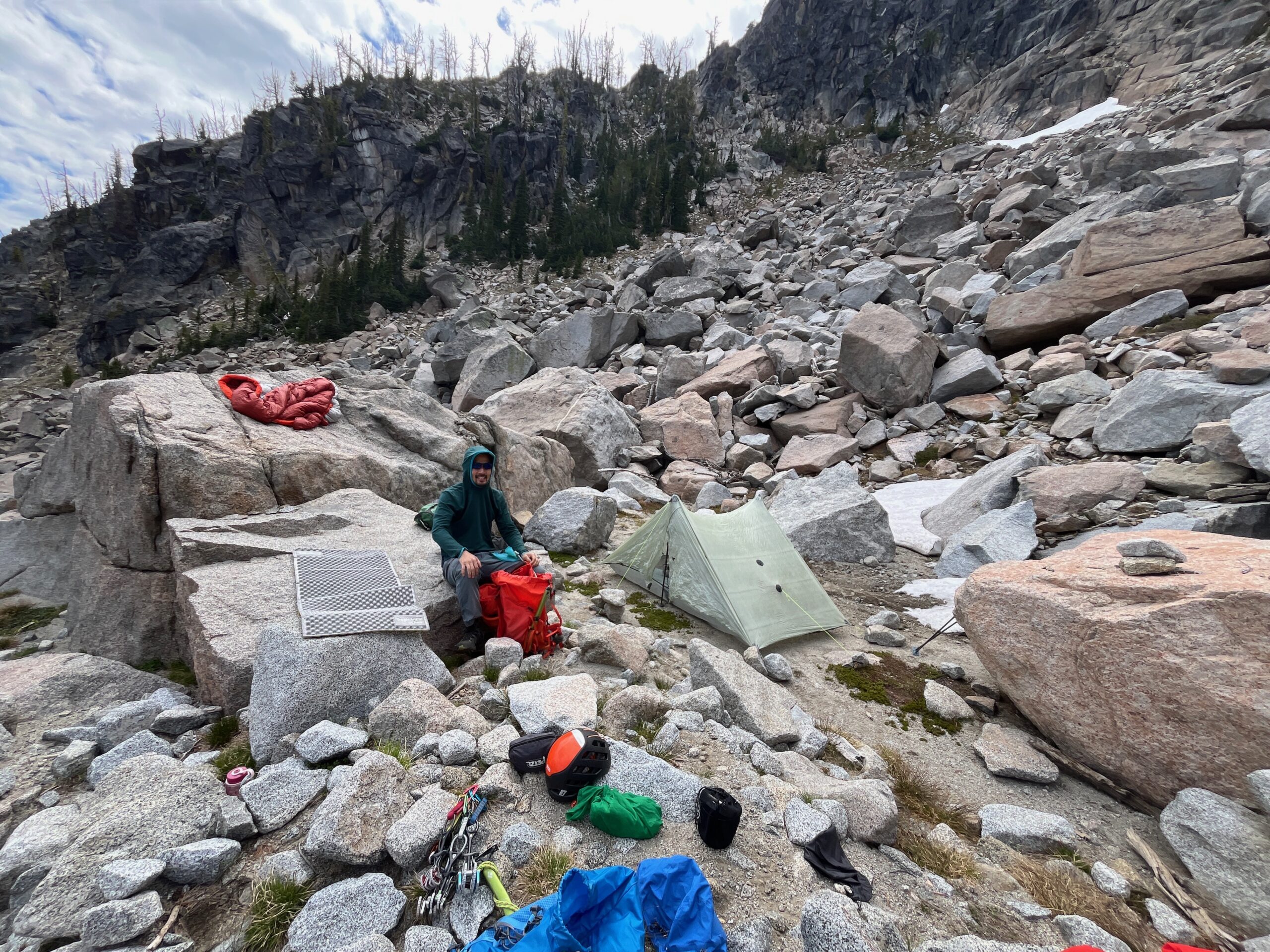
We followed this creek up to about 6,400 feet and found two tent spots to setup camp for the night. We hung out, made dinner and chatted about our plan for the morning summit attempt.
Day 2 – Climb Sherpa Peak and hike out
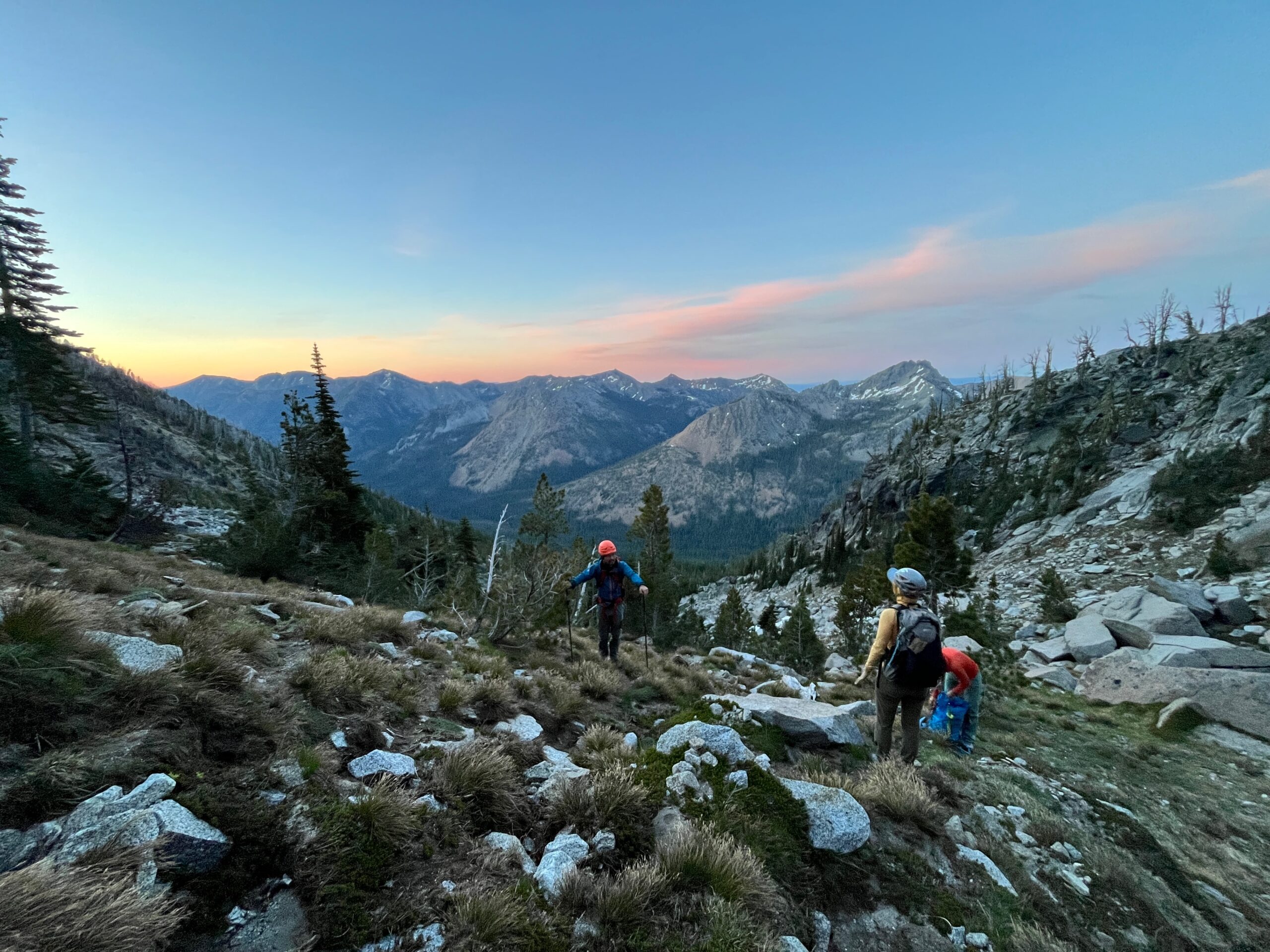
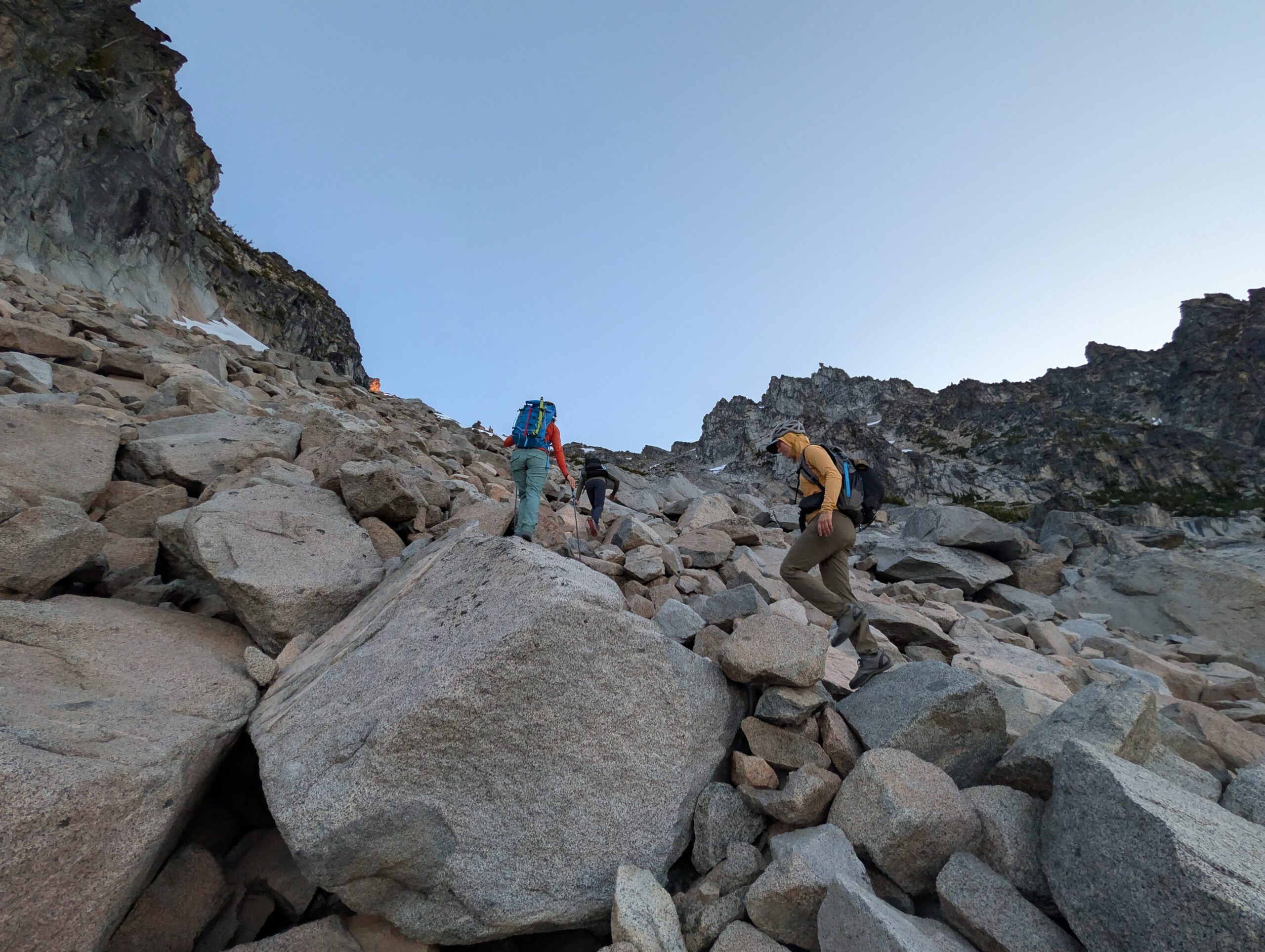
We woke up at 4 a.m. and started moving around 5 a.m. Right from camp we curved around the left side of the waterfall slabs that were above our campsite – finding a grassy ramp that led us to the upper basin. We stayed more on the west side of the basin on the sandy scree and talus until we got to snow. Once we hit the snow we passed by the other folks’ campsite who we’d seen the day before. They had found a huge granite slab to bivy on and it looked like a great spot.
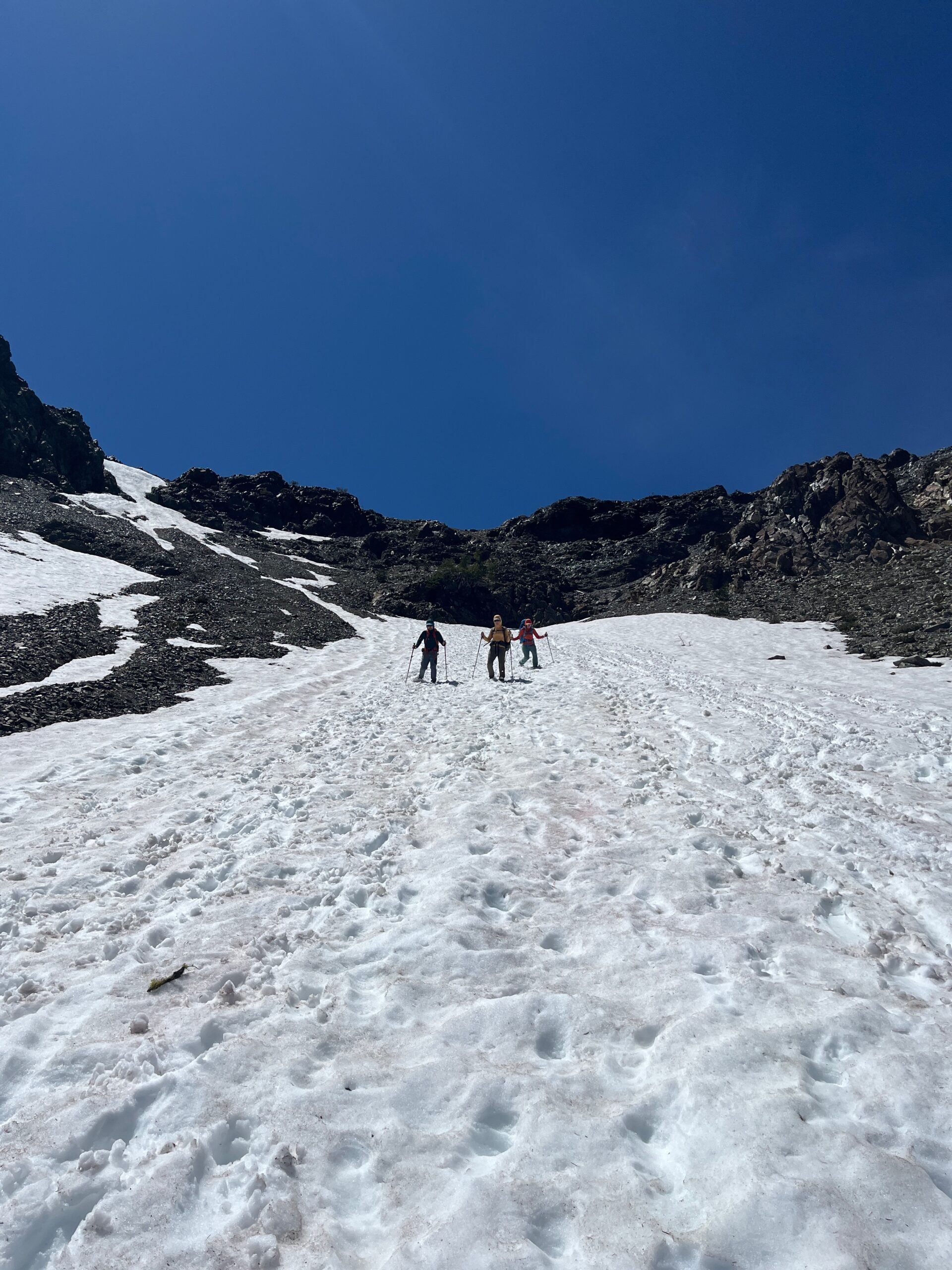
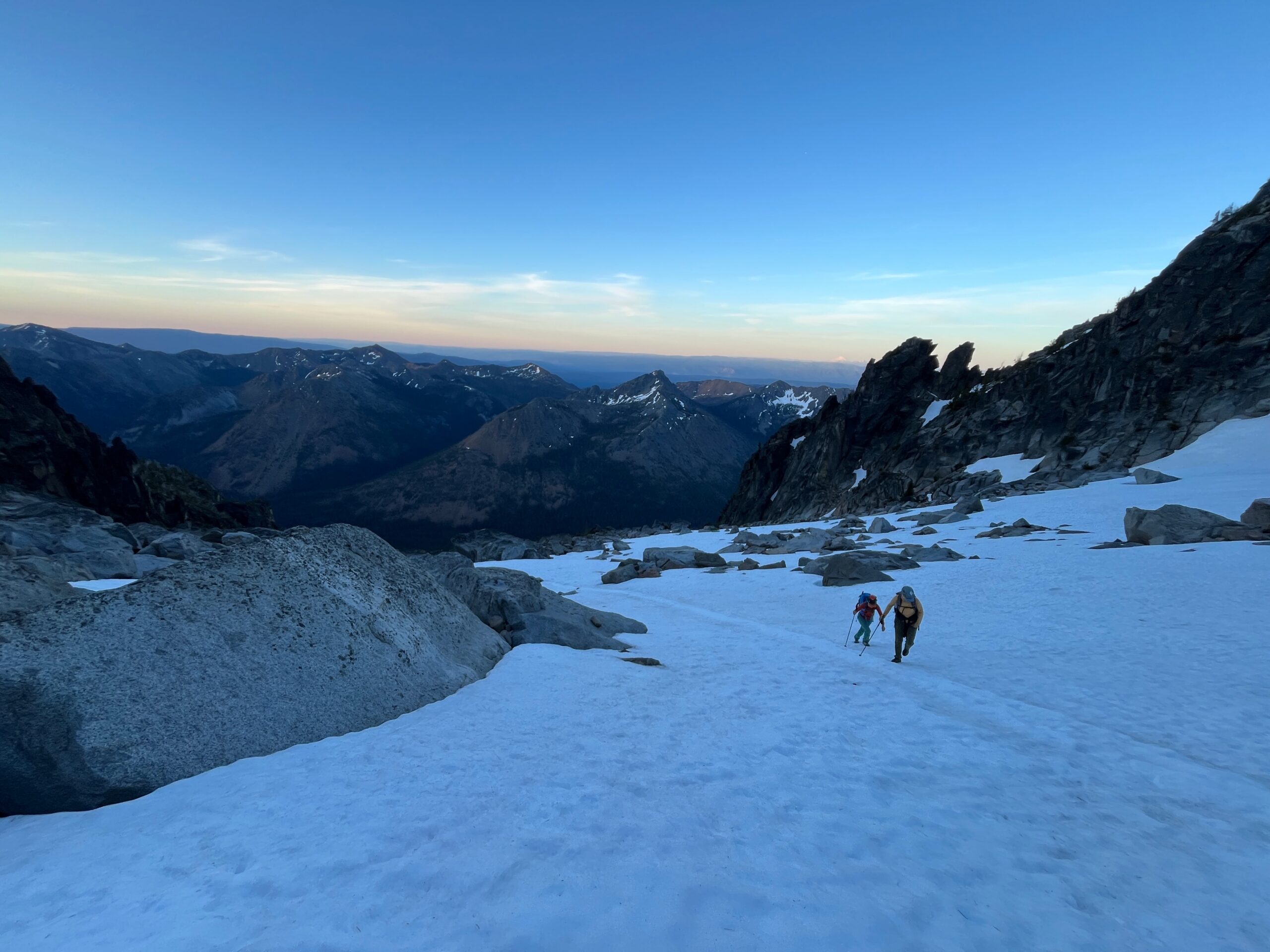
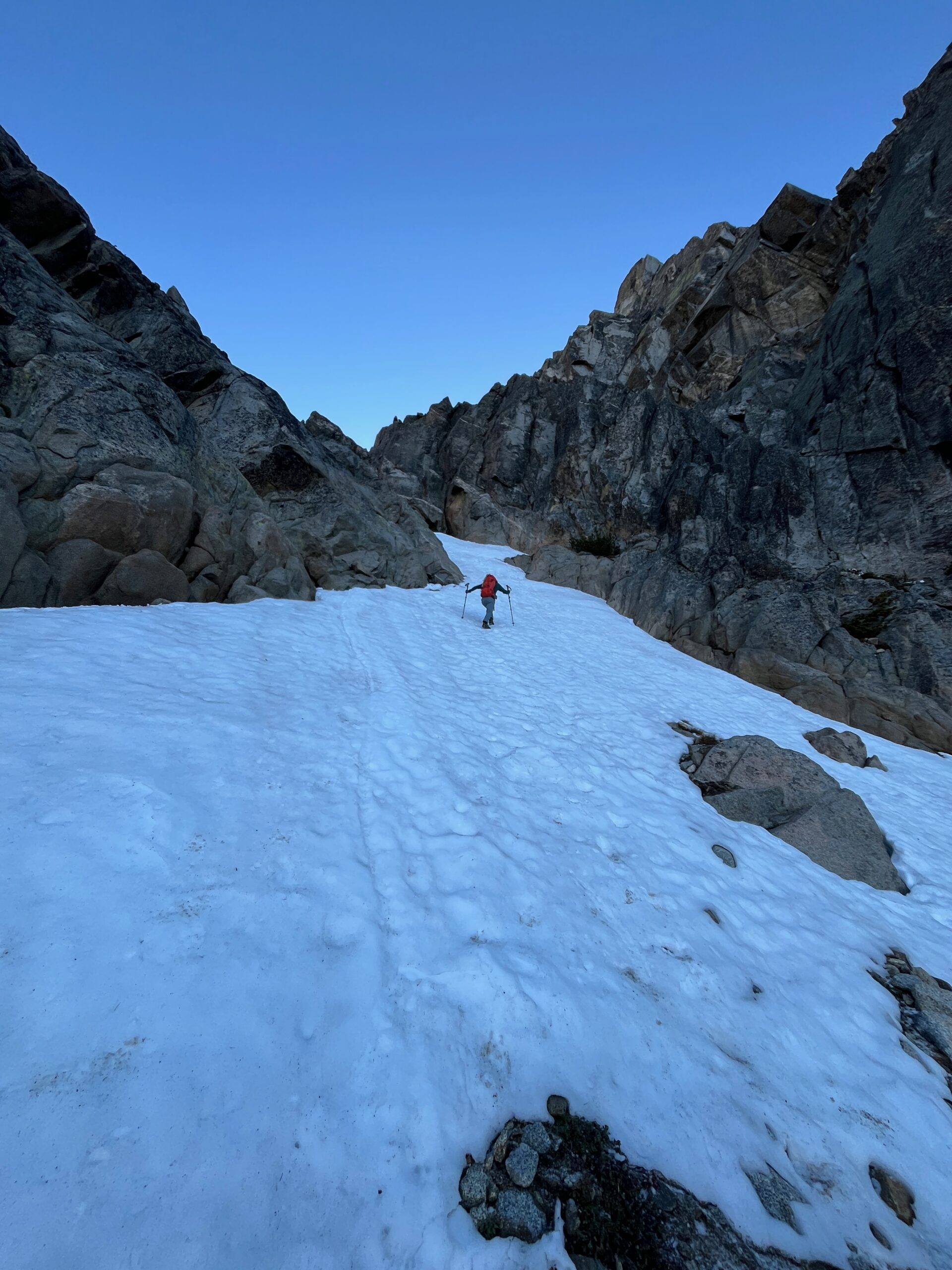
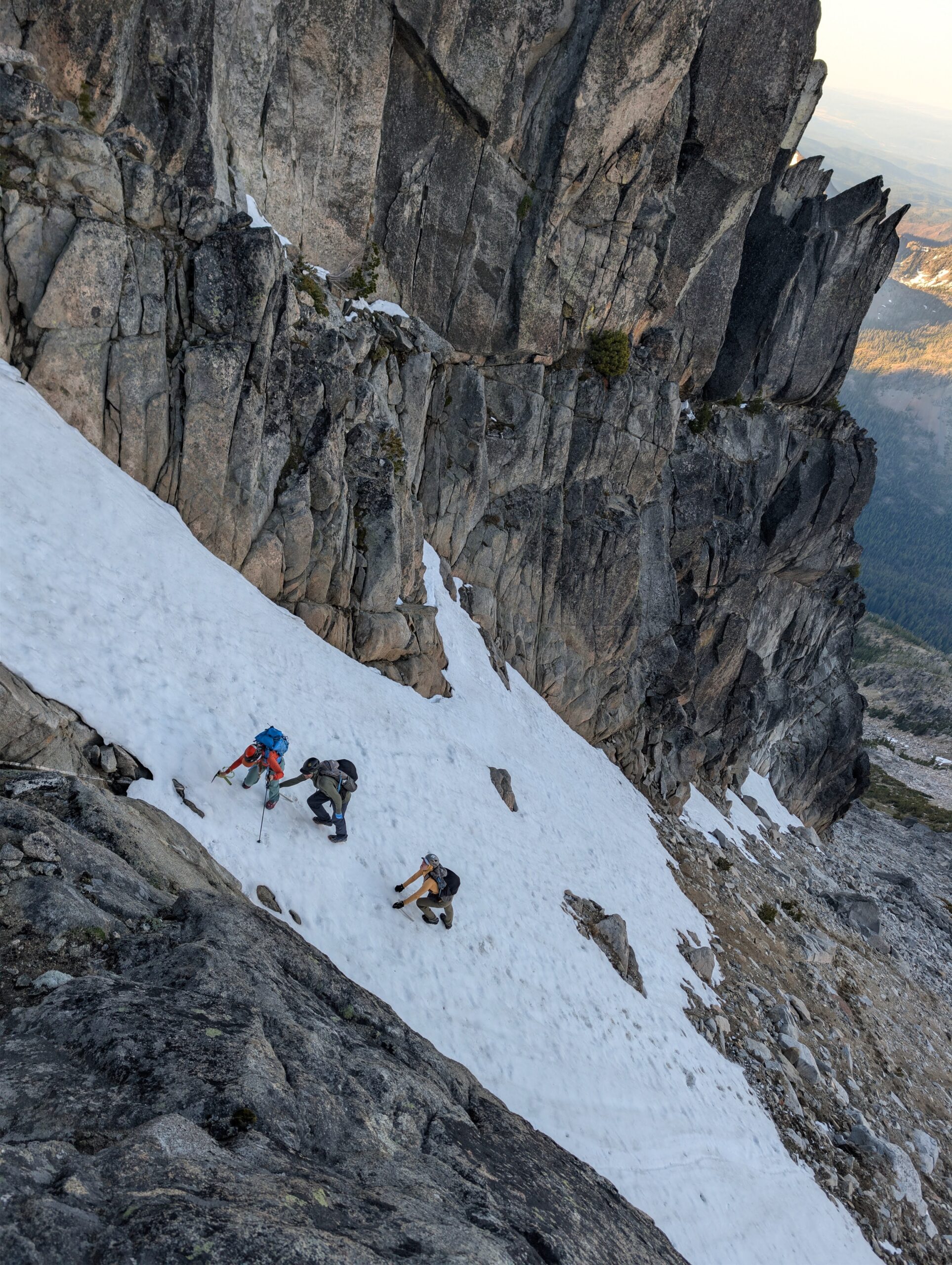
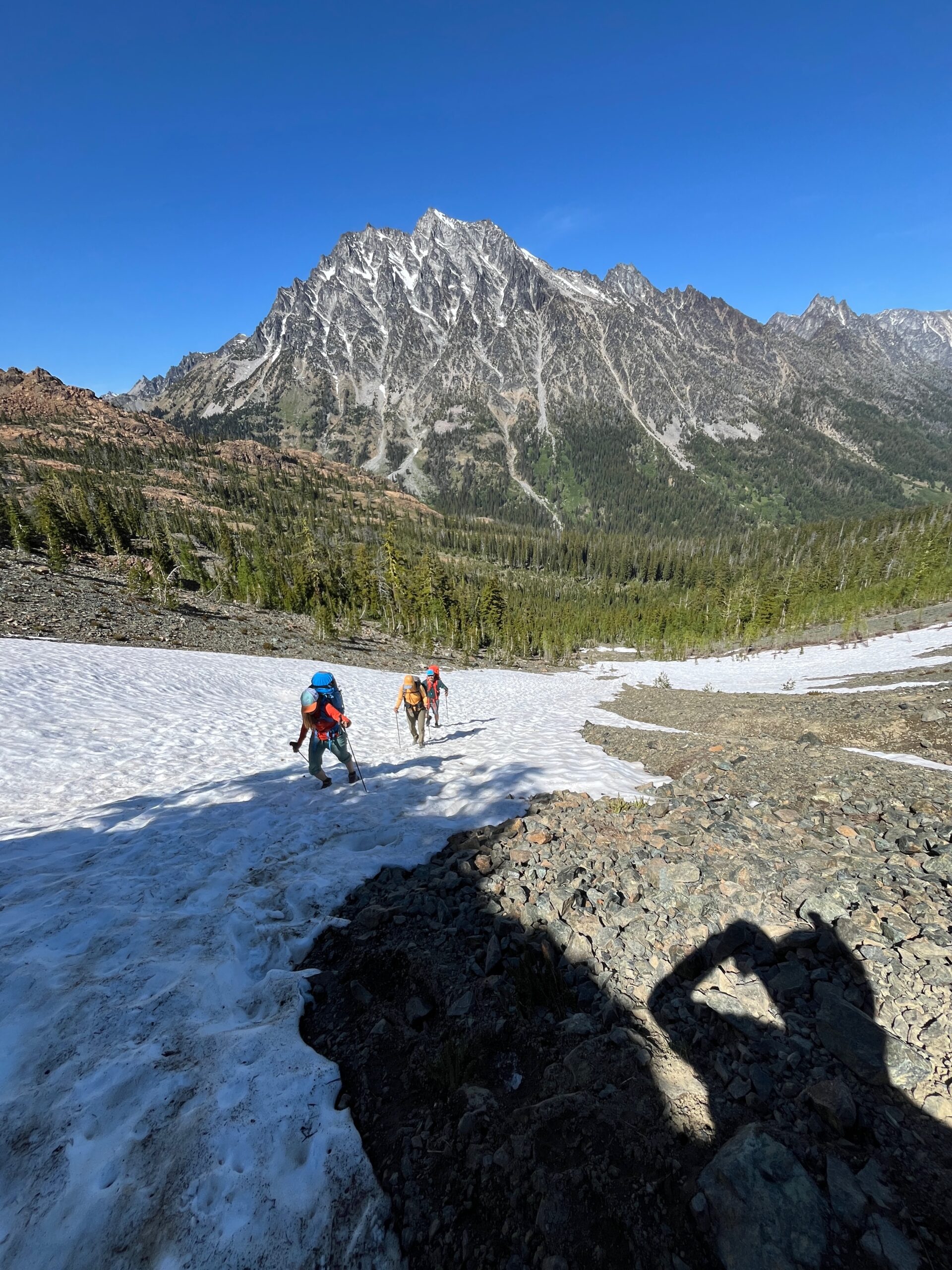
We walked on the snow for a second, but then opted to go back onto the talus as the snow was a bit firm. As we neared the ridge line we could hear the other group of 4 above us just starting the first pitch. We hit a short and firm snow patch right before the ridge and opted to put on micro spikes and get out our ice axes for security. We climbed up the snow, but then stepped off onto the rock to the left before the steepest part and scrambled up easy slab to the ridge line.
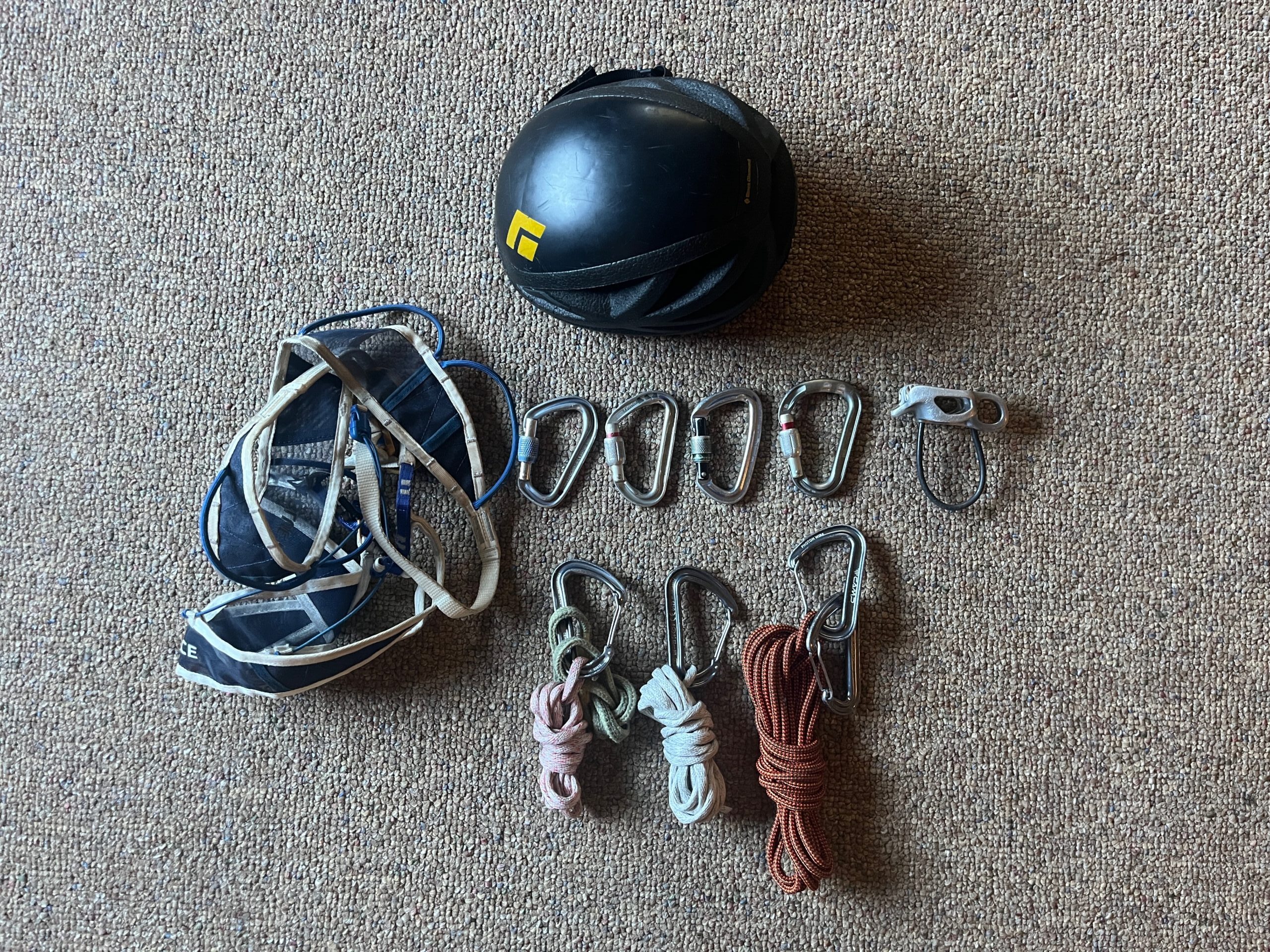
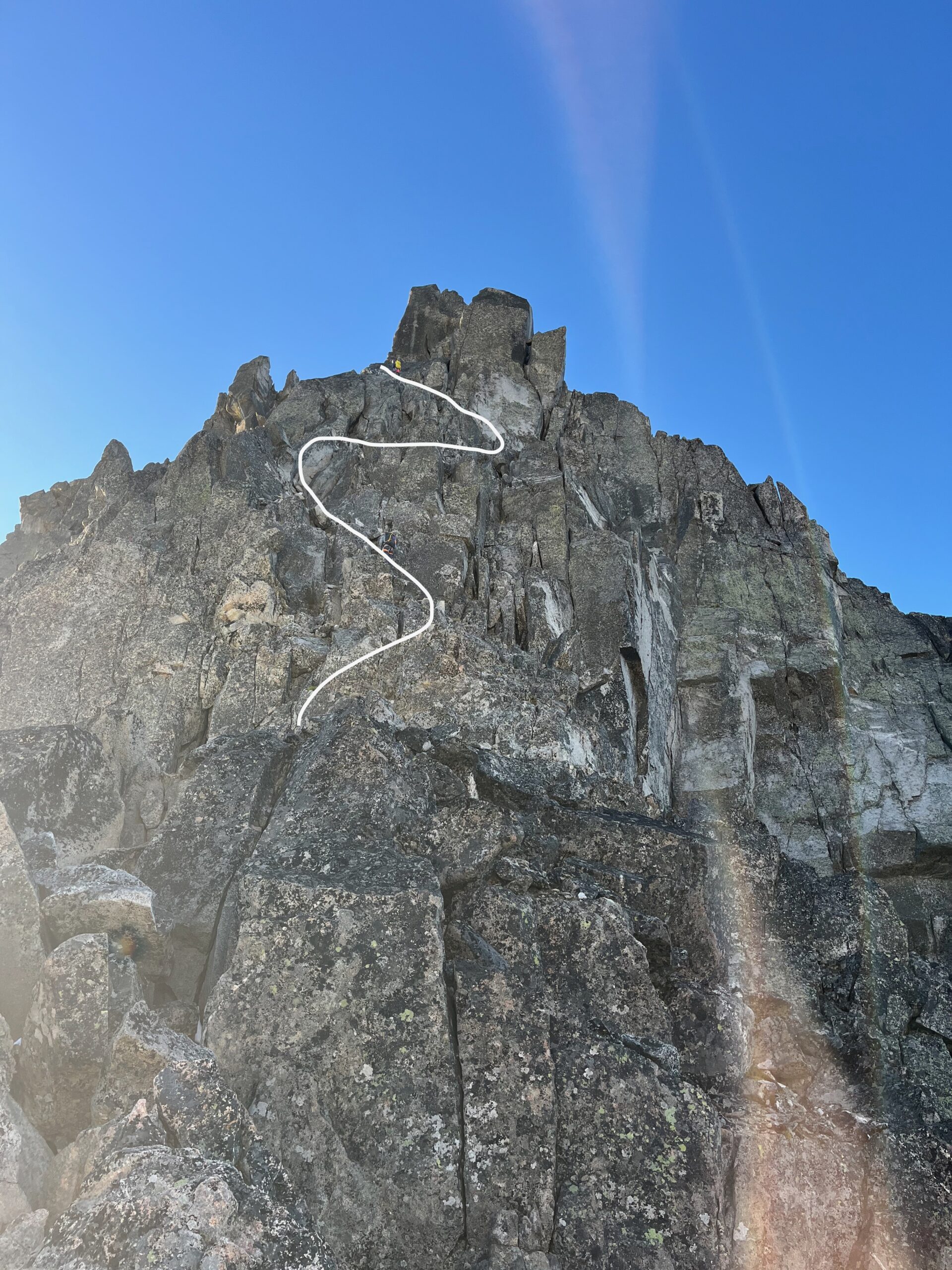
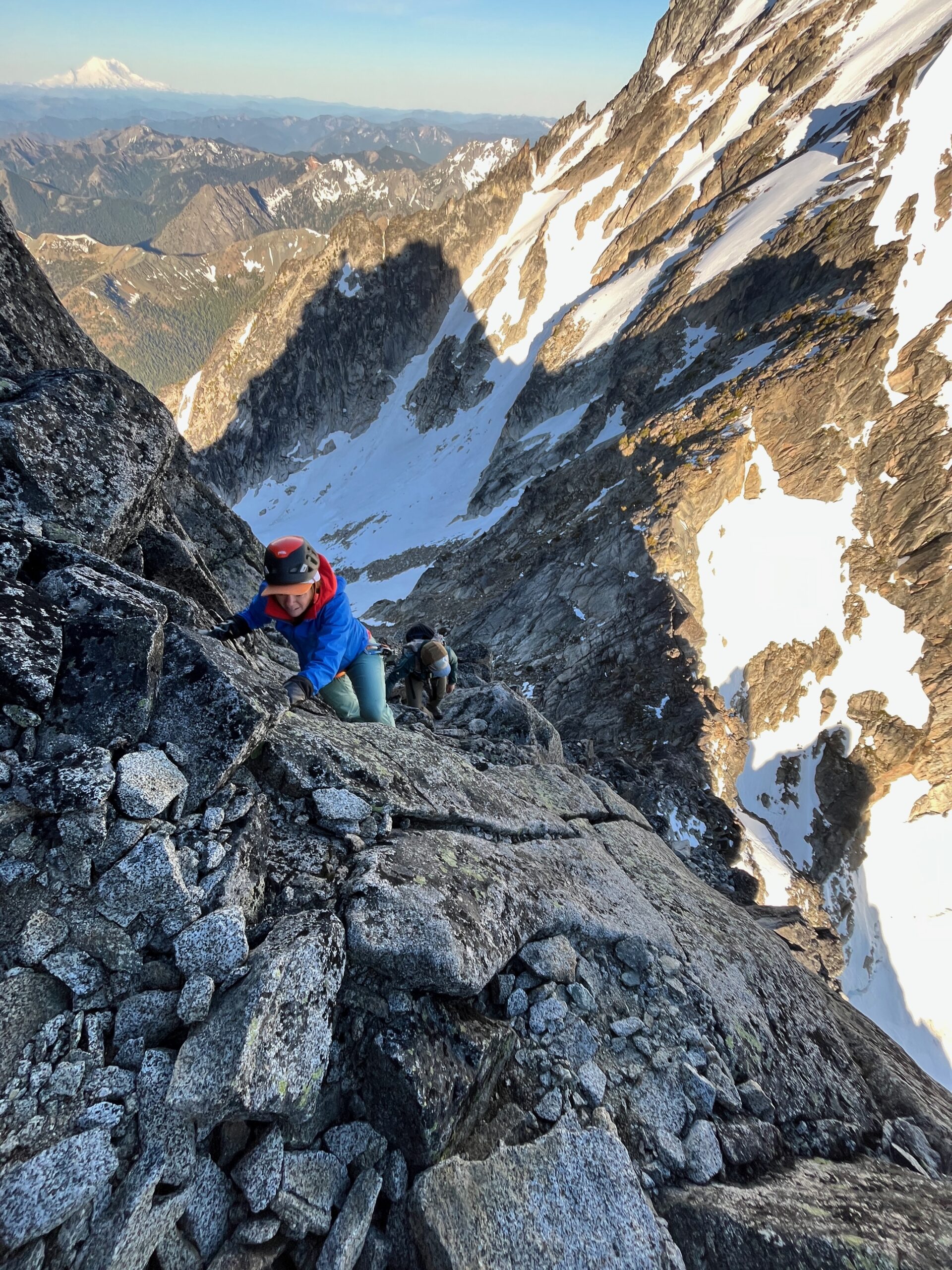
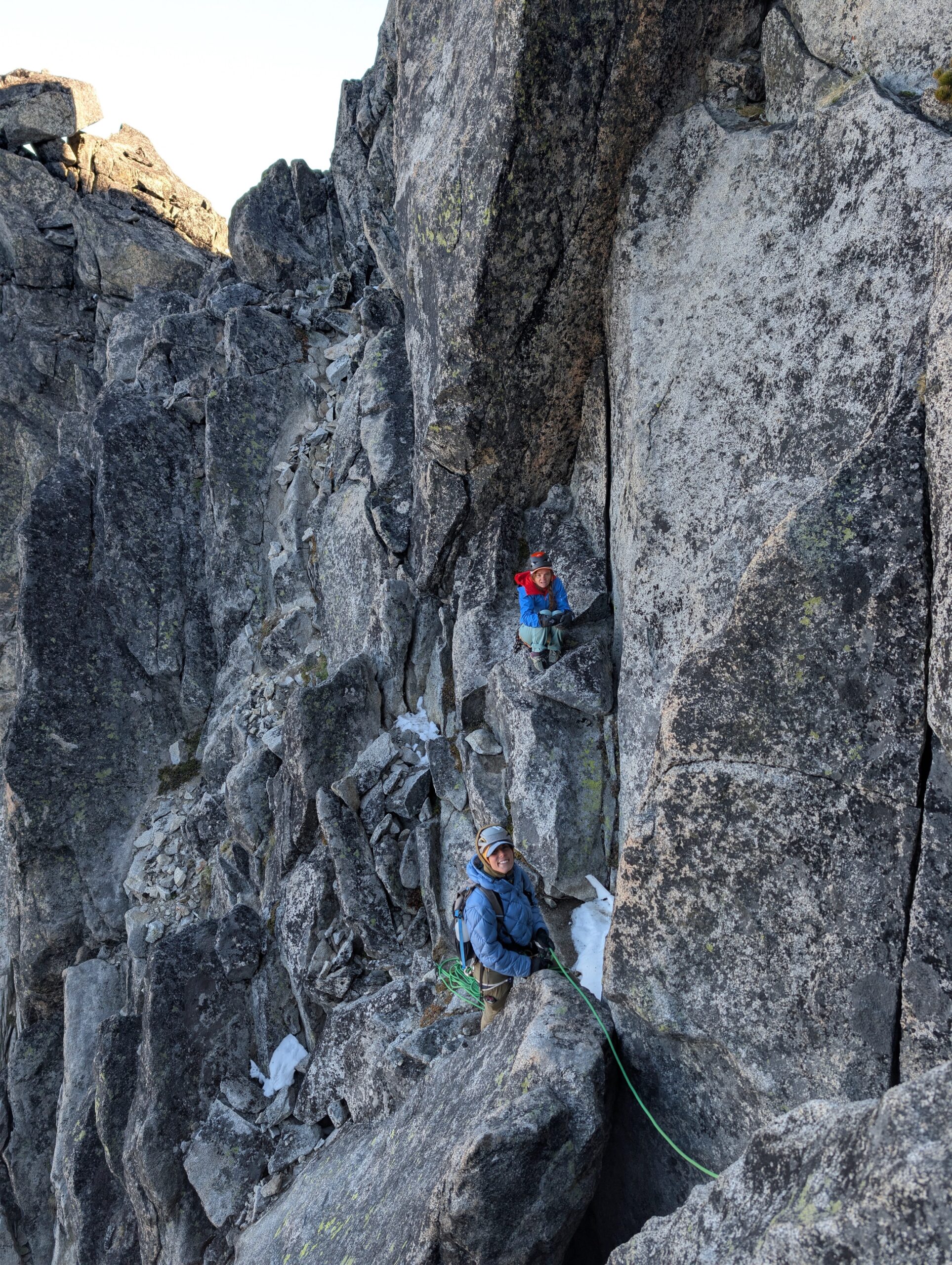
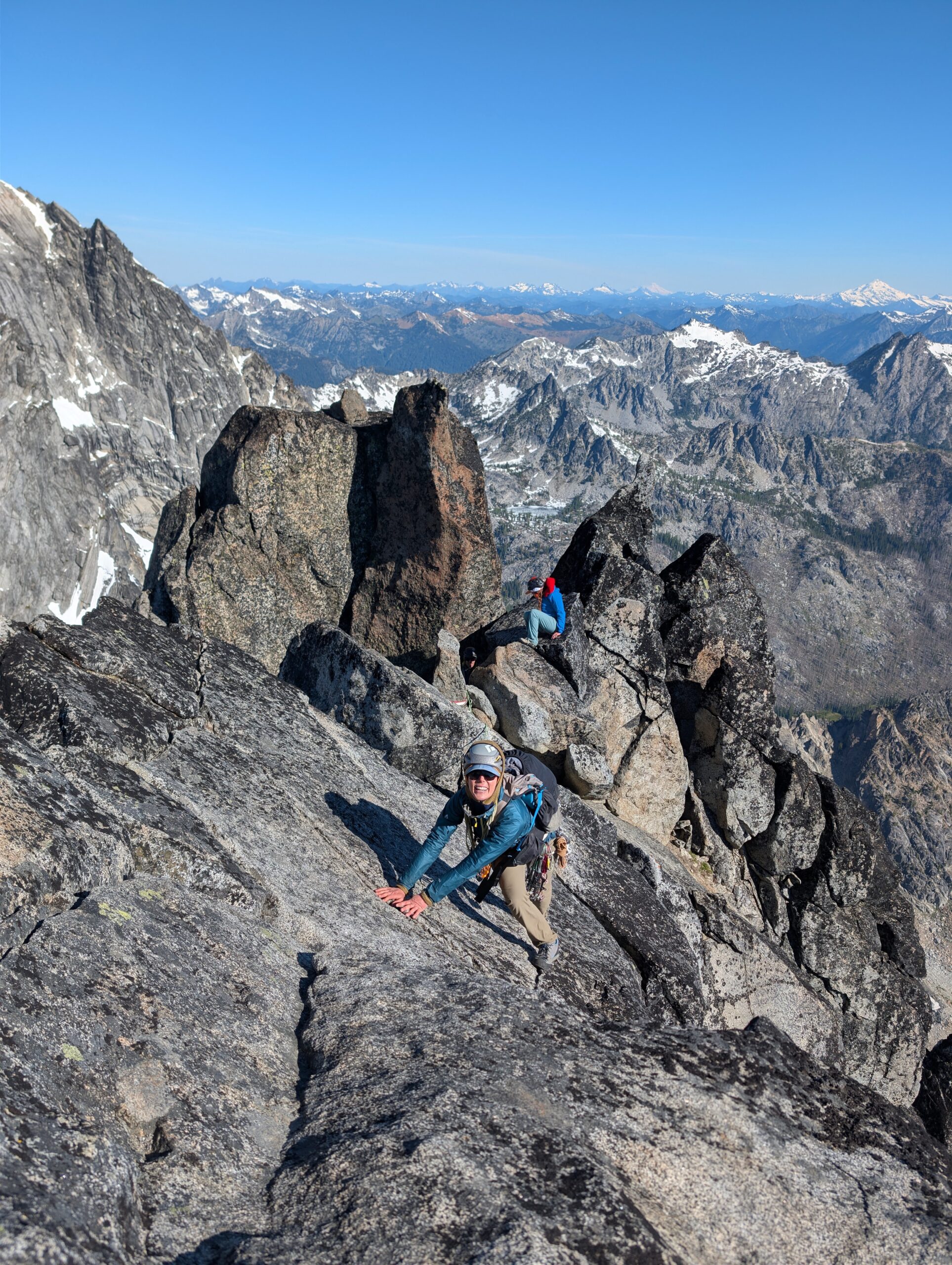
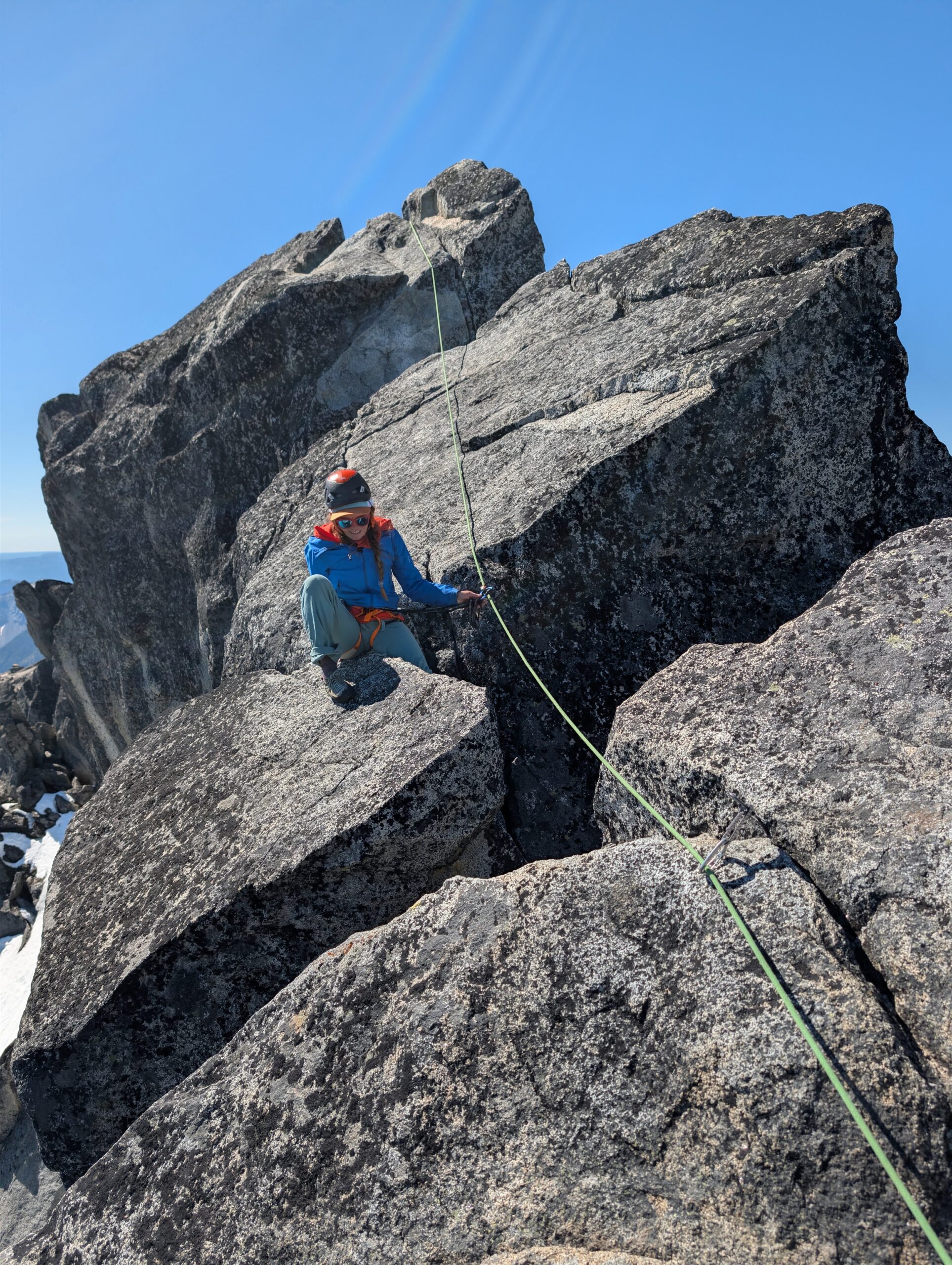
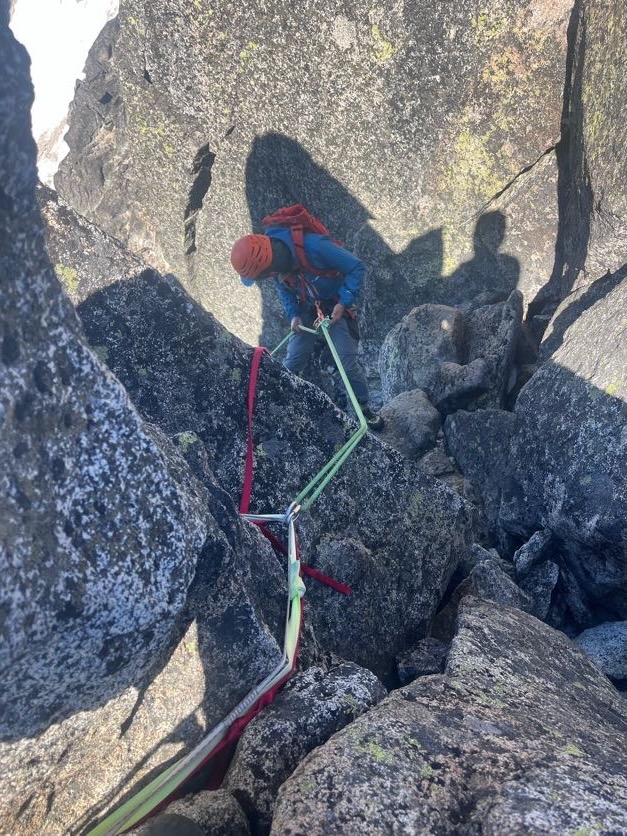
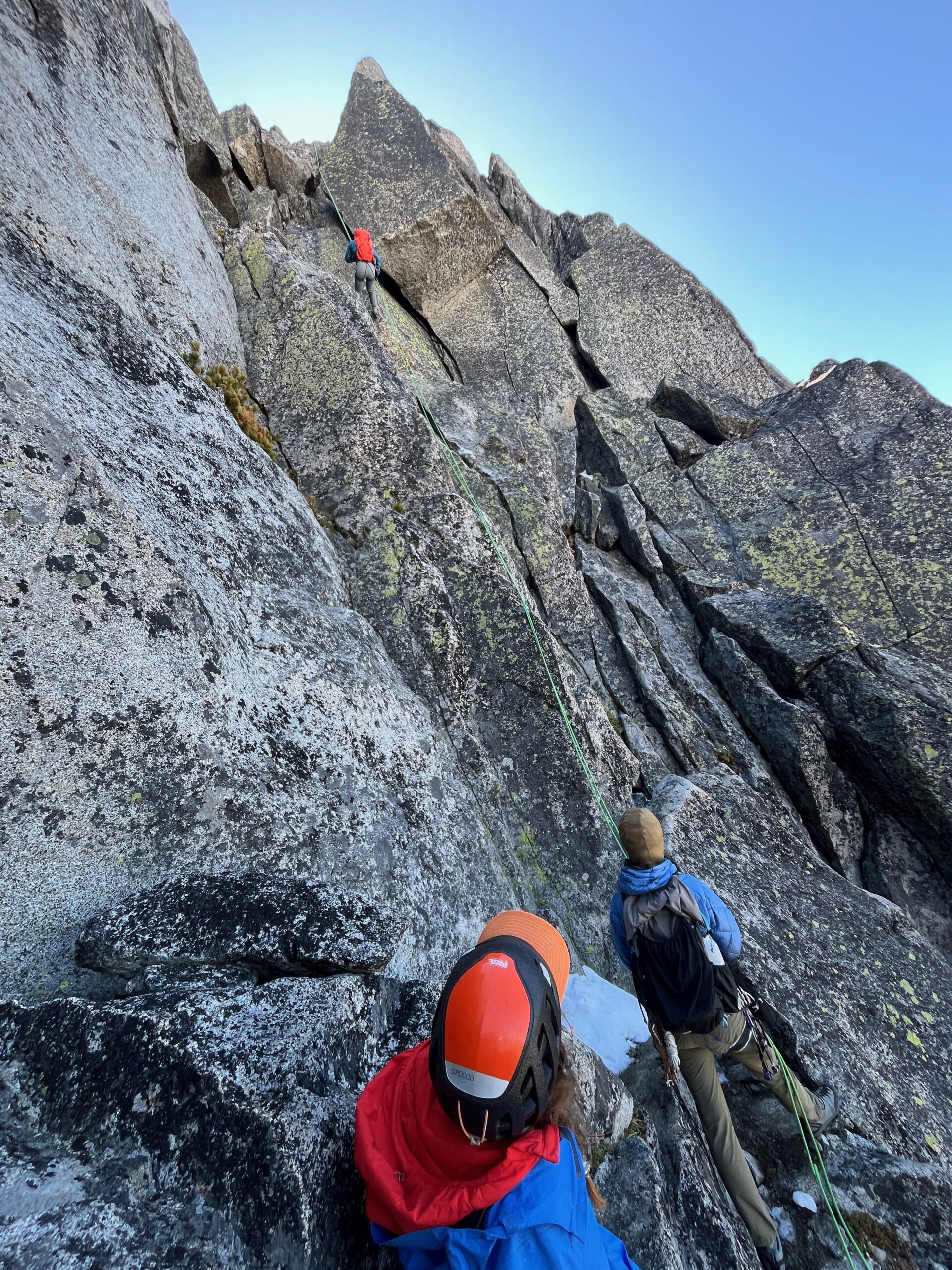
At the ridgeline we put our harnesses, helmets and rock shoes on and opted to scramble as far as we could. We could see the other group a bit up the route and figured we might catch up to them. We scrambled what felt like class 4 to a rap station that we think was the top of Pitch 2. There was a bit of an exposed move just before this station, but all the holds were good. Here we chatted with the last member of the team ahead of us as we got the rope out. Jeff led the finger/hand crack directly up and then into a left facing corner, eventually reaching it’s top and dropping over to the south side of the ridge. The crack took gear well, and once on the south side of the ridge Jeff built an anchor, fixing the line for the next two climbers and belaying the last climber up.
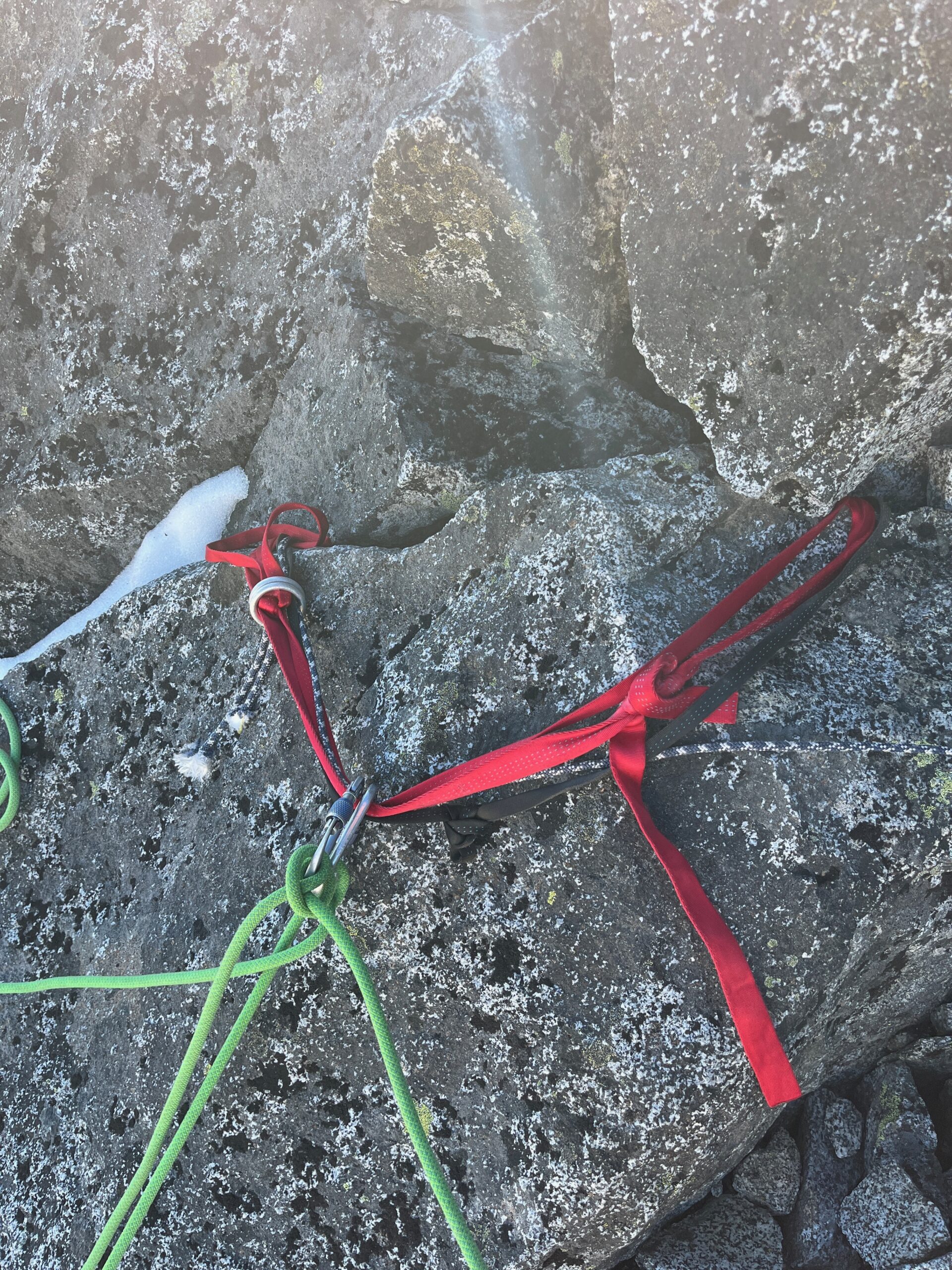
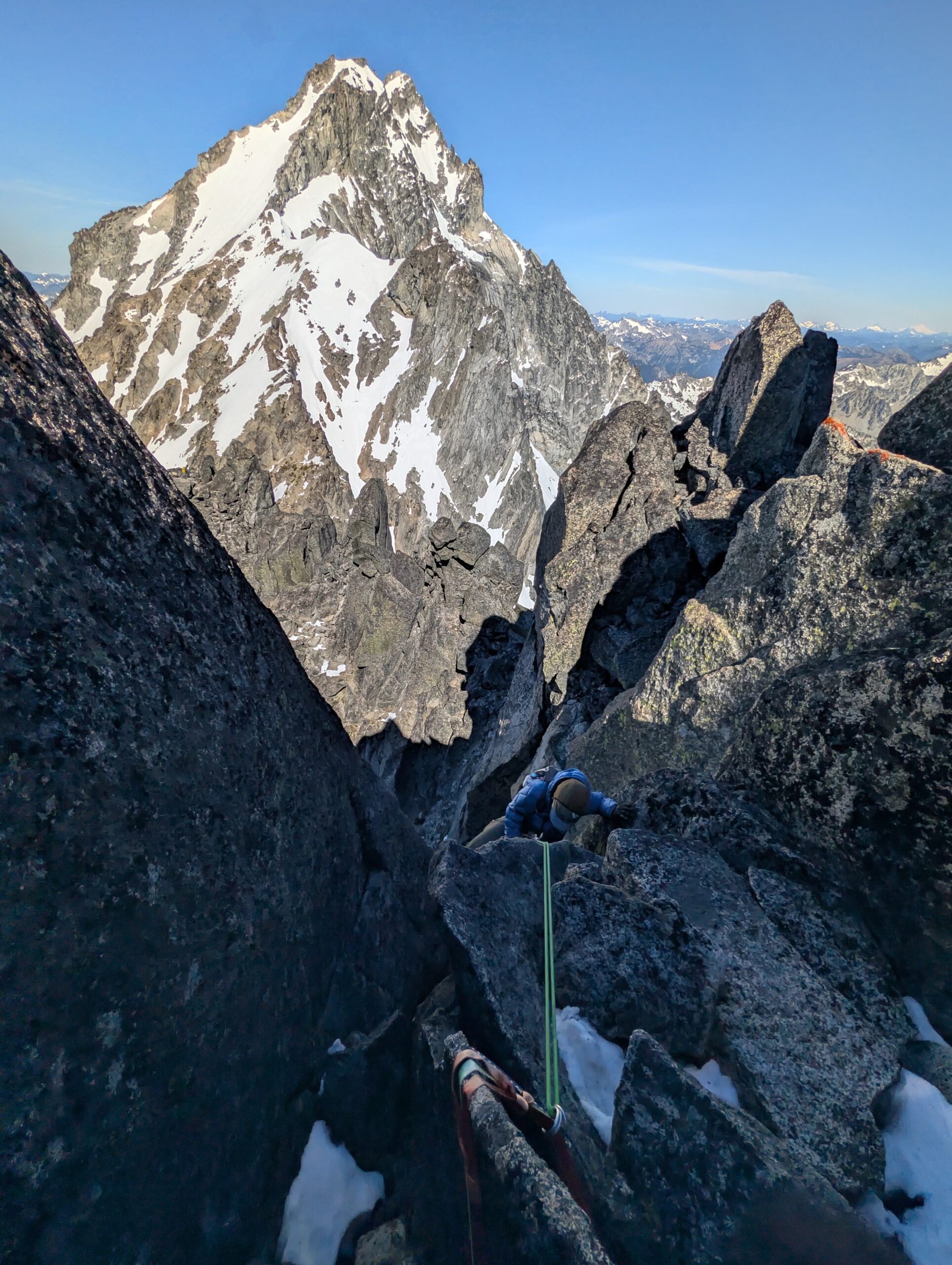
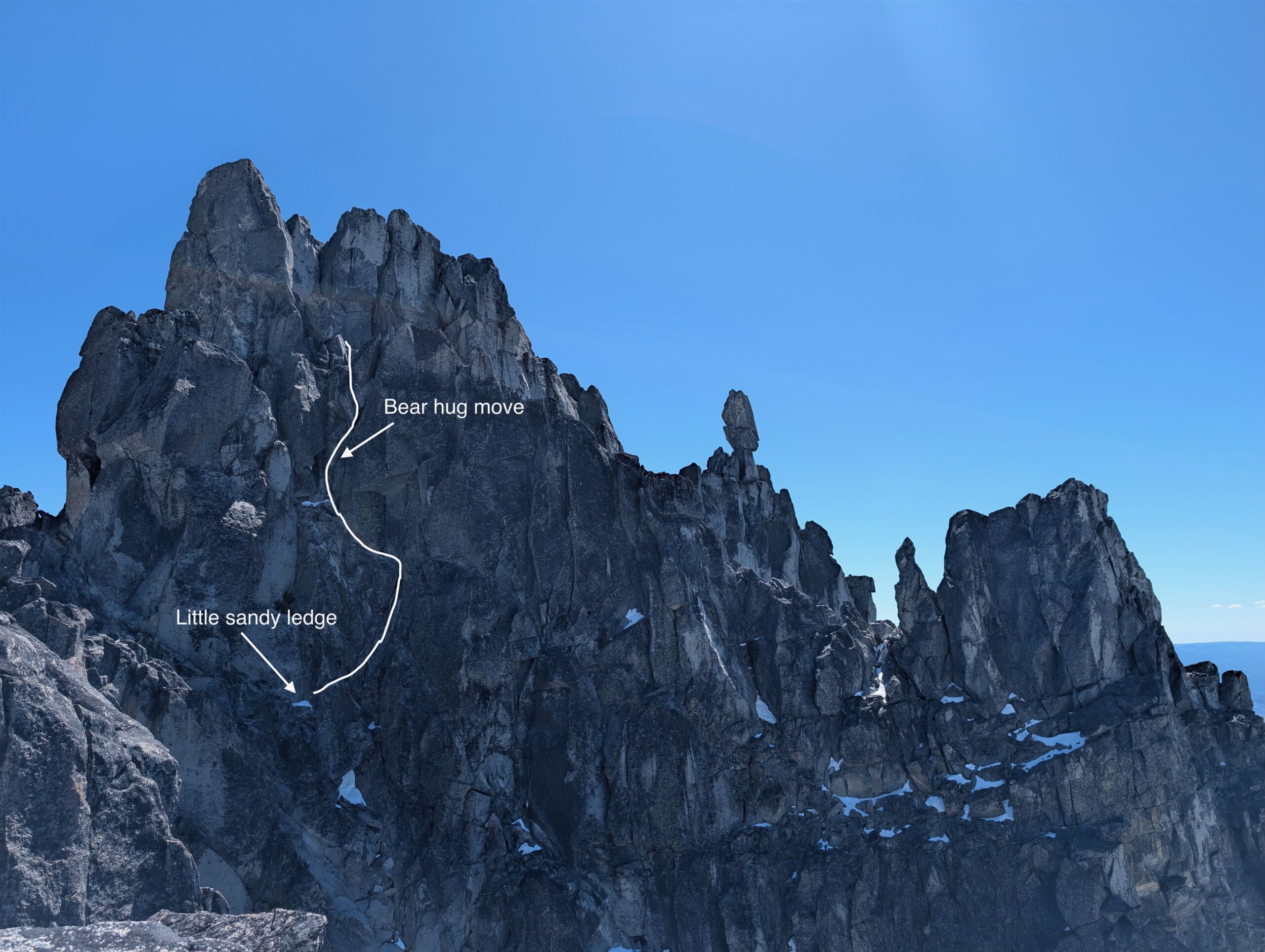
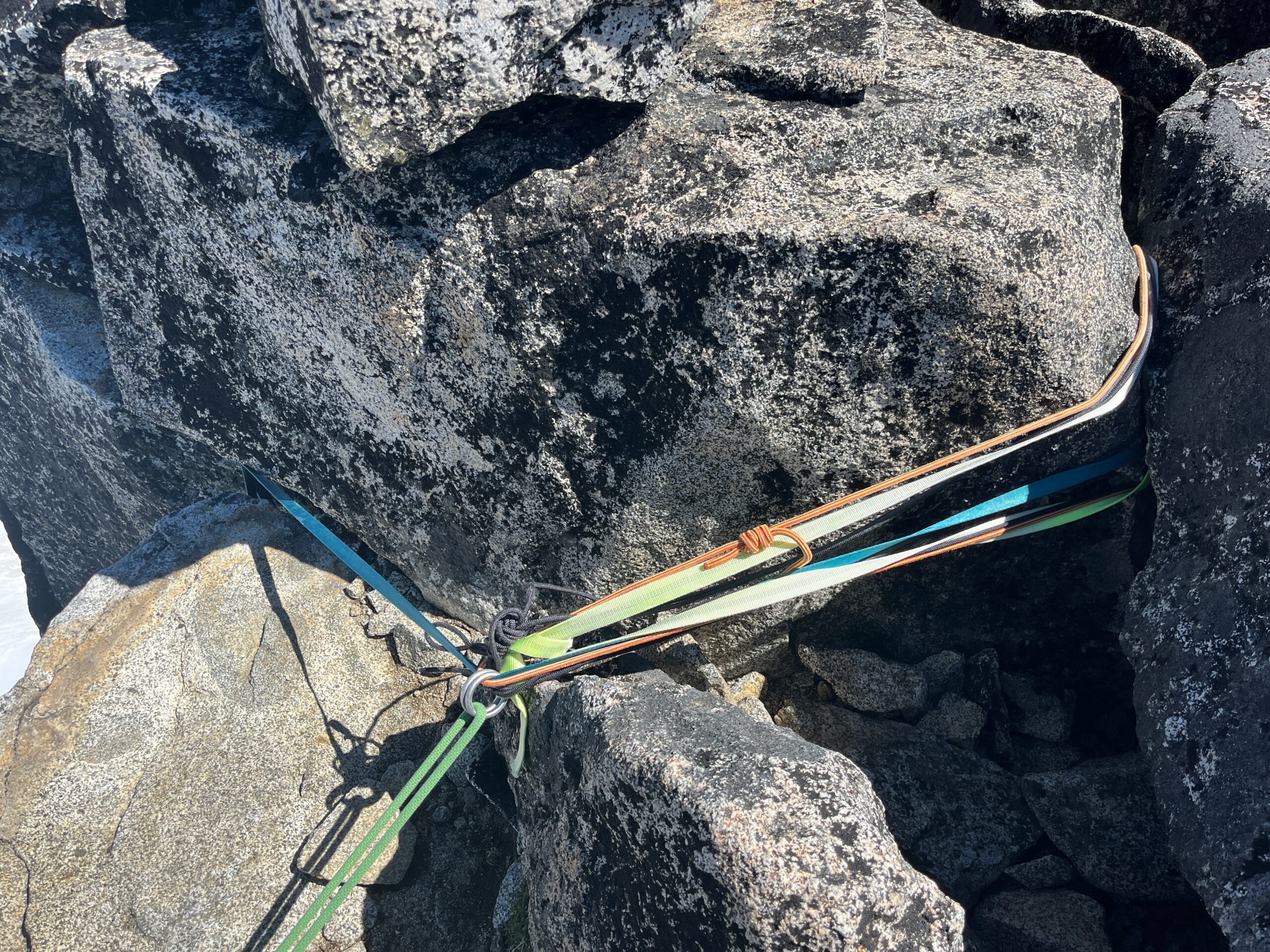
We then scrambled the easy south side of the ridge to the start of the crux pitch on a sandy-ish ledge. Jeff led the ‘bear hug’ pitch placing a #1 (or maybe #2…) in the right side of the block before making a move up and then a step out right to a great foot ledge. We brought the #3 cam, but could have left it at home as there were other placements that worked for all different sizes. He led the pitch all the way to the ridgeline, passing one rap station on the way, and ending at a block with a bunch of slings and some rap rings right at a ‘hole’ in the ridgeline. The rest of the team came up.
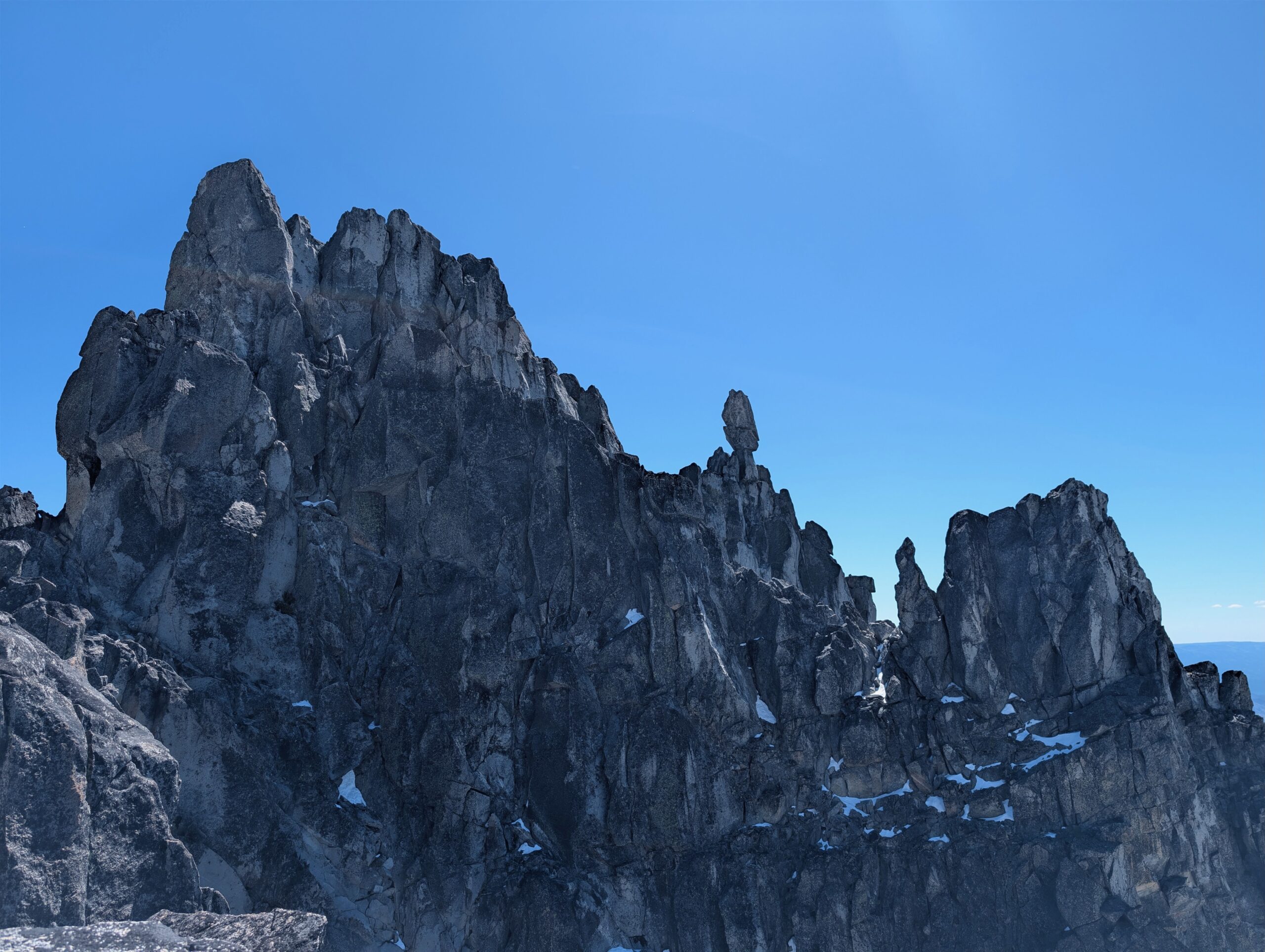
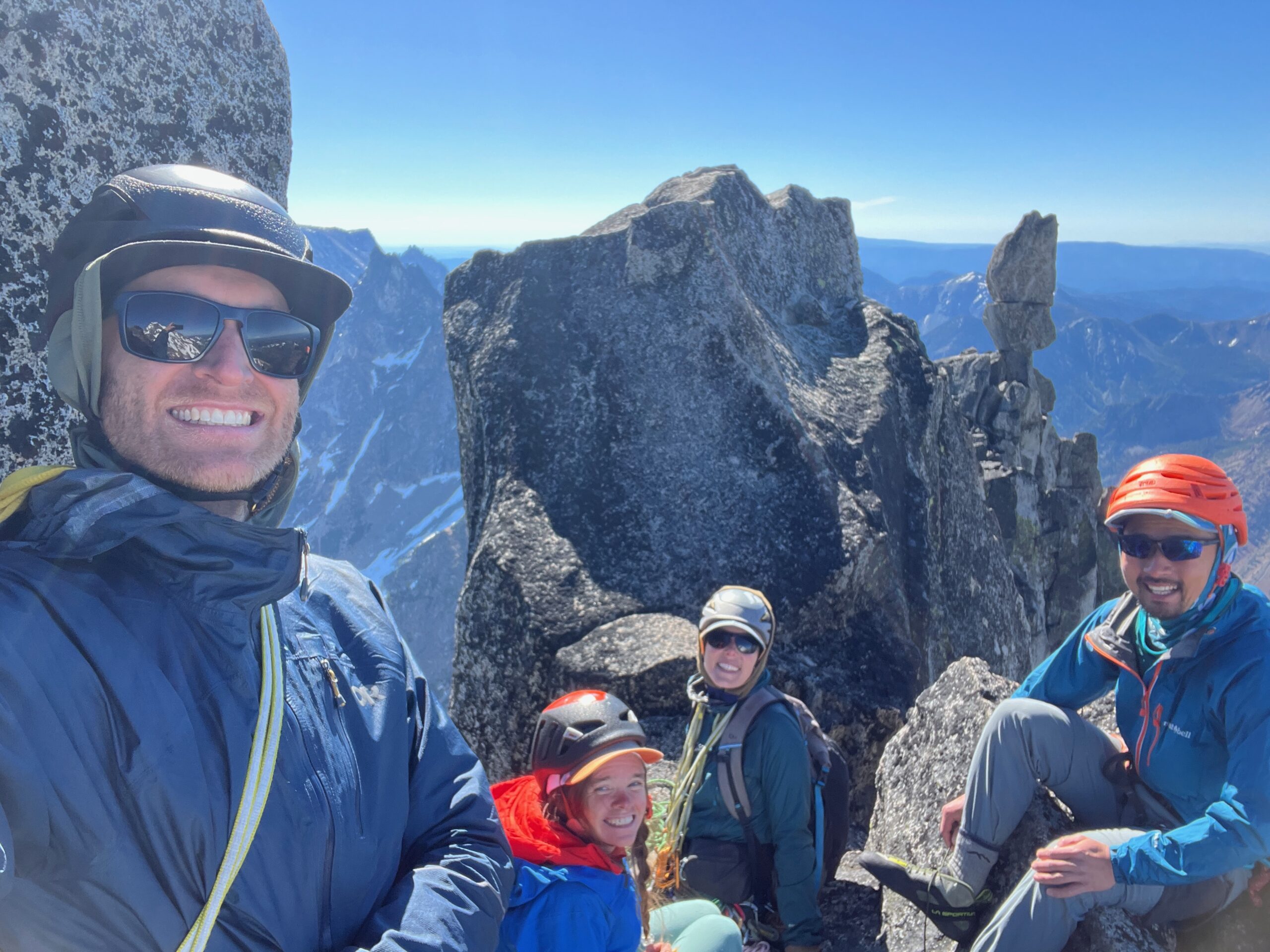
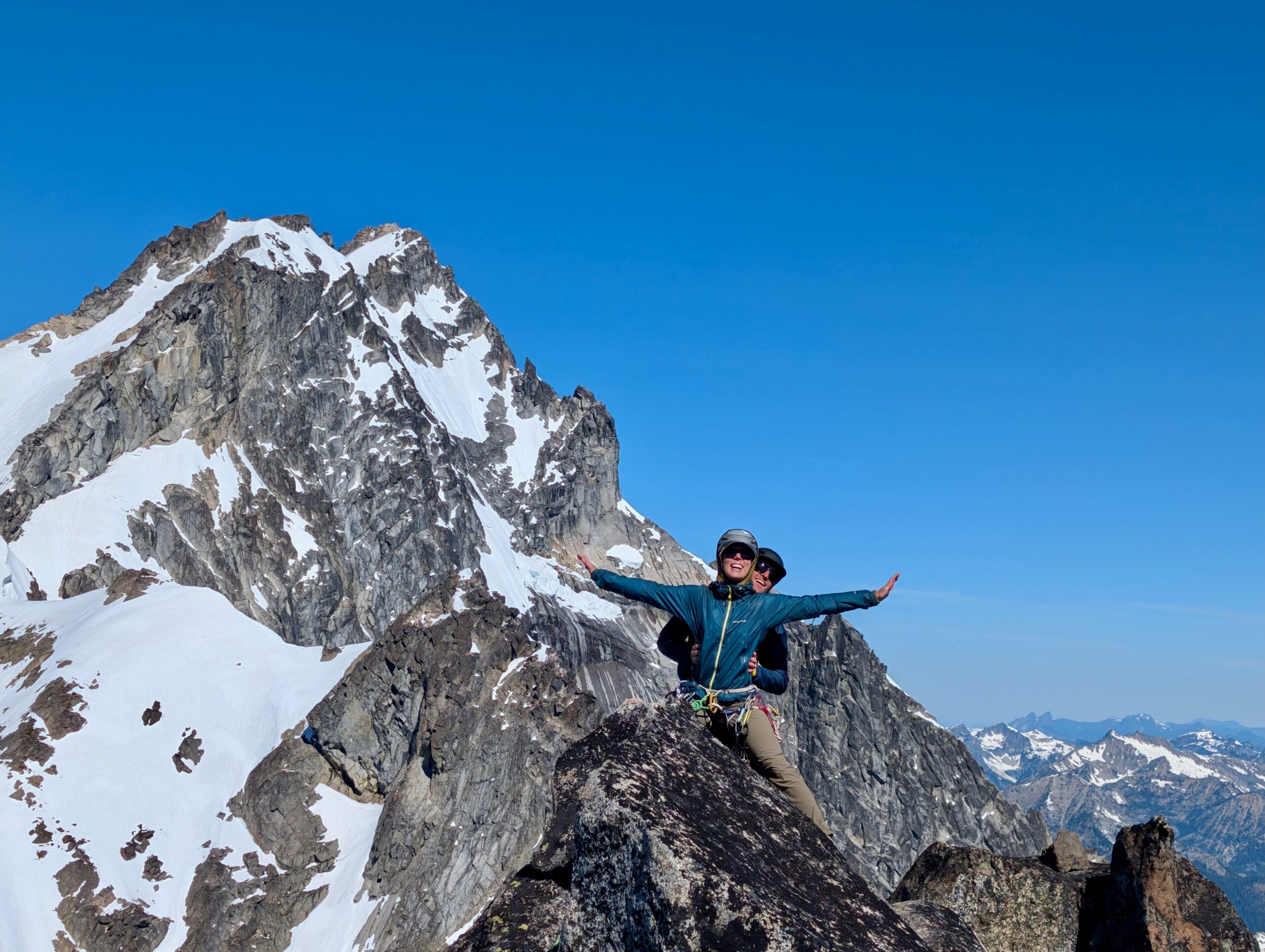
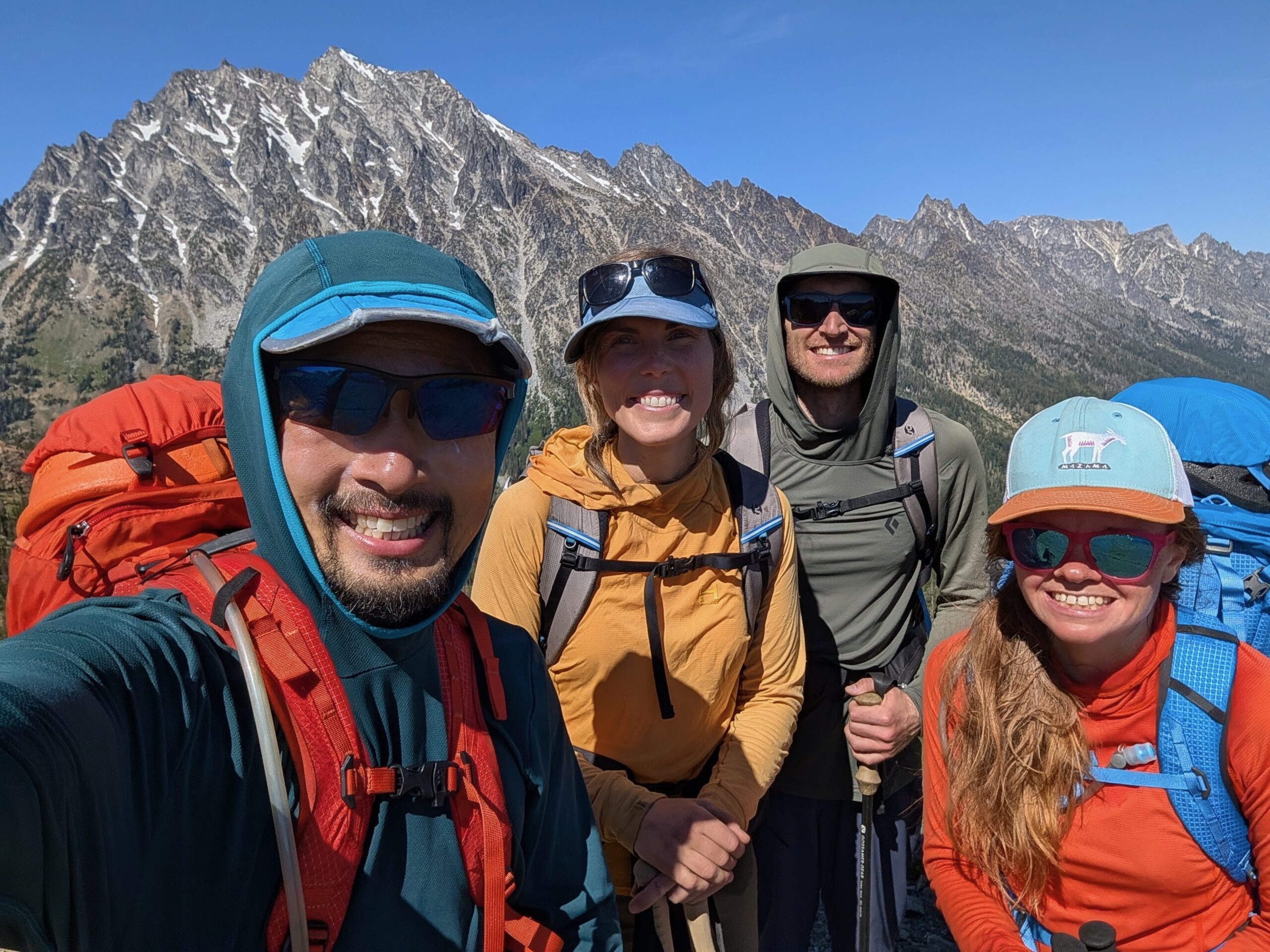
Carolyn then led the slabs to the Sherpa Peak summit. We all joined her on the top and soaked up the views on the stellar sunny day. We summited right around 9am and high fived the other party of 4. The other party started the descent and we hung out on the summit for pictures and ate a snack. We opted not to climb the Balanced Rock, but entertained the idea for a moment.
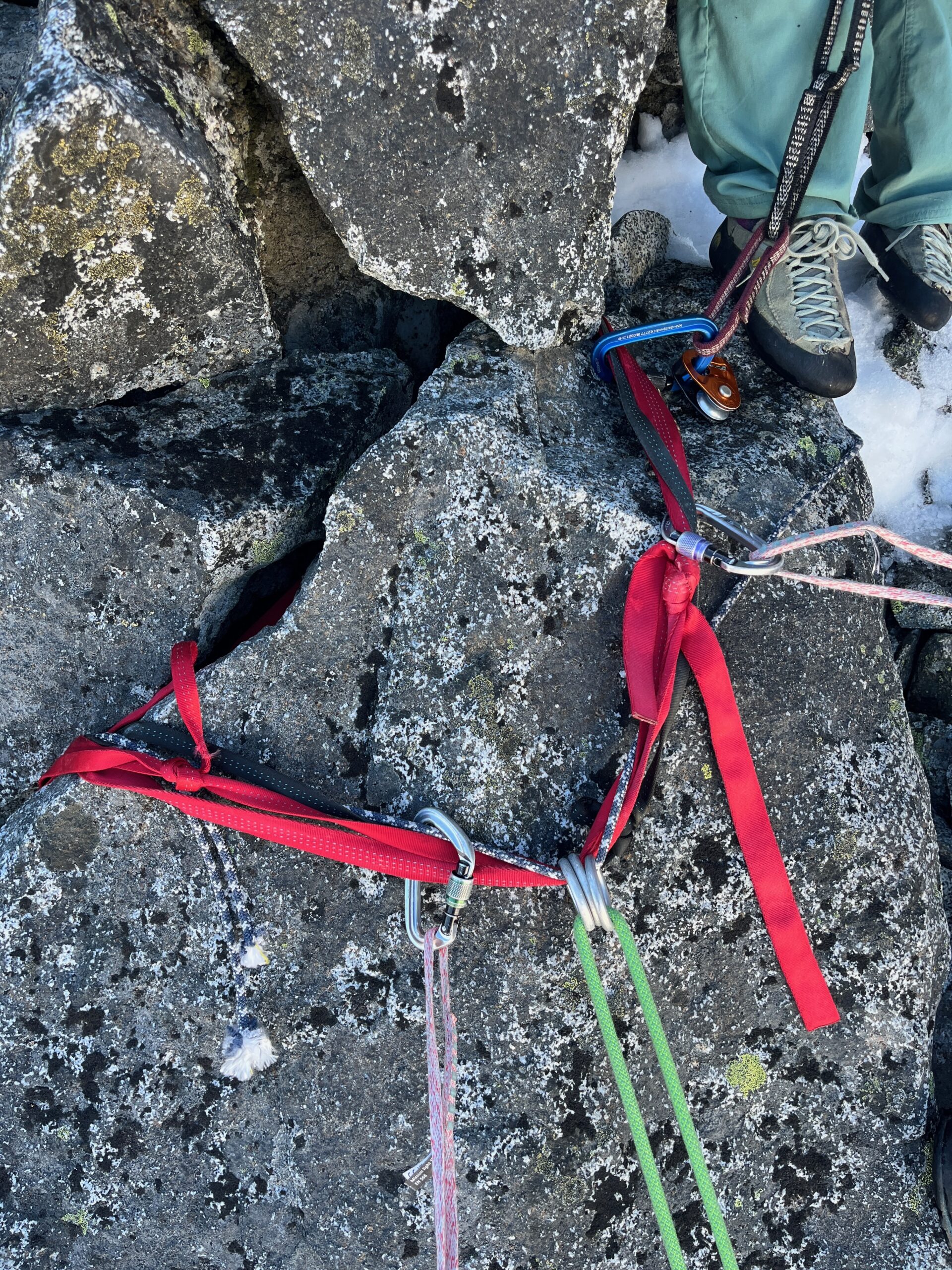
For the descent, we set a line back to the station right at the ridgeline to bring everyone over. Then, we did one rappel to the station that we had passed just above the bear hug pitch. From here, we did one more rappel back to the sandy-ish ledge at the base of the crux pitch. Then, we scrambled the ridge, reversing our route, to a rap station that was on a ledge above the notch we belayed at the top of the finger crack pitch. We noticed a different rap station that was skiers left from the top of that pitch a bit lower down and debated whether or not we should go there rather than the way we came up.
We decided to rap from the station we were at, and ended up having to do another intermediate rappel to get to the start of where we roped up. We think we should have scrambled all the way back down to the first belay station and climbed up to that other rap station for a smoother descent, but so it goes. We did two more rappels back to our gear and sat in the sun for a moment and ate snack.
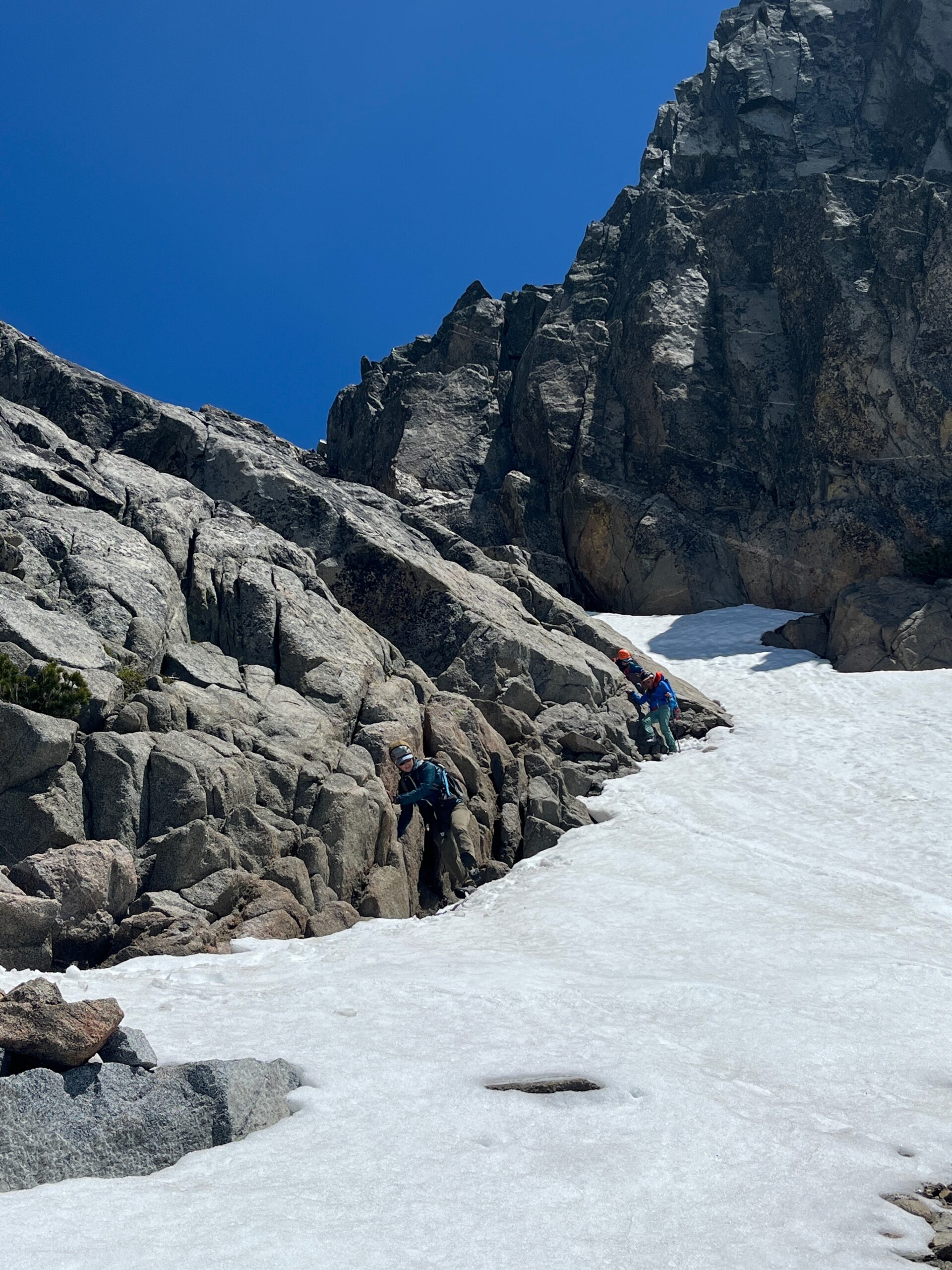
Then, we descended the same route we came up, with some glissading lower down and landed back at camp around 1 p.m. We left camp around 1:45 p.m. and made it back to the car around 5 p.m. Great time on the way back and awesome day out with friends!
Gear Notes
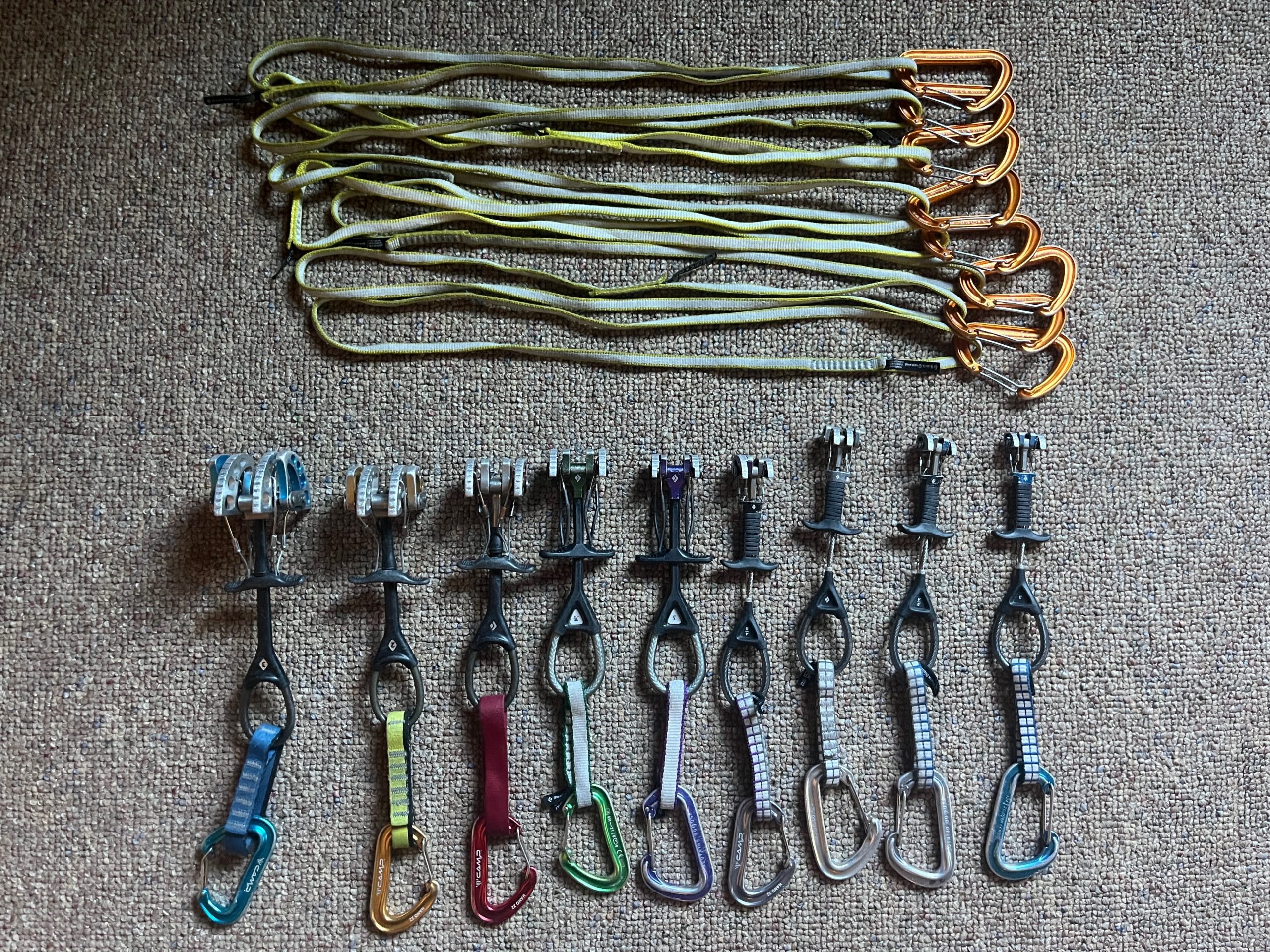
We brought a single rack of cams with two extra offset cams in smaller sizes – 9 total each with thier own carbiners, 8 alpine slings with one carabiner and a 60 meter rope. We had a team of 4 people with a single rope so one person led up and fixed the line to the anchor, then the two middle folks used a microtrax/tibloc to attach themselves to the line and slide that up as they climbed, then the last person was belayed up as normal. This worked well as all of us were confident for the level of climbing expected. Additionally, we brought ice axes and microspikes which we only needed for the way up and for glissading down.